Loading...
Emperor Taizu of Jin vs Wu Zhao
Wu Zhao leads by 1.6 pts · 2 figures compared
…
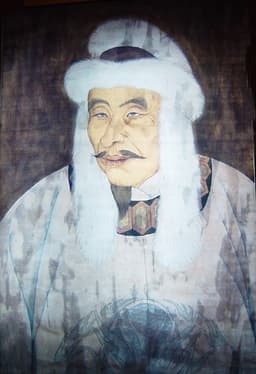
Emperor Taizu of Jin
Emperor · Medieval
63.5Total
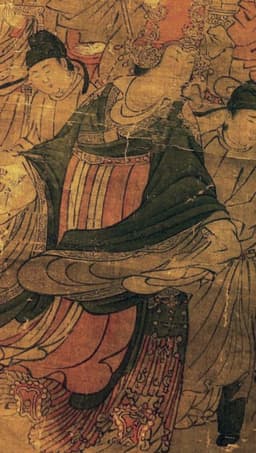
Wu Zhao
Emperor · Medieval
65.1Total
Basic Information
Born
1068
624
Died
1123
705
Era
Medieval
Medieval
Nationality
China
China
Occupation
Emperor
Emperor
Civilization
Eastern
Eastern
Score Comparison
Military (10%)
82.0
52.5
Political (20%)
65.0
59.3
Influence (20%)
55.0
68.0
Legacy (20%)
55.0
68.0
Leadership (15%)
72.0
80.0
Strategy (15%)
72.0
50.0
TOTAL
63.5
65.1
Emperor Taizu of Jin — Complete Timeline
1114 AD
Unification of the Jurchen tribesWar◆ Major
Wanyan Aguda led the Jurchen tribes in a rebellion against the Khitan-led Liao dynasty. He unified the Jurchen clans under his leadership, establishing a confederation that would form the basis of the Jin dynasty.
Jurchen unificationRebellionLiao dynasty
Impact: regionalconstructive
1115 AD
Battle of Hubu RiverWar◆ Major
Aguda's Jin forces defeated a Liao army at the Hubu River. This victory secured Jin control over the Liao's eastern territories and demonstrated the military effectiveness of the Jurchen cavalry against the Khitan.
BattleLiao-Jin WarMilitary victory
Impact: regional
Proclamation of the Jin dynastyPolitical Action◆ Major
Wanyan Aguda declared himself emperor, founding the Jin dynasty. He adopted the Chinese-style reign name Shouguo and established a centralized administration, marking the formal beginning of the Jin state.
Dynasty foundingImperial proclamationJin dynasty
Impact: regionalconstructive
1120 AD
Capture of the Liao Supreme CapitalWar◆ Major
Jin forces under Aguda captured the Liao dynasty's Supreme Capital (Shangjing). This conquest crippled the Liao state and forced the Liao emperor Tianzuo to flee, effectively ending Liao resistance in the region.
Capital captureLiao-Jin WarConquest
Impact: regional
Alliance with the Song dynastyPolitical Action◆ Major
Aguda negotiated the Alliance of the Sea with the Song dynasty, agreeing to jointly attack the Liao dynasty. The Song would receive the Sixteen Prefectures, while Jin would take the rest of Liao territory.
Diplomatic allianceSong-Jin relationsLiao partition
Impact: regional
Wu Zhao — Complete Timeline
690 AD
Reform of the Imperial Examination SystemReform◆ Major
Wu Zhao expanded the imperial examination system, reducing the power of aristocratic families. She introduced new exams for military and literary talent and promoted scholars from humble backgrounds, strengthening meritocracy in government.
MeritocracyBureaucracySocial Mobility
Impact: nationalprogressive
Proclamation as Emperor of the Zhou DynastyPolitical Action
Wu Zhao formally deposed her son, Emperor Ruizong, and ascended the throne as emperor of her own Zhou dynasty. She became the only woman in Chinese history to rule as emperor in her own right, establishing a new capital at Luoyang.
Female EmperorZhou DynastyUsurpation
Impact: nationalprogressive
696 AD
Suppression of the Khitan RebellionWar◆ Major
The Khitan tribes rebelled against Tang rule, defeating Chinese armies. Wu Zhao responded by mobilizing forces and eventually crushing the rebellion. The conflict weakened Tang control over the northeast and demonstrated the limits of her military power.
KhitanRebellionBorder Conflict
Impact: regional
705 AD
Coup of 705 and AbdicationPolitical Action
A coup led by Zhang Jianzhi and other officials forced Wu Zhao to abdicate in favor of her son, Emperor Zhongzong. She died later that year. The coup restored the Tang dynasty and ended her 15-year reign as emperor.
CoupRestorationTang Dynasty
Impact: national
Expert Analysis
Origins
Emperor Taizu of Jin, born Wanyan Aguda in 1068, was a chieftain of the Wanyan clan among the Jurchen tribes in Manchuria. The Jurchen were vassals of the Khitan-led Liao dynasty, and Aguda grew up witnessing Liao exploitation. His early experiences shaped his resolve to unite the Jurchen and overthrow Liao rule. In contrast, Wu Zhao (624–705) was born into a wealthy but non-aristocratic family in Wenshui, Shanxi. Her father was a timber merchant who supported the Tang founder, giving her access to the court. She entered the palace as a concubine of Emperor Taizong, and after his death, she maneuvered to become consort of his son, Gaozong. Her early life was marked by political acumen and ambition, not military prowess.
Rise to Power
Aguda's rise began in 1113 when he succeeded his brother as chieftain. He unified the Jurchen tribes through alliances and conquests, culminating in a rebellion against the Liao in 1114. His victory at the Battle of Hubu River in 1114 demonstrated his military skill (score 82.0) and strategic vision (72.0). In 1115, he proclaimed the Jin dynasty, adopting Chinese-style governance. Wu Zhao's ascent was more gradual and political. She became empress consort in 655 after eliminating rivals, then co-ruled with her ailing husband Gaozong. After his death in 683, she ruled as empress dowager, deposed her sons, and finally declared herself emperor of the Zhou dynasty in 690. Her political maneuvering (score 59.3) was masterful, but she lacked military experience (52.5).
Leadership & Governance
Aguda's leadership was direct and militaristic. He centralized the Jin state by merging Jurchen tribes into a unified army and adopting Chinese administrative practices. He appointed capable officials regardless of tribe and enforced strict discipline. His governance focused on expanding territory and consolidating power. Wu Zhao, by contrast, used political reforms to legitimize her rule. She expanded the imperial examination system to recruit talent from lower classes, weakening the old aristocracy. She promoted Buddhism to support her divine mandate and built new temples. However, her leadership was often ruthless, employing secret police to suppress dissent. Her political score of 59.3 reflects effectiveness but also instability.
Triumph & Tragedy
Aguda's greatest triumph was founding the Jin dynasty and crushing the Liao. He captured the Liao Supreme Capital in 1120 and forced the Liao emperor to flee. His alliance with the Song (the Alliance of the Sea) in 1120 allowed him to split Liao territories. However, his early death in 1123 prevented him from seeing the conquest of the Song, which his successors achieved. His tragedy was that his dynasty later fell to the Mongols. Wu Zhao's triumph was her successful reign as China's only female emperor. She maintained stability, expanded the examination system, and suppressed the Khitan rebellion in 696–697. Her tragedy was the 705 coup that forced her abdication, and her dynasty was overthrown shortly after her death. Her legacy as a female ruler was controversial, but her influence (68.0) endured.
Character & Destiny
Aguda was pragmatic and decisive, a military leader who inspired loyalty. His character drove him to unite the Jurchen and challenge the Liao. His destiny was to die at the peak of his power, leaving a strong state. Wu Zhao was ambitious, intelligent, and ruthless. Her character shaped her rise but also her downfall—her cruelty created enemies. The 705 coup was a direct result of her autocratic style. Her destiny was to be the only woman to claim the title of emperor, but her dynasty was short-lived.
Legacy
Aguda's legacy is the Jin dynasty, which ruled northern China for over a century. He established a pattern of Jurchen state-building that influenced later dynasties like the Qing. His military achievements (82.0) are remembered, but his political (65.0) and influence (55.0) scores are moderate. Wu Zhao's legacy is more complex. She broke gender barriers and reformed governance, but her reputation suffered from Confucian historians. Her influence (68.0) and legacy (68.0) scores reflect her lasting impact on Chinese political culture, especially the examination system.
Conclusion
While Wu Zhao scores higher overall (65.1 vs 63.5), Aguda's impact was more foundational. He created a dynasty that reshaped East Asian geopolitics, while Wu Zhao's reign was a brief interruption in the Tang dynasty. Aguda's military and strategic scores (82.0 and 72.0) are higher than Wu Zhao's political (59.3) and strategy (50.0). Although Wu Zhao's influence is notable, Aguda's tangible creation of a long-lasting state gives him greater historical impact. Thus, Emperor Taizu of Jin had a more decisive effect on history.
Rankings
🥇
Wu ZhaoLeader
Mil: 52.5Pol: 59.3Inf: 68.0
65.1
🥈
Emperor Taizu of Jin
Mil: 82.0Pol: 65.0Inf: 55.0
63.5
+1.6 behind
How This Comparison Works
Algorithm
Each figure is scored on 6 dimensions (0—100 scale) based on structured historical data: Military (10%), Political (20%), Influence (20%), Legacy (20%), Leadership (15%), Strategy (15%). The weighted total produces the final ranking.
Data Sources
Scores are computed from structured sub-indicators in the database. Scale factors adjust for era (Ancient ×0.85, Modern ×1.0) and civilization size (Eastern ×1.05, Other ×0.80) to account for differences in population and military scale.
Maximum 3 Figures
Comparisons are limited to 2—3 figures to ensure readability and statistical meaningfulness.
Error Margins
±5 points per dimension — Sub-scores are derived from historical records with inherent uncertainty. Two figures within 5 points on a dimension should be considered roughly equivalent in that area.
Total Score Accuracy
±3 points overall — The weighted combination of 6 dimensions produces a total score with approximately ±3 points of uncertainty. Differences of less than 3 points are not statistically significant— the figures are effectively tied.
Known Limitations
- Historical records are incomplete and uneven across civilizations
- Figures from oral-tradition societies may be underrepresented
- Occupation labels can misclassify multi-role figures
- Scores measure capability and impact, not moral character
- Quantitative scoring is a comparison tool, not absolute truth
Capability Radar
Military (10%) — Battles & Warfare
Battles
85
55
Win Rate
90
60
Expansion
85
50
Political (20%) — Governance & Reform
Reform
75
80
Diplomacy
80
70
Economy
65
75
Influence (20%) — Cultural & Global Reach
Cultural
55
80
Global
50
70
Legacy (20%) — Historical Impact
Historical
70
85
Longevity
60
75
Leadership (15%) — Power & Stability
Tenure
70
85
Stability
60
70
Strategy (15%) — Tactics & Innovation
Strategy
85
55
Tactics
88
50
Reform
75
65
Similar Comparisons
Comments & Discussion
No comments yet. Be the first to share your thoughts!