Loading...
Qin Hui vs Xu Jie
Xu Jie leads by 7.7 pts · 2 figures compared
…

Qin Hui
Politician · Medieval
46.1Total
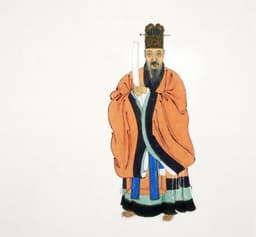
Xu Jie
Politician · Medieval
53.8Total
Basic Information
Born
1090
1503
Died
1155
1583
Era
Medieval
Medieval
Nationality
China
China
Occupation
Politician
Politician
Civilization
Eastern
Eastern
Score Comparison
Military (10%)
50.0
37.5
Political (20%)
30.8
65.0
Influence (20%)
47.1
53.3
Legacy (20%)
43.3
45.8
Leadership (15%)
67.0
78.0
Strategy (15%)
38.1
38.0
TOTAL
46.1
53.8
Qin Hui — Complete Timeline
1138 AD
Appointed Chancellor under Emperor GaozongPolitical Action◆ Major
Qin Hui was appointed as chancellor of the Southern Song dynasty under Emperor Gaozong. He became the leading advocate for peace with the Jin dynasty, favoring diplomatic settlement over continued military campaigns to recover northern territories.
ChancellorshipSouthern SongPeace Policy
Impact: national
1141 AD
Negotiated the Treaty of Shaoxing with the Jin DynastyPolitical Action◆ Major
Qin Hui negotiated the Treaty of Shaoxing, which ended hostilities between the Southern Song and Jin dynasties. The treaty required the Song to pay annual tribute and cede northern territories, securing peace but at the cost of national pride and territorial loss.
TreatyJin DynastySouthern Song
Impact: regional
1142 AD
Orchestrated the Execution of General Yue FeiPolitical Action
Qin Hui, with Emperor Gaozong's approval, ordered the arrest and execution of General Yue Fei on false charges of treason. Yue Fei was a popular military hero who opposed the peace treaty. This act made Qin Hui infamous in Chinese history as a traitor.
ExecutionYue FeiTreason
Impact: nationaldestructive
1155 AD
Death and Posthumous InfamyPolitical Action◆ Major
Qin Hui died in office. In later centuries, his reputation was permanently tarnished as a traitor who betrayed Yue Fei. His kneeling iron statues were placed at Yue Fei's tomb in Hangzhou, where visitors curse and spit on them, symbolizing eternal disgrace.
LegacyInfamyYue Fei
Impact: nationaldestructive
Xu Jie — Complete Timeline
1552 AD
Appointed Grand SecretaryPolitical Action◆ Major
Xu Jie was appointed to the Grand Secretariat. He initially maintained a low profile to survive the dominance of Yan Song, carefully building his own network of allies within the Ming court.
Ming DynastyAppointmentCourt Politics
Impact: national
1562 AD
Ousted Yan Song from PowerPolitical Action
Xu Jie orchestrated the downfall of Grand Secretary Yan Song. He manipulated court politics to turn the Jiajing Emperor against Yan Song, leading to Yan's dismissal and the execution of his son. Xu Jie then became the leading Grand Secretary.
Ming DynastyPolitical ManeuveringPower Shift
Impact: nationalconstructive
1567 AD
Implemented ReformsReform◆ Major
After the death of the Jiajing Emperor, Xu Jie used his influence to implement reforms. He reversed some of the previous regime's excesses, reduced government spending, and promoted capable officials, helping to stabilize the Ming state.
Ming DynastyReformStabilization
Impact: nationalconstructive
1568 AD
Retired from PoliticsPolitical Action
Xu Jie retired from his position as Grand Secretary. His retirement was prompted by conflicts with the new Longqing Emperor and rival officials. He returned to his hometown, where he lived until his death in 1583.
Ming DynastyRetirementCourt Politics
Impact: national
Expert Analysis
Origins
Qin Hui (1090–1155) was born into a scholarly family in Jiangning (modern Nanjing) during the Northern Song dynasty. He passed the imperial examinations in 1115 and began his career as a low-ranking official. During the Jingkang Incident (1127), he was captured by the Jin dynasty along with Emperor Qinzong. After years in captivity, he was released in 1130 and returned to the Southern Song court, where he quickly gained favor with Emperor Gaozong. Xu Jie (1503–1583) was born in Songjiang (modern Shanghai) into a modest official family. He passed the imperial examinations in 1523 with high honors (ranked third in the palace examination) and entered the Hanlin Academy. His early career was marked by cautious advancement under the shadow of the powerful Grand Secretary Yan Song.
Rise to Power
Qin Hui's rise was accelerated by his perceived expertise on Jin affairs. In 1131, he became a vice grand councilor, and by 1138 he was appointed Chancellor. He advocated for peace with the Jin dynasty, which aligned with Emperor Gaozong's desire to secure his throne. His key turning point came in 1140 when he orchestrated the recall of General Yue Fei from the battlefield, leading to Yue's arrest in 1141 and execution in 1142. Xu Jie's rise was more gradual. He was appointed to the Grand Secretariat in 1544 but remained low-key to avoid Yan Song's wrath. In 1562, he orchestrated Yan Song's downfall by subtly turning the Jiajing Emperor against him, using evidence of Yan's corruption and the emperor's growing dissatisfaction. Xu Jie became Grand Secretary in 1562, effectively leading the Ming government.
Leadership & Governance
Qin Hui's leadership was defined by his pursuit of peace at any cost. He centralized power, suppressed dissent, and purged officials who opposed the peace policy. His governance score of 30.8 reflects his authoritarian methods and the long-term damage to Song military readiness. He signed the Treaty of Shaoxing in 1142, which required the Song to pay annual tribute and cede territory. Xu Jie, by contrast, scored 65.0 in political acumen. He was a master of court politics, carefully building alliances and waiting for the right moment to strike. After becoming Grand Secretary, he implemented reforms: reducing government spending, curbing corruption, and restoring the reputation of officials purged under Yan Song. He also promoted education and supported the recruitment of capable officials.
Triumph & Tragedy
Qin Hui's greatest triumph was securing the Treaty of Shaoxing, which ended decades of war and stabilized the Southern Song's borders. However, his greatest tragedy was his role in Yue Fei's death, which permanently stained his legacy. Yue Fei was a national hero, and Qin Hui's execution of him on false charges made him a symbol of treachery. In contrast, Xu Jie's triumph was the ousting of Yan Song, one of the most corrupt officials in Ming history. He then implemented reforms that improved governance and reduced fiscal waste. His tragedy came later: after the Jiajing Emperor's death in 1567, he faced conflicts with the new Longqing Emperor and was forced into retirement in 1568, with many of his reforms reversed.
Character & Destiny
Qin Hui was pragmatic and ruthless, willing to sacrifice anyone for political stability. His character led him to betray Yue Fei, but also to secure a fragile peace. His leadership score of 67.0 indicates a decisive but morally compromised leader. His destiny was to be remembered as a traitor, with iron statues of him kneeling in Yue Fei's temple. Xu Jie was patient and calculating, with a political score of 65.0. He was a survivor who outmaneuvered a more powerful rival. His character allowed him to rise to the top, but his inability to secure his reforms after retirement shows the limits of his influence.
Legacy
Qin Hui's legacy is overwhelmingly negative. He is vilified in Chinese history as the archetypal traitor. His actions led to the execution of a national hero and set a precedent for sacrificing military success for political expediency. His influence score of 47.1 reflects the enduring impact of his peace treaty, which stabilized the Song but also weakened it. Xu Jie's legacy is more mixed but generally positive. He is remembered as a reformer who ended Yan Song's corruption. His influence score of 53.3 reflects his role in shaping Ming politics, though his reforms were not lasting. His legacy is overshadowed by later figures like Zhang Juzheng.
Conclusion
Xu Jie had a greater impact on Chinese history than Qin Hui. Xu Jie's political maneuverings removed a corrupt official and temporarily improved governance, scoring 53.8 overall versus Qin Hui's 46.1. While Qin Hui's peace treaty had long-term consequences, his betrayal of Yue Fei made him a symbol of treachery with a legacy score of 43.3 compared to Xu Jie's 45.8. Xu Jie's ability to navigate court politics and implement reforms demonstrates a more effective leadership style, despite his lower military score (37.5 vs. Qin Hui's 50.0). In the balance of historical impact, Xu Jie's positive contributions outweigh Qin Hui's negative legacy.
Rankings
🥇
Xu JieLeader
Mil: 37.5Pol: 65.0Inf: 53.3
53.8
🥈
Qin Hui
Mil: 50.0Pol: 30.8Inf: 47.1
46.1
+7.7 behind
How This Comparison Works
Algorithm
Each figure is scored on 6 dimensions (0—100 scale) based on structured historical data: Military (10%), Political (20%), Influence (20%), Legacy (20%), Leadership (15%), Strategy (15%). The weighted total produces the final ranking.
Data Sources
Scores are computed from structured sub-indicators in the database. Scale factors adjust for era (Ancient ×0.85, Modern ×1.0) and civilization size (Eastern ×1.05, Other ×0.80) to account for differences in population and military scale.
Maximum 3 Figures
Comparisons are limited to 2—3 figures to ensure readability and statistical meaningfulness.
Error Margins
±5 points per dimension — Sub-scores are derived from historical records with inherent uncertainty. Two figures within 5 points on a dimension should be considered roughly equivalent in that area.
Total Score Accuracy
±3 points overall — The weighted combination of 6 dimensions produces a total score with approximately ±3 points of uncertainty. Differences of less than 3 points are not statistically significant— the figures are effectively tied.
Known Limitations
- Historical records are incomplete and uneven across civilizations
- Figures from oral-tradition societies may be underrepresented
- Occupation labels can misclassify multi-role figures
- Scores measure capability and impact, not moral character
- Quantitative scoring is a comparison tool, not absolute truth
Capability Radar
Military (10%) — Battles & Warfare
Battles
39
38
Win Rate
40
42
Expansion
47
43
Political (20%) — Governance & Reform
Reform
20
65
Diplomacy
10
80
Economy
30
60
Influence (20%) — Cultural & Global Reach
Cultural
10
40
Global
10
20
Legacy (20%) — Historical Impact
Historical
40
55
Longevity
30
30
Leadership (15%) — Power & Stability
Tenure
60
75
Stability
10
70
Strategy (15%) — Tactics & Innovation
Strategy
45
49
Tactics
52
50
Reform
54
52
Similar Comparisons
Comments & Discussion
No comments yet. Be the first to share your thoughts!