Loading...
Xu Jie vs Yang Lian
Xu Jie leads by 16.1 pts · 2 figures compared
…
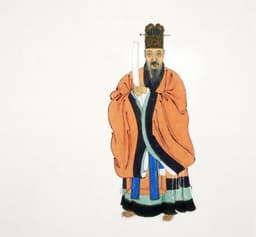
Xu Jie
Politician · Medieval
53.8Total

Yang Lian
Politician · Medieval
37.7Total
Basic Information
Born
1503
1572
Died
1583
1625
Era
Medieval
Medieval
Nationality
China
China
Occupation
Politician
Politician
Civilization
Eastern
Eastern
Score Comparison
Military (10%)
37.5
32.2
Political (20%)
65.0
25.0
Influence (20%)
53.3
48.6
Legacy (20%)
45.8
38.3
Leadership (15%)
78.0
34.6
Strategy (15%)
38.0
38.0
TOTAL
53.8
37.7
Xu Jie — Complete Timeline
1552 AD
Appointed Grand SecretaryPolitical Action◆ Major
Xu Jie was appointed to the Grand Secretariat. He initially maintained a low profile to survive the dominance of Yan Song, carefully building his own network of allies within the Ming court.
Ming DynastyAppointmentCourt Politics
Impact: national
1562 AD
Ousted Yan Song from PowerPolitical Action
Xu Jie orchestrated the downfall of Grand Secretary Yan Song. He manipulated court politics to turn the Jiajing Emperor against Yan Song, leading to Yan's dismissal and the execution of his son. Xu Jie then became the leading Grand Secretary.
Ming DynastyPolitical ManeuveringPower Shift
Impact: nationalconstructive
1567 AD
Implemented ReformsReform◆ Major
After the death of the Jiajing Emperor, Xu Jie used his influence to implement reforms. He reversed some of the previous regime's excesses, reduced government spending, and promoted capable officials, helping to stabilize the Ming state.
Ming DynastyReformStabilization
Impact: nationalconstructive
1568 AD
Retired from PoliticsPolitical Action
Xu Jie retired from his position as Grand Secretary. His retirement was prompted by conflicts with the new Longqing Emperor and rival officials. He returned to his hometown, where he lived until his death in 1583.
Ming DynastyRetirementCourt Politics
Impact: national
Yang Lian — Complete Timeline
1604 AD
Joined the Donglin MovementPolitical Action◆ Major
Yang Lian became a prominent member of the Donglin faction, aligning with scholars who criticized court corruption and eunuch influence. He gained a reputation for integrity and outspokenness in his memorials to the Ming court.
DonglinPolitical FactionMing Court
Impact: nationalconstructive
1624 AD
Memorialized Against Wei ZhongxianPolitical Action
Yang Lian submitted a memorial to the Tianqi Emperor listing 24 crimes of the eunuch Wei Zhongxian. The memorial accused Wei of usurping imperial authority, persecuting officials, and corrupting the government, but the emperor sided with Wei.
Wei ZhongxianMemorial24 Crimes
Impact: nationalconstructive
1625 AD
Tortured to Death by Wei ZhongxianPolitical Action
After Wei Zhongxian launched a purge of Donglin officials, Yang Lian was arrested and tortured in prison. He died from injuries sustained during interrogation, becoming a martyr for the Donglin cause and a symbol of resistance to eunuch tyranny.
MartyrdomDonglin PurgeWei Zhongxian
Impact: nationaltragic
Expert Analysis
Origins
Xu Jie (1503–1583) was born into a scholarly family in Songjiang, Jiangsu. He passed the imperial examinations at age 20, earning the jinshi degree in 1523. His early career was marked by cautious maneuvering in the treacherous Ming court. Yang Lian (1572–1625) hailed from a modest official family in Guangshan, Henan. He earned his jinshi in 1604, later becoming a county magistrate before joining the Donglin Academy. Both men entered politics through the civil service, but their paths diverged sharply.
Rise to Power
Xu Jie rose slowly, serving in various posts including as a compiler in the Hanlin Academy. His breakthrough came when he was appointed to the Grand Secretariat in 1540, but he remained in the shadow of Yan Song, the dominant Grand Secretary. Xu Jie survived by feigning loyalty and avoiding direct confrontation. His patience paid off in 1562 when he orchestrated Yan Song's downfall by subtly turning the Jiajing Emperor against him. Yang Lian rose through moral clarity: as a censor, he gained fame for exposing corruption. In 1624, he submitted a memorial detailing 24 crimes of the eunuch Wei Zhongxian, a turning point that galvanized the Donglin faction but also sealed his fate.
Leadership & Governance
Xu Jie's leadership was pragmatic and cautious. After becoming Senior Grand Secretary in 1562, he implemented reforms: he reduced government spending, canceled some of Yan Song's policies, and promoted capable officials. His governance score of 78.0 reflects his ability to navigate the Jiajing Emperor's erratic rule. Yang Lian, by contrast, was idealistic and confrontational. He led the Donglin faction's fight against eunuch influence, but lacked the political finesse to build alliances. His memorial was a direct attack, not a strategic maneuver. Yang Lian's leadership score of 34.6 indicates his failure to protect himself or his cause through effective strategy.
Triumph & Tragedy
Xu Jie's greatest triumph was dismantling Yan Song's network without bloodshed. He also successfully advised the Jiajing Emperor on state affairs, stabilizing the court. However, his retirement was marred by conflict with the Longqing Emperor and accusations of nepotism. Yang Lian's triumph was his moral stand: his memorial inspired later generations of reformers. Yet his tragedy was immediate and brutal—he was arrested, tortured, and died in prison, while Wei Zhongxian continued his purge. Xu Jie scored 65.0 in political skill; Yang Lian scored only 25.0, reflecting his inability to translate moral authority into political victory.
Character & Destiny
Xu Jie was patient, calculating, and adaptable. He survived decades in a dangerous court by knowing when to act and when to wait. His character led to a long life and influence. Yang Lian was principled, fearless, and uncompromising. He chose martyrdom over silence. Historians note that Xu Jie's caution allowed him to achieve real reforms, while Yang Lian's courage made him a symbol but cost him his life. Their fates were shaped by their choices: Xu Jie's strategic patience versus Yang Lian's righteous defiance.
Legacy
Xu Jie's legacy is as a reformer who cleaned up after Yan Song. His policies reduced corruption and eased the burden on commoners, but his name is less known than his rival's. His total score of 53.8 reflects moderate influence. Yang Lian's legacy is that of a martyr for the Donglin movement. His death mobilized opposition to eunuch power and contributed to the eventual downfall of Wei Zhongxian. He scored 38.3 in legacy, but his symbolic impact endures in Chinese history as a hero of integrity.
Conclusion
Xu Jie had greater political impact than Yang Lian. With a total score of 53.8 versus 37.7, Xu Jie's actual achievements in governance and reform outweighed Yang Lian's moral stand. While Yang Lian's sacrifice inspired future generations, Xu Jie's strategic maneuvering removed a corrupt regime and implemented lasting reforms. In the harsh calculus of historical influence, effective action trumps noble failure. Xu Jie's measured approach produced tangible results; Yang Lian's purity left a legacy but changed little in his time.
Rankings
🥇
Xu JieLeader
Mil: 37.5Pol: 65.0Inf: 53.3
53.8
🥈
Yang Lian
Mil: 32.2Pol: 25.0Inf: 48.6
37.7
+16.1 behind
How This Comparison Works
Algorithm
Each figure is scored on 6 dimensions (0—100 scale) based on structured historical data: Military (10%), Political (20%), Influence (20%), Legacy (20%), Leadership (15%), Strategy (15%). The weighted total produces the final ranking.
Data Sources
Scores are computed from structured sub-indicators in the database. Scale factors adjust for era (Ancient ×0.85, Modern ×1.0) and civilization size (Eastern ×1.05, Other ×0.80) to account for differences in population and military scale.
Maximum 3 Figures
Comparisons are limited to 2—3 figures to ensure readability and statistical meaningfulness.
Error Margins
±5 points per dimension — Sub-scores are derived from historical records with inherent uncertainty. Two figures within 5 points on a dimension should be considered roughly equivalent in that area.
Total Score Accuracy
±3 points overall — The weighted combination of 6 dimensions produces a total score with approximately ±3 points of uncertainty. Differences of less than 3 points are not statistically significant— the figures are effectively tied.
Known Limitations
- Historical records are incomplete and uneven across civilizations
- Figures from oral-tradition societies may be underrepresented
- Occupation labels can misclassify multi-role figures
- Scores measure capability and impact, not moral character
- Quantitative scoring is a comparison tool, not absolute truth
Capability Radar
Military (10%) — Battles & Warfare
Battles
38
37
Win Rate
42
39
Expansion
43
45
Political (20%) — Governance & Reform
Reform
65
20
Diplomacy
80
10
Economy
60
10
Influence (20%) — Cultural & Global Reach
Cultural
40
20
Global
20
10
Legacy (20%) — Historical Impact
Historical
55
25
Longevity
30
15
Leadership (15%) — Power & Stability
Tenure
75
15
Stability
70
5
Strategy (15%) — Tactics & Innovation
Strategy
49
50
Tactics
50
49
Reform
52
52
Similar Comparisons
Comments & Discussion
No comments yet. Be the first to share your thoughts!