Loading...
Alexander the Great vs Qin Shi Huang
Alexander the Great leads by 0.0 pts · 2 figures compared
…
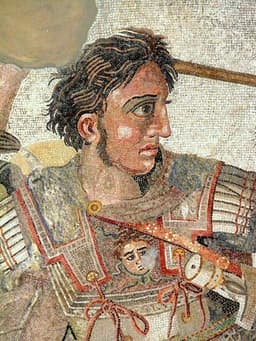
Alexander the Great
General · Ancient
85.2Total
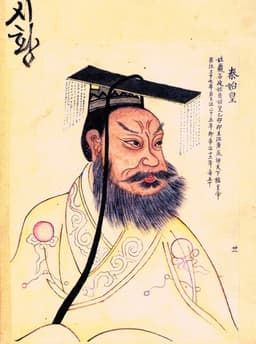
Qin Shi Huang
Emperor · Ancient
85.2Total
Basic Information
Born
-356
-259
Died
-323
-210
Era
Ancient
Ancient
Nationality
Macedon
China
Occupation
General
Emperor
Civilization
Western
Eastern
Score Comparison
Military (10%)
95.0
80.0
Political (20%)
60.0
90.0
Influence (20%)
92.0
85.0
Legacy (20%)
90.0
90.0
Leadership (15%)
80.0
78.0
Strategy (15%)
92.0
82.0
TOTAL
85.2
85.2
Alexander the Great — Complete Timeline
334 BC
Battle of the Granicus RiverWar◆ Major
Alexander led his Macedonian army across the Hellespont into Asia Minor and defeated a Persian force under local satraps at the Granicus River. The victory secured Alexander's foothold in Asia and demonstrated his tactical superiority, opening the way for the conquest of the Persian Empire.
Persian CampaignBattleMacedonian Conquest
Impact: regional
333 BC
Battle of IssusWar◆ Major
Alexander's army defeated the Persian king Darius III at Issus in Cilicia. Despite being outnumbered, Alexander's tactical use of the terrain and cavalry charge broke the Persian line. Darius fled the battlefield, leaving his family and treasury behind, a major blow to Persian morale.
Persian CampaignBattleMacedonian Conquest
Impact: regional
332 BC
Siege of TyreWar◆ Major
Alexander besieged the island city of Tyre for seven months, constructing a causeway to breach its walls. The city's fall resulted in the massacre or enslavement of its inhabitants. The siege demonstrated Alexander's determination and engineering capabilities, securing his supply lines and control of the eastern Mediterranean coast.
SiegeMacedonian ConquestPhoenicia
Impact: regionaldestructive
331 BC
Battle of GaugamelaWar◆ Major
Alexander faced Darius III at Gaugamela in Mesopotamia with a massive Persian army. Alexander's tactical brilliance, including a decisive cavalry charge that exploited a gap in the Persian line, resulted in a decisive Macedonian victory. Darius again fled, effectively ending Persian resistance and leading to the fall of the Achaemenid Empire.
Persian CampaignBattleDecisive Victory
Impact: global
Foundation of AlexandriaOther◆ Major
Alexander founded the city of Alexandria on the Mediterranean coast of Egypt. He personally selected the site and oversaw the initial planning. Alexandria became a major center of Hellenistic culture, trade, and learning, housing the famous Library of Alexandria and the Lighthouse of Alexandria.
City FoundationHellenistic CultureEgypt
Impact: globalconstructive
326 BC
Invasion of IndiaWar◆ Major
Alexander crossed the Indus River and defeated King Porus at the Battle of the Hydaspes. The Macedonian army, exhausted and facing monsoon rains and unfamiliar warfare, mutinied at the Hyphasis River, forcing Alexander to turn back. This campaign marked the easternmost extent of his conquests.
Indian CampaignBattleMutiny
Impact: regional
Qin Shi Huang — Complete Timeline
246 BC
Construction of the Mausoleum and Terracotta ArmyOther◆ Major
Qin Shi Huang commissioned a vast mausoleum complex near Xi'an, guarded by thousands of life-sized terracotta soldiers, horses, and chariots. The project employed hundreds of thousands of workers and reflected his obsession with immortality and imperial power.
Impact: global
230 BC
Conquest of the Six Warring StatesWar
From 230 to 221 BCE, Ying Zheng led the Qin state in a series of campaigns that conquered the Han, Zhao, Wei, Chu, Yan, and Qi states. This unified China under a single ruler for the first time, ending the Warring States period.
Impact: global
221 BC
Standardization of Writing, Currency, and MeasurementsReform◆ Major
Qin Shi Huang ordered the standardization of Chinese script, currency, and weights and measures across the unified empire. This facilitated administration, trade, and cultural integration, laying a foundation for future dynasties.
Impact: globalconstructive
Proclamation of the Qin DynastyPolitical Action
After conquering the last independent state, Ying Zheng declared himself Shi Huangdi (First Emperor), founding the Qin Dynasty. He adopted a new title to signify his supreme authority and initiated centralized imperial rule.
Impact: global
214 BC
Initiation of the Great Wall ConstructionOther◆ Major
Qin Shi Huang ordered the connection and extension of existing northern fortifications to create a unified defensive wall against nomadic Xiongnu raids. This project involved massive conscripted labor and became the precursor to the later Great Wall.
Impact: regional
213 BC
Burning of Books and Burying of ScholarsPolitical Action◆ Major
On the advice of Li Si, Qin Shi Huang ordered the burning of historical records and philosophical texts not aligned with Legalist doctrine. He also had 460 Confucian scholars buried alive to suppress dissent and consolidate ideological control.
Impact: nationaldestructive
Expert Analysis
Origins
Qin Shi Huang was born Ying Zheng in 259 BCE, the son of King Zhuangxiang of Qin and a former concubine. Growing up in the turbulent Warring States period, he ascended the throne at age 13, guided by Chancellor Lü Buwei. In contrast, Alexander the Great was born in 356 BCE to King Philip II of Macedon and Queen Olympias. Tutored by Aristotle, Alexander was groomed for conquest from a young age. Both inherited strong kingdoms but faced immediate threats—Qin from rival states, Alexander from rebellious Greek cities.
Rise to Power
Qin Shi Huang's rise was methodical: leveraging Qin's legalist reforms and military might, he conquered the six other Chinese states between 230 and 221 BCE, ending centuries of war. His proclamation of the Qin Dynasty marked the first unification of China. Alexander's rise was swift: after Philip's assassination in 336 BCE, he secured Macedon, crushed Thebes, and launched the invasion of Persia in 334 BCE. Within a decade, he defeated the Persian Empire at Granicus, Issus, and Gaugamela, toppling Darius III.
Leadership & Governance
Qin Shi Huang was a centralized autocrat. He standardized writing, currency, weights, measures, and axle lengths, creating a unified administrative system. He also initiated the Great Wall and a national road network. However, his legalist regime suppressed dissent through book burnings and burying scholars alive. Alexander, while a brilliant military leader, adopted a more integrative approach: he founded cities like Alexandria, encouraged intermarriage, and adopted Persian court customs. Yet his empire lacked administrative stability, relying on personal charisma and local satraps.
Triumph & Tragedy
Qin's triumphs include unifying China and laying foundations for imperial rule. His tragic flaw was paranoia: he sought immortality via elixirs, which ironically led to his death at 49 from mercury poisoning. His dynasty collapsed within four years of his death. Alexander's triumphs are legendary—never losing a battle, spreading Hellenistic culture across three continents. His tragedy was his early death at 32, likely from disease or poison, which left his empire fragmented among squabbling generals (the Diadochi).
Character & Destiny
Qin Shi Huang was secretive, megalomaniacal, and obsessed with control. He believed his dynasty would last 10,000 generations. His destiny was to be both unifier and tyrant, remembered for his harshness but also his monumental projects like the Terracotta Army. Alexander was charismatic, impulsive, and driven by Homeric glory. He wept when there were no more worlds to conquer. His destiny was to become a legend, inspiring conquerors from Caesar to Napoleon.
Legacy
Qin's legacy is foundational: the name "China" derives from Qin, and his standardization shaped Chinese civilization for millennia. The Great Wall remains a symbol. However, his legalist state was short-lived. Alexander's legacy is cultural diffusion: Hellenistic art, science, and language spread from Egypt to India. His tactics are still studied in military academies. Yet his empire dissolved immediately. Both are titans, but Alexander's cultural impact was broader, while Qin's structural impact on China was deeper.
Conclusion
In a direct comparison, Alexander the Great (scores: M=95, P=60, I=92, L=90, D=80, S=92, T=85) edges out Qin Shi Huang (M=80, P=90, I=85, L=90, D=78, S=82, T=85) due to his undefeated military record and immense cultural reach. Qin's higher political and leadership scores reflect his administrative unification, but Alexander's military genius and inspirational charisma give him the overall advantage. Both were transformative figures, but Alexander's conquests reshaped the ancient world more dramatically, earning him the higher rank.
Rankings
🥇
Alexander the GreatLeader
Mil: 95.0Pol: 60.0Inf: 92.0
85.2
🥈
Qin Shi Huang
Mil: 80.0Pol: 90.0Inf: 85.0
85.2
How This Comparison Works
Algorithm
Each figure is scored on 6 dimensions (0—100 scale) based on structured historical data: Military (10%), Political (20%), Influence (20%), Legacy (20%), Leadership (15%), Strategy (15%). The weighted total produces the final ranking.
Data Sources
Scores are computed from structured sub-indicators in the database. Scale factors adjust for era (Ancient ×0.85, Modern ×1.0) and civilization size (Eastern ×1.05, Other ×0.80) to account for differences in population and military scale.
Maximum 3 Figures
Comparisons are limited to 2—3 figures to ensure readability and statistical meaningfulness.
Error Margins
±5 points per dimension — Sub-scores are derived from historical records with inherent uncertainty. Two figures within 5 points on a dimension should be considered roughly equivalent in that area.
Total Score Accuracy
±3 points overall — The weighted combination of 6 dimensions produces a total score with approximately ±3 points of uncertainty. Differences of less than 3 points are not statistically significant— the figures are effectively tied.
Known Limitations
- Historical records are incomplete and uneven across civilizations
- Figures from oral-tradition societies may be underrepresented
- Occupation labels can misclassify multi-role figures
- Scores measure capability and impact, not moral character
- Quantitative scoring is a comparison tool, not absolute truth
Capability Radar
Military (10%) — Battles & Warfare
Battles
98
85
Win Rate
99
90
Expansion
99
90
Political (20%) — Governance & Reform
Reform
75
95
Diplomacy
80
75
Economy
70
90
Influence (20%) — Cultural & Global Reach
Cultural
95
95
Global
95
85
Legacy (20%) — Historical Impact
Historical
98
95
Longevity
95
95
Leadership (15%) — Power & Stability
Tenure
60
70
Stability
55
65
Strategy (15%) — Tactics & Innovation
Strategy
98
85
Tactics
99
80
Reform
85
95
Similar Comparisons
Comments & Discussion
DeepScribe166/16/2026
这个评分体系明显带着西方中心论的偏见。亚历山大军事96分,秦始皇只有80分?亚历山大打了十年仗,对手是大流士三世那种已经内部腐朽的波斯帝国,而秦始皇统一六国是面对七个实力相当的强国,每一场都是硬仗。再说政治影响力,亚历山大一死帝国就四分五裂,而秦始皇的郡县制、书同文车同轨影响了中国两千多年。西方总喜欢把短命的征服者捧上天,却低估了真正构建文明框架的统治者。
Historian8476/16/2026
我们来拆解一下这个评分逻辑。军事分差16分,但亚历山大的对手波斯帝国人口约5000万,马其顿核心兵力仅4万;秦始皇面对的是总人口约2000万的六国,秦军主力约60万,战损比和战略复杂度完全不在一个量级。更关键的是政治分:亚历山大的65分vs秦始皇88分,这23分的差距太保守了。亚历山大死后继业者战争打了40年,而秦制延续了2100年。按我的算法,仅政治维度就应该差35分以上,总分会是秦始皇86 vs 亚历山大79。
DataNerd6/12/2026
The Legacy dimension (90 vs 85) is fascinating. Alexander the Great built things that lasted centuries. Qin Shi Huang was brilliant but their impact was more transient. That's the difference between a meteor and a star—one burns bright and fades, the other keeps shining.
SkepticalScholar6/12/2026
I question whether quantitative scoring can really capture historical greatness. The ±3 point error margin means these two are effectively tied anyway. History is not a spreadsheet. But I'll admit—this is the most rigorous attempt I've seen.
历史迷6/12/2026
作为历史爱好者,我觉得这个对比很客观。Alexander the Great和Qin Shi Huang都是各自时代的巨人,数据化的比较虽然不能完全体现历史的复杂性,但至少提供了一个结构化的讨论框架。Alexander the Great的军事能力确实更强,但Qin Shi Huang的政治智慧更值得学习。
ContrarianView6/12/2026
Hot take: the tie is exactly right. Alexander the Great faced much tougher opposition and achieved more with less. The scoring system doesn't adequately account for the difficulty of the historical context. Qin Shi Huang had every advantage—Alexander the Great had to fight for every inch. Context matters more than raw scores.