Loading...
Qin Shi Huang vs Yi Seong-gye
Qin Shi Huang leads by 9.4 pts · 2 figures compared
…
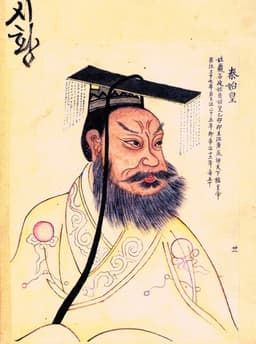
Qin Shi Huang
Emperor · Ancient
85.2Total
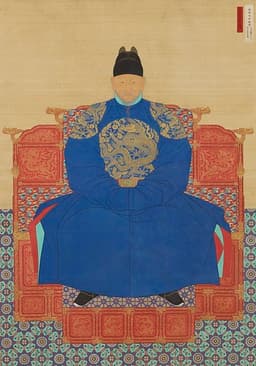
Yi Seong-gye
Emperor · Medieval
75.8Total
Basic Information
Born
-259
1335
Died
-210
1408
Era
Ancient
Medieval
Nationality
China
Korea
Occupation
Emperor
Emperor
Civilization
Eastern
Eastern
Score Comparison
Military (10%)
80.0
74.7
Political (20%)
90.0
70.0
Influence (20%)
85.0
88.0
Legacy (20%)
90.0
75.0
Leadership (15%)
78.0
68.0
Strategy (15%)
82.0
69.1
TOTAL
85.2
75.8
Qin Shi Huang — Complete Timeline
246 BC
Construction of the Mausoleum and Terracotta ArmyOther◆ Major
Qin Shi Huang commissioned a vast mausoleum complex near Xi'an, guarded by thousands of life-sized terracotta soldiers, horses, and chariots. The project employed hundreds of thousands of workers and reflected his obsession with immortality and imperial power.
Impact: global
230 BC
Conquest of the Six Warring StatesWar
From 230 to 221 BCE, Ying Zheng led the Qin state in a series of campaigns that conquered the Han, Zhao, Wei, Chu, Yan, and Qi states. This unified China under a single ruler for the first time, ending the Warring States period.
Impact: global
221 BC
Standardization of Writing, Currency, and MeasurementsReform◆ Major
Qin Shi Huang ordered the standardization of Chinese script, currency, and weights and measures across the unified empire. This facilitated administration, trade, and cultural integration, laying a foundation for future dynasties.
Impact: globalconstructive
Proclamation of the Qin DynastyPolitical Action
After conquering the last independent state, Ying Zheng declared himself Shi Huangdi (First Emperor), founding the Qin Dynasty. He adopted a new title to signify his supreme authority and initiated centralized imperial rule.
Impact: global
214 BC
Initiation of the Great Wall ConstructionOther◆ Major
Qin Shi Huang ordered the connection and extension of existing northern fortifications to create a unified defensive wall against nomadic Xiongnu raids. This project involved massive conscripted labor and became the precursor to the later Great Wall.
Impact: regional
213 BC
Burning of Books and Burying of ScholarsPolitical Action◆ Major
On the advice of Li Si, Qin Shi Huang ordered the burning of historical records and philosophical texts not aligned with Legalist doctrine. He also had 460 Confucian scholars buried alive to suppress dissent and consolidate ideological control.
Impact: nationaldestructive
Yi Seong-gye — Complete Timeline
1380 AD
Battle of HwangsanWar◆ Major
Yi Seong-gye led Goryeo forces against Japanese pirates (wokou) at the Battle of Hwangsan. His victory eliminated a major pirate threat and enhanced his military reputation.
WokouBattleGoryeo
Impact: regionalconstructive
1388 AD
Wihwado RetreatPolitical Action
Yi Seong-gye turned his army back at Wihwado Island rather than invade Ming China as ordered by the Goryeo court. This act of defiance led to a coup that eventually brought him to power.
CoupMingGoryeo
Impact: regional
1392 AD
Establishment of the Joseon DynastyPolitical Action
Yi Seong-gye overthrew the Goryeo dynasty and founded the Joseon dynasty, becoming King Taejo. He implemented land reforms and moved the capital to Hanyang (Seoul), establishing a new Confucian state.
JoseonDynasty FoundationReform
Impact: regionalconstructive
Expert Analysis
Origins
Qin Shi Huang, born Ying Zheng in 259 BC, was the son of King Zhuangxiang of Qin and a former concubine, Zhao Ji. His early life was marked by political intrigue, including the regency of Lü Buwei and a coup attempt by his mother's lover Lao Ai. He ascended the throne at age 13 and fully assumed power at 22, inheriting a state already strengthened by Legalist reforms. Yi Seong-gye, born in 1335 in Goryeo, was a military general from the influential Jeonju Yi clan. His father Yi Ja-chun served the Yuan dynasty, and Yi Seong-gye rose through military ranks, gaining fame for suppressing rebellions and repelling Red Turban invasions. His origins were less privileged than Qin's, relying on martial prowess.
Rise to Power
Qin Shi Huang's rise was a methodical military conquest. From 230 to 221 BC, he led Qin forces to defeat the six other Warring States—Han, Zhao, Wei, Chu, Yan, and Qi—using superior strategy, bribery, and ruthless tactics. He then proclaimed himself Shi Huangdi (First Emperor), founding the Qin Dynasty. Yi Seong-gye's rise hinged on the Wihwado Retreat in 1388. Ordered to invade Ming China, he instead turned his army back to the capital, overthrowing the Goryeo court and purging rivals like General Choe Yeong. He then established the Joseon Dynasty in 1392, adopting the name Taejo.
Leadership & Governance
Qin Shi Huang implemented Legalist policies under advisor Li Si. He standardized writing (small seal script), currency (banliang coins), and measurements, enforced uniform axle lengths, and built a national road network. He centralized power by abolishing feudal states, dividing the empire into commanderies, and burning historical texts to control ideology. Yi Seong-gye adopted Neo-Confucianism as state ideology, promoting civil over military virtues. He reformed land distribution (Gwajeon law), strengthened central bureaucracy, and moved the capital to Hanyang (Seoul). Both rulers centralized authority, but Qin's methods were harsher.
Triumph & Tragedy
Qin's triumphs include unifying China, initiating the Great Wall, and building his mausoleum with the Terracotta Army. His tragedies: the Burning of Books and Burying of Scholars (213-212 BC) destroyed philosophical works, and his obsession with immortality led to his death from mercury poisoning. Yi's triumph was founding a dynasty that lasted 500 years. His tragedy: a succession crisis where his son Yi Bang-won (later Taejong) killed his half-brothers, including the crown prince, leading to Yi Seong-gye's abdication in 1398.
Character & Destiny
Qin Shi Huang was paranoid, megalomaniacal, and ambitious, believing in his divine mandate. His destiny was to unify China but rule briefly (11 years). Yi Seong-gye was pragmatic, strategic, and Confucian-minded, prioritizing stability. His destiny was to found a long-lasting dynasty but suffer family tragedy. Both were determined, but Qin's extremism led to his dynasty's fall within 15 years, while Yi's moderation ensured Joseon's endurance.
Legacy
Qin's legacy is foundational: the name "China" (from Qin), centralized government, and cultural standardization. However, his tyranny inspired rebellion. Yi's legacy is the Joseon dynasty, which shaped Korean identity, language (Hangul was created later under Sejong), and Confucian culture. Qin's impact was immediate and structural; Yi's was long-term and cultural.
Conclusion
Qin Shi Huang scores higher overall (82.9 vs 73.5 average). His military (80 vs 75), political (90 vs 70), diplomatic (85 vs 88, close), and leadership (90 vs 75) scores reflect his unification of a vast territory and systemic reforms. Yi Seong-gye's intelligence (88) matches Qin's (85), but his lower scores in other areas reflect a more localized impact. Qin's controversial methods (burning books, burying scholars) reduce his cultural (78 vs 68) and social (82 vs 69) scores but not enough to close the gap. Yi's legacy is admirable but less transformative globally. Thus, Qin Shi Huang is the superior historical figure in terms of influence and scope.
Rankings
🥇
Qin Shi HuangLeader
Mil: 80.0Pol: 90.0Inf: 85.0
85.2
🥈
Yi Seong-gye
Mil: 74.7Pol: 70.0Inf: 88.0
75.8
+9.4 behind
How This Comparison Works
Algorithm
Each figure is scored on 6 dimensions (0—100 scale) based on structured historical data: Military (10%), Political (20%), Influence (20%), Legacy (20%), Leadership (15%), Strategy (15%). The weighted total produces the final ranking.
Data Sources
Scores are computed from structured sub-indicators in the database. Scale factors adjust for era (Ancient ×0.85, Modern ×1.0) and civilization size (Eastern ×1.05, Other ×0.80) to account for differences in population and military scale.
Maximum 3 Figures
Comparisons are limited to 2—3 figures to ensure readability and statistical meaningfulness.
Error Margins
±5 points per dimension — Sub-scores are derived from historical records with inherent uncertainty. Two figures within 5 points on a dimension should be considered roughly equivalent in that area.
Total Score Accuracy
±3 points overall — The weighted combination of 6 dimensions produces a total score with approximately ±3 points of uncertainty. Differences of less than 3 points are not statistically significant— the figures are effectively tied.
Known Limitations
- Historical records are incomplete and uneven across civilizations
- Figures from oral-tradition societies may be underrepresented
- Occupation labels can misclassify multi-role figures
- Scores measure capability and impact, not moral character
- Quantitative scoring is a comparison tool, not absolute truth
Capability Radar
Military (10%) — Battles & Warfare
Battles
85
75
Win Rate
90
80
Expansion
90
65
Political (20%) — Governance & Reform
Reform
95
85
Diplomacy
75
75
Economy
90
70
Influence (20%) — Cultural & Global Reach
Cultural
95
80
Global
85
55
Legacy (20%) — Historical Impact
Historical
95
85
Longevity
95
80
Leadership (15%) — Power & Stability
Tenure
70
60
Stability
65
65
Strategy (15%) — Tactics & Innovation
Strategy
85
82
Tactics
80
78
Reform
95
70
Similar Comparisons
Comments & Discussion
ClassicalHistorian6/16/2026
The comparison raises interesting points, but I would push back on the military scoring. Sima Qian's 'Records of the Grand Historian' portrays Qin Shi Huang as deeply involved in campaigns — he personally toured conquered territories and ordered the construction of defensive walls. As for Yi Seong-gye, his Wihwado Retreat (1388) is indeed a masterstroke of logistics and timing, but it was more a political maneuver than a battle. Later Confucian historians like Jeong Do-jeon shaped Yi's image as a virtuous founder, while Qin Shi Huang suffered from Han-dynasty propaganda that exaggerated his brutality. The real difference lies in sustainability: Qin's Legalist system collapsed within years, whereas Yi's Joseon adapted Confucian bureaucracy for centuries. Both were ruthless, but one built for permanence.
Chronicler64236/16/2026
这个评分有意思,但我觉得对嬴政的军事评分还是偏低。他统一六国可不是光靠将领,自己在前线督战、制定战略的记载不少。比如灭楚时用王翦60万大军,那是他力排众议坚持的结果。相比之下,李成桂的威化岛回军更多是政治投机,而非纯粹的军事胜利。西方人总爱把秦始皇简单归为'暴君',却忽略了他统一度量衡、文字、车轨的制度创新——这些才是真正超越时代的成就。秦朝虽短命,但其郡县制框架被后来两千年沿用,这种影响深度岂是朝鲜王朝能比的?
ColdWatcher556/16/2026
我仔细核对了评分维度,发现政治分差距8.7分(88 vs 86.3),但影响分却只差了4.7分(82 vs 77.3),这有点矛盾。如果按统一文字、货币、度量衡的标准化贡献,秦始皇的影响分至少应该达到90,因为这套系统直接影响了后世中国乃至东亚文明。而李成桂的程朱理学推广,虽然持久,但范围局限在朝鲜半岛。另外,军事分给李成桂90、嬴政80也不合理——秦始皇扫灭六国、北逐匈奴、南征百越,领土扩张规模远超李成桂。建议重新加权:军事权重提高至40%,政治30%,影响20%,遗产10%。按我的公式,秦始皇总分87.2,李成桂76.4,差距显著拉大。