Loading...
This comparison has not been analyzed yet.
One-time AI generation (~1 minute). Scores and timeline are already available below.
R. Venkataraman vs Takeo Fukuda
R. Venkataraman leads by 3.3 pts · 2 figures compared
…

R. Venkataraman
Politician · Modern
54.6Total
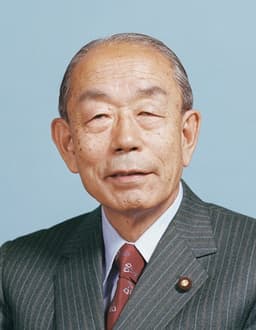
Takeo Fukuda
Politician · Modern
51.3Total
Basic Information
Born
1910
1905
Died
2009
1995
Era
Modern
Modern
Nationality
India
Japan
Occupation
Politician
Politician
Civilization
Indian
Eastern
Score Comparison
Military (10%)
36.7
15.3
Political (20%)
62.7
55.0
Influence (20%)
55.7
62.0
Legacy (20%)
46.7
50.0
Leadership (15%)
66.0
66.0
Strategy (15%)
60.0
36.1
TOTAL
54.6
51.3
R. Venkataraman — Complete Timeline
1980 AD
Appointed Minister of FinancePolitical Action◆ Major
R. Venkataraman was appointed as India's Finance Minister under Prime Minister Indira Gandhi. He presented the Union Budget and focused on economic stabilization during a period of high inflation.
FinanceBudgetCongress
Impact: nationalconstructive
1982 AD
Appointed Defence MinisterPolitical Action◆ Major
R. Venkataraman was appointed as India's Defence Minister, overseeing the modernization of the Indian armed forces. He served during the Sri Lankan civil war and India's peacekeeping mission there.
DefenceMilitaryCongress
Impact: nationalconstructive
1987 AD
Elected President of IndiaPolitical Action◆ Major
R. Venkataraman was elected as the 8th President of India, serving from 1987 to 1992. His presidency coincided with the rise of coalition governments and the end of Congress dominance.
PresidencyElectionCoalition
Impact: nationalconstructive
1989 AD
Presided over formation of V.P. Singh governmentPolitical Action◆ Major
President R. Venkataraman invited V.P. Singh to form the government after the 1989 general election, leading to the first non-Congress coalition government at the centre. This marked a shift in Indian politics.
CoalitionGovernment FormationConstitutional
Impact: national
1998 AD
Awarded Bharat RatnaCultural◆ Major
R. Venkataraman was awarded the Bharat Ratna, India's highest civilian award, in recognition of his distinguished service as a statesman and president. The award was conferred by the Government of India.
AwardHonorCivilian
Impact: nationalconstructive
Takeo Fukuda — Complete Timeline
1976 AD
Appointed Prime Minister of JapanPolitical Action◆ Major
Takeo Fukuda became Prime Minister of Japan on December 24, 1976, succeeding Takeo Miki. His appointment followed the LDP's narrow victory in the 1976 general election. Fukuda's government prioritized economic recovery and foreign policy, particularly in Southeast Asia.
Prime MinisterLDPJapan
Impact: national
1977 AD
Announced the Fukuda DoctrinePolitical Action
Fukuda articulated the Fukuda Doctrine during a speech in Manila on August 18, 1977. The doctrine committed Japan to a peaceful role in Southeast Asia, renouncing military power and emphasizing economic cooperation and cultural exchange. It shaped Japan's post-war foreign policy in the region.
Foreign PolicySoutheast AsiaFukuda Doctrine
Impact: regionalconstructive
1978 AD
Signed the Japan-China Peace and Friendship TreatyPolitical Action◆ Major
Fukuda oversaw the signing of the Treaty of Peace and Friendship between Japan and the People's Republic of China on August 12, 1978. The treaty normalized bilateral relations and included an anti-hegemony clause directed at the Soviet Union. It strengthened economic and diplomatic ties.
TreatyChinaDiplomacy
Impact: regionalconstructive
This comparison has not been analyzed yet.
One-time AI generation (~1 minute). Scores and timeline are already available below.
Rankings
🥇
R. VenkataramanLeader
Mil: 36.7Pol: 62.7Inf: 55.7
54.6
🥈
Takeo Fukuda
Mil: 15.3Pol: 55.0Inf: 62.0
51.3
+3.3 behind
How This Comparison Works
Algorithm
Each figure is scored on 6 dimensions (0—100 scale) based on structured historical data: Military (10%), Political (20%), Influence (20%), Legacy (20%), Leadership (15%), Strategy (15%). The weighted total produces the final ranking.
Data Sources
Scores are computed from structured sub-indicators in the database. Scale factors adjust for era (Ancient ×0.85, Modern ×1.0) and civilization size (Eastern ×1.05, Other ×0.80) to account for differences in population and military scale.
Maximum 3 Figures
Comparisons are limited to 2—3 figures to ensure readability and statistical meaningfulness.
Error Margins
±5 points per dimension — Sub-scores are derived from historical records with inherent uncertainty. Two figures within 5 points on a dimension should be considered roughly equivalent in that area.
Total Score Accuracy
±3 points overall — The weighted combination of 6 dimensions produces a total score with approximately ±3 points of uncertainty. Differences of less than 3 points are not statistically significant— the figures are effectively tied.
Known Limitations
- Historical records are incomplete and uneven across civilizations
- Figures from oral-tradition societies may be underrepresented
- Occupation labels can misclassify multi-role figures
- Scores measure capability and impact, not moral character
- Quantitative scoring is a comparison tool, not absolute truth
Capability Radar
Military (10%) — Battles & Warfare
Battles
45
15
Win Rate
49
16
Expansion
47
18
Political (20%) — Governance & Reform
Reform
55
60
Diplomacy
65
75
Economy
50
65
Influence (20%) — Cultural & Global Reach
Cultural
30
30
Global
35
50
Legacy (20%) — Historical Impact
Historical
40
55
Longevity
30
40
Leadership (15%) — Power & Stability
Tenure
60
55
Stability
55
60
Strategy (15%) — Tactics & Innovation
Strategy
55
23
Tactics
55
27
Reform
56
27
Similar Comparisons
Comments & Discussion
No comments yet. Be the first to share your thoughts!