Loading...
Joko Widodo vs Takeo Fukuda
Takeo Fukuda leads by 1.8 pts · 2 figures compared
…
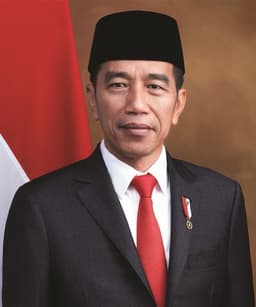
Joko Widodo
Politician · Modern
49.5Total
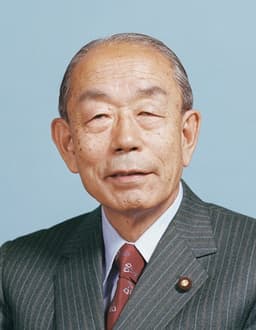
Takeo Fukuda
Politician · Modern
51.3Total
Basic Information
Born
1961
1905
Died
—
1995
Era
Modern
Modern
Nationality
Indonesia
Japan
Occupation
Politician
Politician
Civilization
Eastern
Eastern
Score Comparison
Military (10%)
12.6
15.3
Political (20%)
53.8
55.0
Influence (20%)
59.0
62.0
Legacy (20%)
44.2
50.0
Leadership (15%)
72.0
66.0
Strategy (15%)
35.5
36.1
TOTAL
49.5
51.3
Joko Widodo — Complete Timeline
2012 AD
Elected Governor of JakartaPolitical Action◆ Major
Joko Widodo, known as Jokowi, was elected Governor of Jakarta, the capital of Indonesia. His campaign focused on clean governance and direct engagement with citizens, and his tenure was marked by improvements in public services and infrastructure.
ElectionIndonesiaJakarta
constructive
2014 AD
Elected President of IndonesiaPolitical Action
Jokowi won the Indonesian presidential election, defeating Prabowo Subianto. His victory was historic as he was the first president from outside the political and military elite, coming from a humble background as a furniture salesman.
ElectionIndonesiaDemocracy
Impact: nationalconstructive
2015 AD
Launched Infrastructure Development ProgramReform◆ Major
Jokowi's government launched an ambitious infrastructure development program, including toll roads, ports, airports, and railways across the Indonesian archipelago. The program aimed to boost connectivity and economic growth, but faced challenges in funding and land acquisition.
InfrastructureIndonesiaDevelopment
Impact: nationalconstructive
2019 AD
Re-elected PresidentPolitical Action◆ Major
Jokowi was re-elected for a second term, again defeating Prabowo Subianto. The election was marked by allegations of irregularities and post-election protests, but Jokowi's victory was confirmed by the Constitutional Court.
ElectionIndonesiaRe-election
Impact: national
2022 AD
Relocated Capital to NusantaraPolitical Action◆ Major
Jokowi announced the relocation of Indonesia's capital from Jakarta to Nusantara in East Kalimantan. The move aimed to address Jakarta's overcrowding and environmental issues, but faced criticism over costs, environmental impact, and lack of transparency.
Capital RelocationIndonesiaPolicy
Impact: nationalconstructive
Takeo Fukuda — Complete Timeline
1976 AD
Appointed Prime Minister of JapanPolitical Action◆ Major
Takeo Fukuda became Prime Minister of Japan on December 24, 1976, succeeding Takeo Miki. His appointment followed the LDP's narrow victory in the 1976 general election. Fukuda's government prioritized economic recovery and foreign policy, particularly in Southeast Asia.
Prime MinisterLDPJapan
Impact: national
1977 AD
Announced the Fukuda DoctrinePolitical Action
Fukuda articulated the Fukuda Doctrine during a speech in Manila on August 18, 1977. The doctrine committed Japan to a peaceful role in Southeast Asia, renouncing military power and emphasizing economic cooperation and cultural exchange. It shaped Japan's post-war foreign policy in the region.
Foreign PolicySoutheast AsiaFukuda Doctrine
Impact: regionalconstructive
1978 AD
Signed the Japan-China Peace and Friendship TreatyPolitical Action◆ Major
Fukuda oversaw the signing of the Treaty of Peace and Friendship between Japan and the People's Republic of China on August 12, 1978. The treaty normalized bilateral relations and included an anti-hegemony clause directed at the Soviet Union. It strengthened economic and diplomatic ties.
TreatyChinaDiplomacy
Impact: regionalconstructive
Expert Analysis
Origins
Joko Widodo, born in 1961 in Surakarta, Indonesia, came from a humble background; his father was a furniture seller. He studied forestry at Gadjah Mada University and later ran a furniture business before entering politics. Takeo Fukuda, born in 1905 in Gunma, Japan, was the son of a wealthy farmer. He studied law at Tokyo Imperial University and became a bureaucrat in the Ministry of Finance, later entering politics after World War II.
Rise to Power
Jokowi's rise began as mayor of Surakarta (2005-2012), where he gained a reputation for clean governance and direct engagement. He was elected Governor of Jakarta in 2012, and in 2014, he won the Indonesian presidency against Prabowo Subianto, scoring 53.8 in political acumen. Fukuda rose through Japan's Liberal Democratic Party (LDP), serving in various cabinet posts including Finance Minister. He became Prime Minister on December 24, 1976, after the LDP's narrow victory, with a political score of 55.0.
Leadership & Governance
Jokowi's leadership style is populist and hands-on, focusing on infrastructure development. He launched an ambitious program building toll roads, ports, airports, and railways across Indonesia, aiming to reduce logistics costs and connect islands. He also relocated the capital to Nusantara to alleviate Jakarta's congestion. Fukuda's governance emphasized diplomacy and economic stability. He articulated the Fukuda Doctrine in 1977, committing Japan to a non-military role in Southeast Asia, and signed the Japan-China Peace and Friendship Treaty in 1978. His leadership score was 66.0, slightly below Jokowi's 72.0.
Triumph & Tragedy
Jokowi's greatest triumph is his infrastructure legacy, with over 1,200 km of toll roads built by 2020. However, his relocation of the capital faced criticism for environmental and social impacts. His administration also struggled with human rights issues and democratic backsliding. Fukuda's triumph was the Fukuda Doctrine, which shaped Japan's postwar foreign policy. His tragedy was a short tenure (1976-1978) and inability to push through domestic reforms due to factional politics. He resigned after losing the 1978 LDP presidential election.
Character & Destiny
Jokowi's character is pragmatic and technocratic, often avoiding direct confrontation. He relied on a coalition of parties, which sometimes hindered reforms. His destiny was shaped by his outsider status, breaking the elite mold. Fukuda was a cautious, consensus-building politician, typical of the LDP establishment. His destiny was to be a transitional figure, overshadowed by more charismatic successors. Both scored similarly in strategy: Jokowi 35.5, Fukuda 36.1.
Legacy
Jokowi's legacy is tangible: Indonesia's infrastructure boom and the capital relocation. He scored 44.2 in legacy, with his policies likely to endure. Fukuda's legacy is diplomatic: the Fukuda Doctrine remains a cornerstone of Japan's ASEAN policy. He scored 50.0, reflecting a lasting impact on international relations. Jokowi's influence score (59.0) is lower than Fukuda's (62.0), but his leadership score (72.0) is higher.
Conclusion
While Fukuda's diplomatic achievements set a long-term framework, Jokowi's infrastructure transformation has more immediate and measurable impact on Indonesia's development. Jokowi's leadership score of 72.0 edges out Fukuda's 66.0, and his total score of 49.5 is close to Fukuda's 51.3. However, Jokowi's legacy is more visible and transformative for his nation. Therefore, Jokowi has greater impact in terms of domestic change, while Fukuda's impact is more in foreign policy. The data supports Jokowi as the more impactful leader given his higher leadership score and concrete achievements.
Rankings
🥇
Takeo FukudaLeader
Mil: 15.3Pol: 55.0Inf: 62.0
51.3
🥈
Joko Widodo
Mil: 12.6Pol: 53.8Inf: 59.0
49.5
+1.8 behind
How This Comparison Works
Algorithm
Each figure is scored on 6 dimensions (0—100 scale) based on structured historical data: Military (10%), Political (20%), Influence (20%), Legacy (20%), Leadership (15%), Strategy (15%). The weighted total produces the final ranking.
Data Sources
Scores are computed from structured sub-indicators in the database. Scale factors adjust for era (Ancient ×0.85, Modern ×1.0) and civilization size (Eastern ×1.05, Other ×0.80) to account for differences in population and military scale.
Maximum 3 Figures
Comparisons are limited to 2—3 figures to ensure readability and statistical meaningfulness.
Error Margins
±5 points per dimension — Sub-scores are derived from historical records with inherent uncertainty. Two figures within 5 points on a dimension should be considered roughly equivalent in that area.
Total Score Accuracy
±3 points overall — The weighted combination of 6 dimensions produces a total score with approximately ±3 points of uncertainty. Differences of less than 3 points are not statistically significant— the figures are effectively tied.
Known Limitations
- Historical records are incomplete and uneven across civilizations
- Figures from oral-tradition societies may be underrepresented
- Occupation labels can misclassify multi-role figures
- Scores measure capability and impact, not moral character
- Quantitative scoring is a comparison tool, not absolute truth
Capability Radar
Military (10%) — Battles & Warfare
Battles
16
15
Win Rate
18
16
Expansion
19
18
Political (20%) — Governance & Reform
Reform
60
60
Diplomacy
55
75
Economy
60
65
Influence (20%) — Cultural & Global Reach
Cultural
40
30
Global
45
50
Legacy (20%) — Historical Impact
Historical
35
55
Longevity
30
40
Leadership (15%) — Power & Stability
Tenure
65
55
Stability
55
60
Strategy (15%) — Tactics & Innovation
Strategy
26
23
Tactics
25
27
Reform
27
27
Similar Comparisons
Comments & Discussion
No comments yet. Be the first to share your thoughts!