Loading...
This comparison has not been analyzed yet.
One-time AI generation (~1 minute). Scores and timeline are already available below.
Radovan Karadzic vs Umaru Musa YarAdua
Umaru Musa YarAdua leads by 3.0 pts · 2 figures compared
…
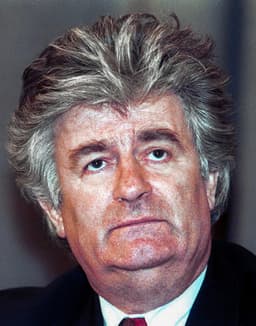
Radovan Karadzic
Politician · Modern
40.6Total

Umaru Musa YarAdua
Politician · Modern
43.6Total
Basic Information
Born
1945
1951
Died
—
—
Era
Modern
Modern
Nationality
Bosnia
Nigeria
Occupation
Politician
Politician
Civilization
Western
Other
Score Comparison
Military (10%)
14.9
46.1
Political (20%)
25.0
40.8
Influence (20%)
50.2
50.2
Legacy (20%)
38.3
38.3
Leadership (15%)
51.9
45.0
Strategy (15%)
54.8
40.3
TOTAL
40.6
43.6
Radovan Karadzic — Complete Timeline
1990 AD
Founding of the Serb Democratic Party (SDS)Political Action◆ Major
Karadžić co-founded the Serb Democratic Party (SDS) in Bosnia and Herzegovina in 1990. The party advocated for the unification of Bosnian Serb territories with Serbia and played a key role in the Bosnian War, promoting ethnic separation and conflict.
Political PartyNationalismBosnian War
Impact: regionaldestructive
1992 AD
Siege of SarajevoWar◆ Major
As leader of the Bosnian Serbs, Karad
SiegeWar CrimesSarajevo
Impact: regionaldestructive
1995 AD
Srebrenica GenocideWar◆ Major
Karadžić was found responsible for the Srebrenica genocide in July 1995, where Bosnian Serb forces killed over 8,000 Bosniak men and boys. The massacre was the worst atrocity in Europe since World War II and led to his indictment for genocide.
GenocideSrebrenicaWar Crimes
Impact: globaldestructive
2008 AD
Arrest and Extradition to The HaguePolitical Action◆ Major
Karadžić was arrested in Belgrade on July 21, 2008, after 13 years as a fugitive. He had been living under the alias Dragan Dabić, working as a New Age healer. He was extradited to the ICTY in The Hague to face trial for war crimes.
ArrestFugitiveICTY
Impact: global
2016 AD
Conviction for Genocide by ICTYPolitical Action◆ Major
Radovan Karad
War CrimesGenocideICTY
Impact: globaldestructive
Umaru Musa YarAdua — Complete Timeline
2007 AD
Elected President of NigeriaPolitical Action◆ Major
YarAdua was elected President of Nigeria in 2007 under the People's Democratic Party, succeeding Olusegun Obasanjo. His election was marred by allegations of fraud, but he promised reforms and anti-corruption measures.
NigeriaElectionPDP
Impact: national
2009 AD
Initiated Niger Delta Amnesty ProgramPolitical Action◆ Major
YarAdua launched a amnesty program for militants in the Niger Delta region in 2009. The program offered disarmament, rehabilitation, and cash payments to reduce oil production disruptions and violence.
NigeriaNiger DeltaPeace
Impact: nationalconstructive
2010 AD
Died in OfficePolitical Action◆ Major
YarAdua died in office in 2010 after a prolonged illness. His death led to a constitutional crisis over succession, with Vice President Goodluck Jonathan eventually assuming power after YarAdua's absence from the country.
NigeriaDeathSuccession Crisis
Impact: nationaltragic
This comparison has not been analyzed yet.
One-time AI generation (~1 minute). Scores and timeline are already available below.
Rankings
🥇
Umaru Musa YarAduaLeader
Mil: 46.1Pol: 40.8Inf: 50.2
43.6
🥈
Radovan Karadzic
Mil: 14.9Pol: 25.0Inf: 50.2
40.6
+3.0 behind
How This Comparison Works
Algorithm
Each figure is scored on 6 dimensions (0—100 scale) based on structured historical data: Military (10%), Political (20%), Influence (20%), Legacy (20%), Leadership (15%), Strategy (15%). The weighted total produces the final ranking.
Data Sources
Scores are computed from structured sub-indicators in the database. Scale factors adjust for era (Ancient ×0.85, Modern ×1.0) and civilization size (Eastern ×1.05, Other ×0.80) to account for differences in population and military scale.
Maximum 3 Figures
Comparisons are limited to 2—3 figures to ensure readability and statistical meaningfulness.
Error Margins
±5 points per dimension — Sub-scores are derived from historical records with inherent uncertainty. Two figures within 5 points on a dimension should be considered roughly equivalent in that area.
Total Score Accuracy
±3 points overall — The weighted combination of 6 dimensions produces a total score with approximately ±3 points of uncertainty. Differences of less than 3 points are not statistically significant— the figures are effectively tied.
Known Limitations
- Historical records are incomplete and uneven across civilizations
- Figures from oral-tradition societies may be underrepresented
- Occupation labels can misclassify multi-role figures
- Scores measure capability and impact, not moral character
- Quantitative scoring is a comparison tool, not absolute truth
Capability Radar
Military (10%) — Battles & Warfare
Battles
20
20
Win Rate
15
27
Expansion
15
28
Political (20%) — Governance & Reform
Reform
10
30
Diplomacy
20
40
Economy
10
25
Influence (20%) — Cultural & Global Reach
Cultural
15
15
Global
25
15
Legacy (20%) — Historical Impact
Historical
30
20
Longevity
10
10
Leadership (15%) — Power & Stability
Tenure
40
15
Stability
5
20
Strategy (15%) — Tactics & Innovation
Strategy
20
32
Tactics
25
33
Reform
10
38
Similar Comparisons
Comments & Discussion
No comments yet. Be the first to share your thoughts!