Loading...
Shehu Shagari vs William Gladstone
William Gladstone leads by 10.1 pts · 2 figures compared
…

Shehu Shagari
Politician · Modern
52.1Total
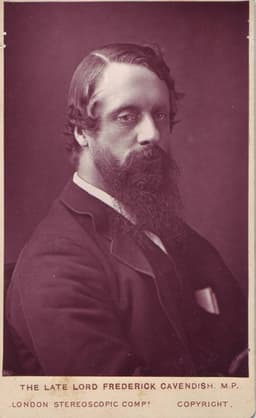
William Gladstone
Politician · Modern
62.2Total
Basic Information
Born
1925
1809
Died
—
1898
Era
Modern
Modern
Nationality
Nigeria
United Kingdom
Occupation
Politician
Politician
Civilization
Other
Western
Score Comparison
Military (10%)
44.2
10.0
Political (20%)
68.0
88.0
Influence (20%)
52.5
65.0
Legacy (20%)
41.7
65.0
Leadership (15%)
65.0
78.0
Strategy (15%)
41.9
38.3
TOTAL
52.1
62.2
Shehu Shagari — Complete Timeline
1979 AD
Elected first Executive President of NigeriaPolitical Action
Shehu Shagari won the 1979 presidential election under the National Party of Nigeria, becoming the first executive president of Nigeria's Second Republic. His victory marked the end of 13 years of military rule and a return to civilian democracy.
ElectionSecond RepublicDemocracy
Impact: nationalconstructive
1983 AD
Re-elected in 1983 amid allegations of fraudPolitical Action◆ Major
Shagari won re-election in August 1983, but the election was marred by widespread allegations of rigging and violence. The opposition rejected the results, leading to political instability and a breakdown of public trust.
ElectionFraudControversy
Impact: nationaldestructive
Overthrown in 1983 military coupPolitical Action◆ Major
Shagari was overthrown in a military coup led by General Muhammadu Buhari on December 31, 1983. The coup was justified by allegations of corruption and economic mismanagement, ending the Second Republic and returning Nigeria to military rule.
CoupOverthrowBuhari
Impact: nationaldestructive
William Gladstone — Complete Timeline
1853 AD
First Budget as ChancellorReform
Gladstone, as Chancellor of the Exchequer, delivered his first budget in 1853, which reduced tariffs and extended income tax. He aimed for free trade and fiscal responsibility, setting the stage for his reputation as a financial reformer.
BudgetFree TradeTax Reform
Impact: nationalconstructive
1868 AD
First Term as Prime MinisterPolitical Action
Gladstone became Prime Minister for the first time on December 3, 1868, after winning the general election. His first ministry (1868-1874) passed major reforms including the disestablishment of the Irish Church, the Education Act 1870, and the Ballot Act 1872.
Prime MinisterLiberal PartyReform
Impact: nationalconstructive
1869 AD
Irish Church DisestablishmentReform◆ Major
Gladstone's government passed the Irish Church Act 1869, which disestablished the Church of Ireland as the state church in Ireland. This removed its official status and ended mandatory tithes for Catholics, addressing a major grievance in Irish politics.
IrelandChurchReligious Reform
Impact: regionalprogressive
1870 AD
Education Act 1870Reform◆ Major
Gladstone's government passed the Elementary Education Act 1870, which established school boards and provided for elementary education in England and Wales. It created a national system of education, though attendance was not compulsory until later.
EducationReformSocial Policy
Impact: nationalprogressive
1879 AD
Midlothian CampaignPolitical Action◆ Major
Gladstone conducted the Midlothian Campaign in 1879-1880, a series of speeches in Scotland attacking Disraeli's foreign policy. This was the first modern political campaign, using mass rallies and media coverage. It helped the Liberals win the 1880 general election.
Election CampaignPolitical OratoryLiberal Party
Impact: national
1886 AD
Home Rule Bill for IrelandPolitical Action◆ Major
Gladstone introduced the First Home Rule Bill in 1886, proposing a devolved parliament for Ireland. The bill split the Liberal Party and was defeated in the Commons. This issue dominated his later career and led to the formation of the Liberal Unionist Party.
IrelandHome RuleLiberal Party Split
Impact: national
Expert Analysis
Origins
Shehu Shagari was born on February 25, 1925, in Shagari village, Sokoto Province, Nigeria, into a Fulani family. He attended local Islamic schools and later Sokoto Provincial College, training as a teacher. He entered politics in the 1950s as a member of the Northern People's Congress. William Ewart Gladstone was born on December 29, 1809, in Liverpool, England, to a wealthy Scottish merchant family. He studied at Eton and Christ Church, Oxford, graduating with a double first in classics and mathematics. He entered Parliament in 1832 as a Tory, later moving to the Liberals.
Rise to Power
Shagari rose through Nigerian politics as a loyal party man. He served as a federal minister in the First Republic, including posts in economic development and finance. After the 1966 coup and civil war, he was a delegate to the 1977 Constituent Assembly. In 1979, he won the presidential election for the National Party of Nigeria (NPN) with 33.8% of the vote, becoming the first executive president of Nigeria's Second Republic. Gladstone's rise was more dramatic: he served as President of the Board of Trade under Peel, then as Chancellor of the Exchequer under Aberdeen and Palmerston. His budgets of the 1850s and 1860s established him as a fiscal reformer. He became Liberal Party leader in 1867 and Prime Minister in 1868 after a landslide victory. His Midlothian Campaign of 1879-1880 revolutionized political campaigning and returned him to power.
Leadership & Governance
Shagari's leadership style was consultative and federalist. He focused on infrastructure, agriculture, and the Green Revolution program, increasing food production. He pursued a policy of 'Ethnic Balancing' via the Federal Character Commission. However, his government was hampered by falling oil prices and widespread corruption. Gladstone's governance was characterized by moral fervor and legislative activism. His first ministry (1868-1874) passed the Irish Church Act 1869 (disestablishing the Church of Ireland), the Land Act 1870, and the Education Act 1870 (establishing elementary schools). He also introduced secret ballots in 1872 and judicial reforms. His later ministries attempted Irish Home Rule, splitting his party. Shagari's political score of 68.0 reflects his ability to manage a fragile democracy, but his leadership score of 65.0 is lower than Gladstone's 78.0 due to the coup that ended his tenure.
Triumph & Tragedy
Shagari's triumph was overseeing Nigeria's transition to civilian rule and being elected president. His Green Revolution improved agricultural output. His tragedy was the 1983 election, marred by allegations of fraud and violence, and the subsequent military coup on December 31, 1983, led by General Muhammadu Buhari. He was imprisoned and later released, but his reputation suffered from corruption charges. Gladstone's triumphs include the disestablishment of the Irish Church, the Education Act, and his moral leadership. His tragedy was the failure of his Home Rule Bills; the first in 1886 split the Liberal Party, and the second in 1893 passed the Commons but was rejected by the Lords. He resigned in 1894, his great ambition unfulfilled. Gladstone's military score of 10.0 reflects his anti-imperialist stance, while Shagari's 44.2 is higher due to Nigeria's military context, but neither was a military strategist.
Character & Destiny
Shagari was known as a calm, conciliatory figure, sometimes seen as weak. His reluctance to confront corruption and electoral fraud contributed to his downfall. He believed in consensus but was unable to control the excesses of his party. Gladstone was driven by a strong moral compass and a sense of divine mission. He was a formidable orator with a volcanic temper. His obsessive pursuit of Irish Home Rule defined his later career and divided the Liberals. His character—principled yet stubborn—led to both legislative achievements and political fragmentation. Historical assessments note Gladstone's 'grandeur' but also his 'impractical idealism'. Shagari is often seen as a victim of circumstances beyond his control.
Legacy
Shagari's legacy is mixed: he established the precedent of a civilian presidency in Nigeria, but his administration is remembered for corruption and the collapse of the Second Republic. His Green Revolution had limited long-term impact. He remains a respected figure in Northern Nigeria but is overshadowed by military rulers. Gladstone's legacy is profound: he reshaped British liberalism, championed free trade, and expanded democracy. The Education Act laid the foundation for state schooling. His Home Rule efforts, though unsuccessful, paved the way for eventual Irish independence. He is revered as one of Britain's greatest prime ministers, with a total score of 62.2 compared to Shagari's 52.1.
Conclusion
William Gladstone had a greater impact on his nation and the world. His political score of 88.0 far exceeds Shagari's 68.0, reflecting his mastery of parliamentary politics and reform. Gladstone's influence score of 65.0 and legacy score of 65.0 both surpass Shagari's 52.5 and 41.7. While Shagari led Nigeria during a critical democratic experiment, his tenure was short and ended in failure. Gladstone's four terms and enduring legislative achievements made him a titan of 19th-century politics. The data clearly supports Gladstone as the more consequential figure.
Rankings
🥇
William GladstoneLeader
Mil: 10.0Pol: 88.0Inf: 65.0
62.2
🥈
Shehu Shagari
Mil: 44.2Pol: 68.0Inf: 52.5
52.1
+10.1 behind
How This Comparison Works
Algorithm
Each figure is scored on 6 dimensions (0—100 scale) based on structured historical data: Military (10%), Political (20%), Influence (20%), Legacy (20%), Leadership (15%), Strategy (15%). The weighted total produces the final ranking.
Data Sources
Scores are computed from structured sub-indicators in the database. Scale factors adjust for era (Ancient ×0.85, Modern ×1.0) and civilization size (Eastern ×1.05, Other ×0.80) to account for differences in population and military scale.
Maximum 3 Figures
Comparisons are limited to 2—3 figures to ensure readability and statistical meaningfulness.
Error Margins
±5 points per dimension — Sub-scores are derived from historical records with inherent uncertainty. Two figures within 5 points on a dimension should be considered roughly equivalent in that area.
Total Score Accuracy
±3 points overall — The weighted combination of 6 dimensions produces a total score with approximately ±3 points of uncertainty. Differences of less than 3 points are not statistically significant— the figures are effectively tied.
Known Limitations
- Historical records are incomplete and uneven across civilizations
- Figures from oral-tradition societies may be underrepresented
- Occupation labels can misclassify multi-role figures
- Scores measure capability and impact, not moral character
- Quantitative scoring is a comparison tool, not absolute truth
Capability Radar
Military (10%) — Battles & Warfare
Battles
23
0
Win Rate
27
0
Expansion
25
0
Political (20%) — Governance & Reform
Reform
35
90
Diplomacy
45
85
Economy
30
85
Influence (20%) — Cultural & Global Reach
Cultural
25
70
Global
20
75
Legacy (20%) — Historical Impact
Historical
30
80
Longevity
20
75
Leadership (15%) — Power & Stability
Tenure
40
85
Stability
20
75
Strategy (15%) — Tactics & Innovation
Strategy
32
0
Tactics
35
0
Reform
36
10
Similar Comparisons
Comments & Discussion
No comments yet. Be the first to share your thoughts!