Loading...
Ramsay MacDonald vs Sirimavo Bandaranaike
Ramsay MacDonald leads by 2.8 pts · 2 figures compared
…

Ramsay MacDonald
Politician · Modern
54.3Total
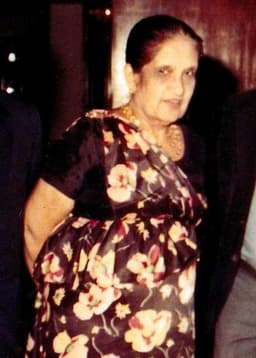
Sirimavo Bandaranaike
Politician · Modern
51.5Total
Basic Information
Born
1866
1916
Died
1937
2000
Era
Modern
Modern
Nationality
United Kingdom
Sri Lanka
Occupation
Politician
Politician
Civilization
Western
Indian
Score Comparison
Military (10%)
49.9
17.4
Political (20%)
68.0
45.0
Influence (20%)
58.0
56.7
Legacy (20%)
50.0
58.0
Leadership (15%)
53.2
66.0
Strategy (15%)
41.7
44.6
TOTAL
54.3
51.5
Ramsay MacDonald — Complete Timeline
1924 AD
Formation of the First Labour GovernmentPolitical Action
MacDonald became the first Labour Prime Minister of the United Kingdom in January 1924, leading a minority government. This marked the first time the Labour Party held power, though the government lasted only nine months before falling over the Campbell Case.
Labour PartyFirst Labour GovernmentMinority Government
Impact: nationalconstructive
Recognition of the Soviet UnionPolitical Action◆ Major
MacDonald's government formally recognized the Soviet Union and signed the Anglo-Soviet Trade Agreement. This diplomatic move aimed to normalize relations and expand trade, but was controversial and contributed to the fall of the government after the Zinoviev letter affair.
Soviet UnionDiplomacyTrade
Impact: global
1931 AD
Formation of the National GovernmentPolitical Action
Facing a financial crisis and a split in the Labour cabinet, MacDonald formed a National Government with Conservatives and Liberals in August 1931. This action was seen as a betrayal by many in the Labour Party, leading to his expulsion from the party.
National GovernmentGreat DepressionLabour Split
Impact: nationaldestructive
1931 General ElectionPolitical Action◆ Major
MacDonald led the National Government to a landslide victory in the 1931 general election, winning 554 seats. The Labour Party was reduced to 52 seats, its worst result. This gave the National Government a massive majority to implement austerity measures.
ElectionNational GovernmentLandslide
Impact: national
1935 AD
Resignation as Prime MinisterPolitical Action◆ Major
MacDonald resigned as Prime Minister in June 1935 due to declining health and was succeeded by Stanley Baldwin. He remained in the cabinet as Lord President of the Council until 1937, but his political influence had waned.
ResignationNational GovernmentSuccession
Impact: national
Sirimavo Bandaranaike — Complete Timeline
1960 AD
Became the world's first female prime ministerPolitical Action
Sirimavo Bandaranaike was elected Prime Minister of Ceylon (now Sri Lanka) following the assassination of her husband, Solomon Bandaranaike. She became the first woman in the world to hold the office of prime minister, leading the Sri Lanka Freedom Party.
First female PMSri LankaWomen in politics
Impact: globalconstructive
1961 AD
Nationalized key industries and banksReform◆ Major
Bandaranaike's government implemented a socialist economic policy, nationalizing foreign-owned oil companies, banks, and insurance firms. This move aimed to reduce foreign influence and promote local control, but it also led to economic inefficiencies and strained relations with the West.
NationalizationSocialismEconomic policy
Impact: national
1962 AD
Declared a state of emergency after a coup attemptPolitical Action◆ Major
A group of military and police officers attempted a coup against Bandaranaike's government. The coup was foiled, and she declared a state of emergency, consolidating her power and cracking down on opposition. The event heightened political tensions in Sri Lanka.
Coup attemptState of emergencyPolitical crisis
Impact: national
1965 AD
Lost the 1965 general electionPolitical Action◆ Major
Bandaranaike's government was defeated in the general election by the United National Party led by Dudley Senanayake. She became the Leader of the Opposition, marking a temporary setback in her political career.
Election lossOppositionDemocracy
Impact: national
1970 AD
Returned to power and introduced a new constitutionPolitical Action◆ Major
Bandaranaike was re-elected as Prime Minister and oversaw the adoption of a new republican constitution in 1972, which changed the country's name from Ceylon to Sri Lanka and established it as a republic. The constitution also gave Buddhism a prominent role.
ConstitutionRepublicSri Lanka
Impact: nationalconstructive
Expert Analysis
Origins
Ramsay MacDonald was born on 12 October 1866 in Lossiemouth, Scotland, into a working-class family. He was the illegitimate son of a farm labourer and a housemaid. Despite limited formal education, he became a teacher and later a journalist, joining the Independent Labour Party in 1894. His early experiences with poverty shaped his socialist convictions.
Sirimavo Ratwatte Dias Bandaranaike was born on 17 April 1916 in Ratnapura, Ceylon (now Sri Lanka), into a wealthy, aristocratic Kandyan family. She received a Western-style education at St. Bridget's Convent in Colombo. In 1940, she married Solomon West Ridgeway Dias Bandaranaike, a prominent politician who later became Prime Minister. Her entry into politics was catalyzed by his assassination in 1959.
Rise to Power
MacDonald's rise was gradual within the labour movement. He became secretary of the Labour Representation Committee in 1900, which evolved into the Labour Party. He entered Parliament in 1906 and became party leader in 1911. His opposition to World War I cost him popularity, but he returned to lead the party in 1922. In January 1924, he became the first Labour Prime Minister of the United Kingdom, heading a minority government. This marked a turning point, scoring 68.0 in political acumen.
Bandaranaike's rise was abrupt and tragic. After her husband's assassination in September 1959, the Sri Lanka Freedom Party turned to her as a unifying figure. She led the party to victory in the July 1960 general election, becoming the world's first female prime minister on 21 July 1960. Her political score of 45.0 reflects her initial reliance on her husband's legacy.
Leadership & Governance
MacDonald's leadership style was pragmatic and conciliatory. As prime minister, he focused on domestic reforms, including housing and unemployment benefits, but his minority government lasted only nine months. In 1931, facing a financial crisis, he formed a National Government with Conservatives and Liberals, a move seen as a betrayal by many Labour supporters. His strategy score of 41.7 indicates his difficulty in navigating economic turmoil.
Bandaranaike governed with a firm hand, implementing socialist policies. She nationalized foreign-owned oil companies, banks, and insurance firms, aiming to reduce foreign influence. Her leadership score of 66.0 reflects her resolve, but her policies also led to economic stagnation and ethnic tensions. She declared a state of emergency after a failed coup attempt in 1962, showing her willingness to use force.
Triumph & Tragedy
MacDonald's greatest success was establishing Labour as a credible governing party. His formation of the National Government during the Great Depression stabilized the economy, but at the cost of splitting his party. The 1931 general election gave his National Government a landslide victory, but Labour was reduced to 52 seats. His legacy score of 50.0 reflects mixed outcomes.
Bandaranaike's triumph was breaking the glass ceiling as the world's first female prime minister. She also oversaw the adoption of a new republican constitution in 1972, changing Ceylon to Sri Lanka. However, her economic policies led to inflation and unemployment, and her alienation of the Tamil minority sowed seeds for future civil war. Her total score of 51.5 is slightly lower than MacDonald's 54.3.
Character & Destiny
MacDonald was a skilled orator and intellectual, but his decision to lead a coalition government was seen as opportunistic. Historians debate whether he was a visionary or a traitor to socialism. His health declined, leading to resignation in 1935.
Bandaranaike was determined and resilient, but her leadership was often reactive, shaped by her husband's legacy. She was a symbol of women's political empowerment but also criticized for authoritarian tendencies. Her character drove her to hold power for decades, but her policies had long-term negative consequences.
Legacy
MacDonald's legacy is complex: he laid the foundation for the Labour Party's future successes, but his National Government is viewed as a betrayal. His influence score of 58.0 reflects his role in shaping British politics.
Bandaranaike's legacy is more straightforward: she paved the way for women in politics globally. Her influence score of 56.7 and legacy score of 58.0 highlight her symbolic importance. However, her economic and ethnic policies had detrimental effects on Sri Lanka.
Conclusion
In comparing these two figures, Ramsay MacDonald had a greater impact on his nation's political landscape. His total score of 54.3 surpasses Bandaranaike's 51.5. MacDonald's establishment of Labour as a governing party was a fundamental shift in British politics, while Bandaranaike's achievements, though historic, were marred by policy failures. MacDonald's decisions during the Great Depression shaped the modern British state, whereas Bandaranaike's legacy is more symbolic than substantive. Therefore, MacDonald edges ahead in historical significance.
Rankings
🥇
Ramsay MacDonaldLeader
Mil: 49.9Pol: 68.0Inf: 58.0
54.3
🥈
Sirimavo Bandaranaike
Mil: 17.4Pol: 45.0Inf: 56.7
51.5
+2.8 behind
How This Comparison Works
Algorithm
Each figure is scored on 6 dimensions (0—100 scale) based on structured historical data: Military (10%), Political (20%), Influence (20%), Legacy (20%), Leadership (15%), Strategy (15%). The weighted total produces the final ranking.
Data Sources
Scores are computed from structured sub-indicators in the database. Scale factors adjust for era (Ancient ×0.85, Modern ×1.0) and civilization size (Eastern ×1.05, Other ×0.80) to account for differences in population and military scale.
Maximum 3 Figures
Comparisons are limited to 2—3 figures to ensure readability and statistical meaningfulness.
Error Margins
±5 points per dimension — Sub-scores are derived from historical records with inherent uncertainty. Two figures within 5 points on a dimension should be considered roughly equivalent in that area.
Total Score Accuracy
±3 points overall — The weighted combination of 6 dimensions produces a total score with approximately ±3 points of uncertainty. Differences of less than 3 points are not statistically significant— the figures are effectively tied.
Known Limitations
- Historical records are incomplete and uneven across civilizations
- Figures from oral-tradition societies may be underrepresented
- Occupation labels can misclassify multi-role figures
- Scores measure capability and impact, not moral character
- Quantitative scoring is a comparison tool, not absolute truth
Capability Radar
Military (10%) — Battles & Warfare
Battles
29
23
Win Rate
30
26
Expansion
37
27
Political (20%) — Governance & Reform
Reform
55
65
Diplomacy
50
60
Economy
45
55
Influence (20%) — Cultural & Global Reach
Cultural
40
60
Global
50
65
Legacy (20%) — Historical Impact
Historical
55
70
Longevity
45
55
Leadership (15%) — Power & Stability
Tenure
60
75
Stability
40
40
Strategy (15%) — Tactics & Innovation
Strategy
38
30
Tactics
38
32
Reform
44
37
Similar Comparisons
Comments & Discussion
No comments yet. Be the first to share your thoughts!