Loading...
Ranil Wickremesinghe vs Warren G. Harding
Ranil Wickremesinghe leads by 7.0 pts · 2 figures compared
…
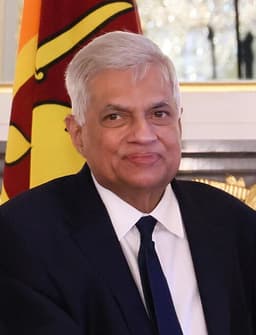
Ranil Wickremesinghe
Politician · Modern
50.7Total

Warren G. Harding
Politician · Modern
43.7Total
Basic Information
Born
1949
1865
Died
—
1923
Era
Modern
Modern
Nationality
Sri Lanka
United States
Occupation
Politician
Politician
Civilization
Indian
Western
Score Comparison
Military (10%)
25.9
50.0
Political (20%)
45.0
35.1
Influence (20%)
54.9
48.6
Legacy (20%)
45.8
39.2
Leadership (15%)
68.0
48.4
Strategy (15%)
60.0
42.7
TOTAL
50.7
43.7
Ranil Wickremesinghe — Complete Timeline
1987 AD
Signed the Indo-Sri Lanka Peace AccordPolitical Action◆ Major
As a key negotiator, Wickremesinghe helped finalize the Indo-Sri Lanka Peace Accord, which aimed to end the Sri Lankan Civil War by devolving power to provinces and deploying Indian peacekeeping forces. The accord ultimately failed to bring lasting peace.
Peace accordIndiaCivil war
Impact: regional
1993 AD
Appointed Prime Minister for the first timePolitical Action◆ Major
Ranil Wickremesinghe was appointed Prime Minister of Sri Lanka by President D.B. Wijetunga, following the assassination of President Ranasinghe Premadasa. He led the United National Party government, beginning a long political career marked by multiple terms.
Prime MinisterUNPSri Lanka
Impact: national
2005 AD
Lost the 2005 presidential electionPolitical Action◆ Major
Wickremesinghe, as the UNP candidate, lost the presidential election to Mahinda Rajapaksa. The defeat was partly attributed to a boycott by the Tamil Tiger rebels, which suppressed voter turnout in the north and east. This loss kept him out of power for several years.
Election lossRajapaksaUNP
Impact: national
2022 AD
Became Prime Minister for a sixth timePolitical Action◆ Major
After the resignation of Mahinda Rajapaksa amid economic crisis, Wickremesinghe was appointed Prime Minister. He later became acting president and then president after Gotabaya Rajapaksa fled the country. His leadership focused on stabilizing the economy and securing an IMF bailout.
Prime MinisterEconomic crisisIMF
Impact: national
Warren G. Harding — Complete Timeline
1920 AD
Election as President of the United StatesPolitical Action◆ Major
Harding, a Republican, won the 1920 presidential election in a landslide against Democrat James M. Cox. His campaign promised a 'return to normalcy' after World War I and the Progressive Era, appealing to voters weary of reform and international engagement.
Presidential ElectionReturn to Normalcy
Impact: national
1921 AD
Signing of the Budget and Accounting ActReform◆ Major
Harding signed the Budget and Accounting Act, which created the Bureau of the Budget (now the Office of Management and Budget) and the General Accounting Office (now the Government Accountability Office). This established the first formal federal budgeting process.
Budget ReformGovernment Efficiency
Impact: nationalconstructive
1922 AD
Teapot Dome ScandalPolitical Action◆ Major
The Teapot Dome scandal erupted, revealing that Secretary of the Interior Albert Fall had secretly leased naval oil reserves at Teapot Dome, Wyoming, to private oil companies in exchange for bribes. Fall was later convicted, becoming the first cabinet member imprisoned for crimes in office.
ScandalCorruption
Impact: nationaldestructive
Expert Analysis
Origins
Ranil Wickremesinghe was born on March 24, 1949, in Colombo, Sri Lanka, into a politically active family. His father was a lawyer and his uncle, J.R. Jayewardene, served as President. He studied at Royal College Colombo and later earned a law degree from the University of Ceylon. Warren G. Harding was born on November 2, 1865, in Corsica, Ohio, to a farming family. He attended Ohio Central College and became a newspaper publisher, buying the *Marion Star* in 1884. His background in journalism shaped his political career.
Rise to Power
Wickremesinghe entered politics in 1977, winning a seat in Parliament. He became Prime Minister in 1993 after President Premadasa's assassination, serving briefly. His key turning point was the signing of the Indo-Sri Lanka Peace Accord in 1987, which aimed to devolve power to Tamil provinces. He lost the 2005 presidency partly due to Tamil boycott, but returned as Prime Minister in 2022 amid economic collapse. Harding rose through Ohio politics, serving as state senator and lieutenant governor. He gained national attention at the 1916 Republican Convention and won the 1920 presidential election with a promise of "return to normalcy," securing 60.3% of the popular vote.
Leadership & Governance
Wickremesinghe's leadership is technocratic and crisis-driven. In 2022, he implemented austerity measures to secure an IMF bailout, cutting subsidies and raising taxes. His governance focused on economic stabilization, with inflation dropping from 70% to single digits by 2024. Harding promoted pro-business policies, cutting taxes and reducing federal spending. He signed the Budget and Accounting Act of 1921, creating the Bureau of the Budget, which improved efficiency. However, his administration was marked by scandals like Teapot Dome, where Secretary of Interior Albert Fall leased oil reserves for bribes. Wickremesinghe scored 68.0 in leadership vs Harding's 48.4.
Triumph & Tragedy
Wickremesinghe's greatest success was navigating Sri Lanka's 2022 economic crisis, securing a $2.9 billion IMF program and preventing default. He also passed the 20th Amendment to strengthen parliamentary control. His failures include losing the 2005 election due to Tamil disenfranchisement and his inability to end the civil war during his earlier terms. Harding's achievements include the Washington Naval Conference (1921-22), limiting naval arms, and the Budget Act. His tragedy is the Teapot Dome scandal, which tarnished his reputation. He died in 1923 before the scandal fully erupted, leaving a legacy of corruption. Harding's political score is 35.1 vs Wickremesinghe's 45.0.
Character & Destiny
Wickremesinghe is known as a pragmatist, willing to make unpopular decisions. His character is resilient—he returned to power six times despite repeated defeats. His destiny was shaped by crises: he became president during the worst economic downturn in Sri Lanka's history. Harding was affable but lacked the temperament to control corrupt associates. Historians often rank him among the worst presidents. His character—trusting and prone to cronyism—led to his downfall. Wickremesinghe's strategy score of 60.0 reflects his ability to navigate complex political landscapes, while Harding's 42.7 indicates poor judgment in appointments.
Legacy
Wickremesinghe's legacy is mixed: he stabilized Sri Lanka's economy but is criticized for austerity and close ties to the Rajapaksa family. His influence score of 54.9 reflects his long tenure but limited transformative power. Harding's legacy is dominated by scandal, though his fiscal reforms had lasting impact. The Budget Act remains a cornerstone of U.S. financial governance. However, his overall legacy score is 39.2. Wickremesinghe's total score of 50.7 surpasses Harding's 43.7, indicating greater overall impact.
Conclusion
Ranil Wickremesinghe had a greater impact than Warren Harding. Despite Harding's structural reforms, his administration's corruption overshadowed achievements. Wickremesinghe, facing a severe crisis, implemented necessary reforms that prevented national collapse. His leadership score (68.0) and strategy (60.0) decisively outrank Harding's (48.4 and 42.7). While both faced scandals, Wickremesinghe's ability to repeatedly return to power and manage crises demonstrates superior political resilience. Harding, by contrast, is remembered primarily for scandal. Data supports Wickremesinghe as the more effective leader.
Rankings
🥇
Ranil WickremesingheLeader
Mil: 25.9Pol: 45.0Inf: 54.9
50.7
🥈
Warren G. Harding
Mil: 50.0Pol: 35.1Inf: 48.6
43.7
+7.0 behind
How This Comparison Works
Algorithm
Each figure is scored on 6 dimensions (0—100 scale) based on structured historical data: Military (10%), Political (20%), Influence (20%), Legacy (20%), Leadership (15%), Strategy (15%). The weighted total produces the final ranking.
Data Sources
Scores are computed from structured sub-indicators in the database. Scale factors adjust for era (Ancient ×0.85, Modern ×1.0) and civilization size (Eastern ×1.05, Other ×0.80) to account for differences in population and military scale.
Maximum 3 Figures
Comparisons are limited to 2—3 figures to ensure readability and statistical meaningfulness.
Error Margins
±5 points per dimension — Sub-scores are derived from historical records with inherent uncertainty. Two figures within 5 points on a dimension should be considered roughly equivalent in that area.
Total Score Accuracy
±3 points overall — The weighted combination of 6 dimensions produces a total score with approximately ±3 points of uncertainty. Differences of less than 3 points are not statistically significant— the figures are effectively tied.
Known Limitations
- Historical records are incomplete and uneven across civilizations
- Figures from oral-tradition societies may be underrepresented
- Occupation labels can misclassify multi-role figures
- Scores measure capability and impact, not moral character
- Quantitative scoring is a comparison tool, not absolute truth
Capability Radar
Military (10%) — Battles & Warfare
Battles
46
26
Win Rate
48
34
Expansion
50
33
Political (20%) — Governance & Reform
Reform
55
15
Diplomacy
60
20
Economy
50
25
Influence (20%) — Cultural & Global Reach
Cultural
30
10
Global
40
10
Legacy (20%) — Historical Impact
Historical
40
20
Longevity
35
15
Leadership (15%) — Power & Stability
Tenure
65
30
Stability
40
10
Strategy (15%) — Tactics & Innovation
Strategy
53
37
Tactics
54
44
Reform
58
42
Similar Comparisons
Comments & Discussion
No comments yet. Be the first to share your thoughts!