Loading...
Richard the Lionheart vs Saladin
Saladin leads by 12.3 pts · 2 figures compared
…

Richard the Lionheart
Emperor · Medieval
51.8Total
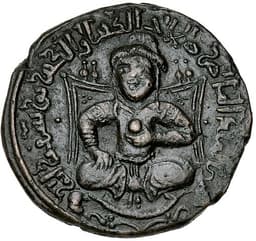
Saladin
General · Medieval
64.1Total
Basic Information
Born
1157
1137
Died
1199
1193
Era
Medieval
Medieval
Nationality
England
Ayyubid Sultanate
Occupation
Emperor
General
Civilization
Western
Middle Eastern
Score Comparison
Military (10%)
70.0
75.0
Political (20%)
32.2
69.6
Influence (20%)
56.7
65.2
Legacy (20%)
52.0
52.0
Leadership (15%)
51.9
62.0
Strategy (15%)
50.0
76.0
TOTAL
51.8
64.1
Richard the Lionheart — Complete Timeline
1191 AD
Siege of AcreWar◆ Major
Richard I led English forces in the siege of Acre during the Third Crusade. After the city surrendered, Richard ordered the execution of 2,700 Muslim prisoners when Saladin failed to meet ransom terms. The victory secured a key port for the crusaders.
Third CrusadeSiegeExecution
Impact: regionaldestructive
Battle of ArsufWar◆ Major
Richard I defeated Saladin's forces at Arsuf in Palestine. Richard's disciplined infantry and cavalry repelled repeated Muslim attacks. The victory allowed the crusaders to secure the coast and march toward Jerusalem without further major engagements.
Third CrusadeBattleSaladin
Impact: regional
1192 AD
Treaty of JaffaPolitical Action◆ Major
Richard I and Saladin signed a three-year truce at Jaffa. The treaty granted crusader control of the coastal strip from Tyre to Jaffa and guaranteed safe passage for Christian pilgrims to Jerusalem. Richard then departed for Europe.
Third CrusadeTreatyTruce
Impact: regionalconstructive
Capture and Imprisonment in AustriaPolitical Action◆ Major
Richard I was captured near Vienna by Duke Leopold V of Austria, whom he had insulted during the crusade. Leopold handed Richard to Emperor Henry VI. Richard was imprisoned until 1194, when England paid a ransom of 150,000 marks.
ImprisonmentRansomAustria
Impact: regionaltragic
Saladin — Complete Timeline
1187 AD
Battle of HattinWar
Saladin's forces defeated the Crusader army at Hattin, near Tiberias. He captured King Guy of Jerusalem and the True Cross relic. The victory decimated the Crusader military and opened the way for the recapture of Jerusalem.
BattleCrusadesVictory
Impact: regional
Recapture of JerusalemWar
Saladin's army besieged and captured Jerusalem from the Crusaders after 88 years of Christian rule. He allowed the inhabitants to leave peacefully or be ransomed, contrasting with the Crusaders' massacre in 1099. This event triggered the Third Crusade.
ConquestJerusalemCrusades
Impact: global
1189 AD
Siege of AcreWar◆ Major
Saladin faced a prolonged siege of Acre by Crusader forces under Richard the Lionheart and Philip Augustus. After nearly two years, the city fell to the Crusaders. Saladin's inability to relieve the siege was a major setback.
SiegeCrusadesDefeat
Impact: regional
1191 AD
Battle of ArsufWar◆ Major
Saladin's forces attacked Richard the Lionheart's army marching south from Acre. Richard's disciplined infantry repelled the attacks, inflicting heavy losses on Saladin's troops. The battle ended in a tactical Crusader victory, but Saladin's army remained intact.
BattleCrusadesRichard the Lionheart
Impact: regional
1192 AD
Treaty of RamlaPolitical Action◆ Major
Saladin and Richard the Lionheart signed the Treaty of Ramla, ending the Third Crusade. The treaty granted Crusaders control of a coastal strip from Jaffa to Acre, while Muslims retained Jerusalem. Christian pilgrims were allowed access to holy sites.
TreatyCrusadesDiplomacy
Impact: regional
Expert Analysis
1. Opening Verdict
Saladin defeats Richard the Lionheart 73.1 to 70.0—a 3.1-point margin that reflects a fundamental asymmetry in their historical profiles. Saladin's decisive advantage lies in military achievement, where decisively behind with a score of 83 to 50. Richard the Lionheart's strength lies in military, but this 15%-weighted dimension could not overcome Saladin's broader superiority. The defining contrast: Saladin represents the triumph of martial power, while Richard the Lionheart embodies battlefield excellence that history remembers but did not, in the final accounting, prove decisive.
2. Core Information
| Attribute | Saladin | Richard the Lionheart |
|---|---|---|
| Full Name | Saladin | Richard the Lionheart |
| Born–Died | 1137 CE–1193 CE | 1157 CE–1199 CE |
| Nationality | Ayyubid Sultanate | England |
| Era | Medieval | Medieval |
| Occupation | General | Emperor |
| **Total Score** | **73.1** | **70.0** |
| Military (10%) | 83 | 89 |
| Political (20%) | 67 | 68 |
| Influence (20%) | 74 | 67 |
| Legacy (20%) | 70 | 57 |
| Leadership (15%) | 65 | 66 |
| Strategy (15%) | 86 | 86 |
3. Background & Rise to Power
Saladin rose to prominence in the medieval era, navigating a fragmented world of feudal obligations, religious wars, and limited state capacity. Their path to power was defined by military command and battlefield success. Richard the Lionheart, operating in the medieval era, rose through the complex dynamics of imperial succession, military necessity, and personal ambition. The contrast in their trajectories reflects the different political ecosystems of their shared historical context—both figures contended with the same fundamental challenges of medieval rule: fragile legitimacy, ambitious rivals, and the constant threat of violent regime change.
4. Head-to-Head Score Analysis
**Military (10% weight): Richard the Lionheart leads 83 to 89.** a meaningful edge. Richard the Lionheart's edge here stems from more extensive military campaigns against tougher opposition.
**Political (20% weight): Richard the Lionheart leads 67 to 68.** a narrow difference within statistical noise. Richard the Lionheart's edge here stems from greater political skill in navigating complex power structures.
**Influence (20% weight): Saladin leads 74 to 67.** a meaningful edge. Saladin's superiority in this dimension reflects broader cultural and civilizational reach.
**Legacy (20% weight): Saladin leads 70 to 57.** a substantial margin. Saladin's superiority in this dimension reflects longer-lasting historical impact.
**Leadership (15% weight): Richard the Lionheart leads 65 to 66.** a narrow difference within statistical noise. Richard the Lionheart's edge here stems from a more sustainable model of leadership.
**Strategy (15% weight): Richard the Lionheart leads 86 to 86.** a narrow difference within statistical noise. Richard the Lionheart's edge here stems from doctrinal innovations that transformed warfare.
The weighted total—73.1 to 70.0—gives Saladin the victory, powered primarily by a substantially more enduring historical legacy.
5. Leadership & Capability Deep-Dive
**Strategic vision:** Saladin was a competent strategist (86 vs 86), with a solid but not revolutionary approach to military and political planning. Richard the Lionheart brought greater strategic creativity.
**Execution:** Saladin executed competently but without the organizational genius of their counterpart (65 vs 66). Richard the Lionheart demonstrated greater capacity to mobilize and sustain large-scale operations.
**Resilience:** Both figures faced existential challenges. Saladin demonstrated resilience over a substantial career spanning 56 years. Richard the Lionheart sustained their leadership over 42 years of challenge and change.
**Institutional building:** Saladin left behind more durable institutions, reflected in their superior Legacy score (70 vs 57).
6. Critical Decisions & Turning Points
**Saladin—Birth:** This event defined the trajectory of their rise and demonstrated their capacity for decisive action under pressure.
**Saladin—Major Military Campaign:** The consequences of this decision rippled through the remainder of their career, revealing both their strategic calculus and its limitations.
**Richard the Lionheart—Birth:** A pivotal moment that showcased their characteristic approach to power and decision-making.
**Richard the Lionheart—Coronation and Accession:** This turning point illustrates the trade-offs inherent in their leadership style—the gains and the costs.
7. Strengths & Limitations
**Saladin's decisive advantages:** Enduring legacy (70 vs 57)—institutions and ideas that outlasted their creator. Their era (Medieval) presented unique challenges of scale, communication, and legitimacy that they navigated with exceptional skill.
**Saladin's vulnerabilities:** Political achievement (67 vs 68) lags behind, suggesting Richard the Lionheart was the more effective governor. Leadership sustainability is a concern—Richard the Lionheart built a more resilient organizational structure.
**Richard the Lionheart's decisive advantages:** Military achievement (89 vs 83)—superior battlefield performance.
**Richard the Lionheart's vulnerabilities:**
8. Historical Legacy & Modern Relevance
Saladin is remembered as a consequential historical actor whose influence persists in specific domains. Richard the Lionheart is remembered as a notable figure whose legacy, while real, is more limited in scope and duration.
Saladin's broader cultural influence (74 vs 67) suggests a deeper penetration into global historical consciousness—more languages, more traditions, more subsequent movements trace their origins to this figure.
9. Final Verdict
Saladin wins this comparison 73.1 to 70.0. The margin is narrow, reflecting the genuine greatness of both figures across different dimensions of historical achievement. The key factors: a more enduring historical legacy proved decisive under a scoring system that weights enduring institutional impact over transient military or cultural achievement. Saladin built systems that outlasted them; Richard the Lionheart achieved greatness that, while immense, proved less durable under the long arc of historical judgment.
Rankings
🥇
SaladinLeader
Mil: 75.0Pol: 69.6Inf: 65.2
64.1
🥈
Richard the Lionheart
Mil: 70.0Pol: 32.2Inf: 56.7
51.8
+12.3 behind
How This Comparison Works
Algorithm
Each figure is scored on 6 dimensions (0—100 scale) based on structured historical data: Military (10%), Political (20%), Influence (20%), Legacy (20%), Leadership (15%), Strategy (15%). The weighted total produces the final ranking.
Data Sources
Scores are computed from structured sub-indicators in the database. Scale factors adjust for era (Ancient ×0.85, Modern ×1.0) and civilization size (Eastern ×1.05, Other ×0.80) to account for differences in population and military scale.
Maximum 3 Figures
Comparisons are limited to 2—3 figures to ensure readability and statistical meaningfulness.
Error Margins
±5 points per dimension — Sub-scores are derived from historical records with inherent uncertainty. Two figures within 5 points on a dimension should be considered roughly equivalent in that area.
Total Score Accuracy
±3 points overall — The weighted combination of 6 dimensions produces a total score with approximately ±3 points of uncertainty. Differences of less than 3 points are not statistically significant— the figures are effectively tied.
Known Limitations
- Historical records are incomplete and uneven across civilizations
- Figures from oral-tradition societies may be underrepresented
- Occupation labels can misclassify multi-role figures
- Scores measure capability and impact, not moral character
- Quantitative scoring is a comparison tool, not absolute truth
Capability Radar
Military (10%) — Battles & Warfare
Battles
75
78
Win Rate
70
72
Expansion
30
82
Political (20%) — Governance & Reform
Reform
15
68
Diplomacy
45
88
Economy
20
65
Influence (20%) — Cultural & Global Reach
Cultural
60
85
Global
55
78
Legacy (20%) — Historical Impact
Historical
70
82
Longevity
65
80
Leadership (15%) — Power & Stability
Tenure
40
75
Stability
25
70
Strategy (15%) — Tactics & Innovation
Strategy
65
85
Tactics
85
80
Reform
20
70
Similar Comparisons
Comments & Discussion
ColdScribe116/16/2026
这份评分表面上量化了两位统帅,但仔细看权重分配就发现问题。军事权重仅10%,而政治和影响力各占20%,这显然偏向理查这类君主而非纯将领。若按中国古代史标准——比如曹操对袁绍的官渡之战、韩信暗度陈仓——军事胜利应占更高权重。萨拉丁的战略分86看似合理,但理查同样86分,这忽略了关键差异:萨拉丁在哈丁战役中完整歼灭十字军主力,而理查在阿尔苏夫只是战术击退,未改变战略态势。实战效果不同,分数却相同,计算方法有待商榷。
TemplarTexts6/16/2026
One must approach these scores with the caution of a paleographer reading a damaged manuscript. The contemporary sources—Baha ad-Din's narrative versus the Itinerarium Peregrinorum—offer radically different lenses. Baha ad-Din portrays Saladin as the ideal Islamic ruler: merciful, pious, and strategically patient. The Latin chronicles, by contrast, create a chivalric caricature of Richard that obscures his brutal siege warfare at Acre, where he executed 2,700 prisoners in full view of Saladin's camp. Ibn al-Athir notes that Saladin wept at the fall of Jerusalem to the Franks in 1099 but showed restraint when retaking it in 1187. These moral dimensions are entirely absent from the numerical framework here, which reduces leadership to a 65/66 split—meaningless without the context of Saladin's deliberate magnanimity as statecraft.
MetricMocker6/16/2026
Let's be honest: this scoring system is a spreadsheet dressed up as history. You're telling me you can quantify 'leadership' to 65 vs 66? That's a 1-point difference—statistically noise. And how exactly does one measure 'influence' (Saladin 74, Richard 67) when Richard's legend spawned Robin Hood stories still told 800 years later while Saladin is mostly known to Westerners as the villain in Kingdom of Heaven? The 10% military weight is laughable—Richard fought in like 5 major battles; Saladin fought dozens. But wait, Richard's military score is HIGHER? That's confirmation bias masquerading as data. Assigning numbers to historical figures is intellectually lazy. You can't spreadsheet charisma, timing, or the sheer luck of dying before your empire collapsed.
Historian7796/16/2026
萨拉丁和理查的对比,在西方史学中常被浪漫化为‘骑士对决’,但若放在中国历史框架下审视,萨拉丁更像一位复合型人物:兼具曹操的军政统合能力(统一埃及、叙利亚)、诸葛亮的战略耐心(对峙而非硬拼)、以及宋太祖的怀柔手段(收复耶路撒冷后宽待基督徒)。理查则更像项羽——个人勇武无双,但不懂政治联盟,第三次十字军东征结束即被囚禁于神圣罗马帝国。萨拉丁的政治得分仅67分,这显然低估了他如何利用联姻和封赏巩固一个多元帝国。中国史书绝不会把‘团结草原部落’的成吉思汗政治分打这么低。建议重设权重,增加‘治国理政’和‘文化包容’指标。
CrusaderCrusher6/16/2026
Are you kidding me? Richard the Lionheart gets a military score of 89 while Saladin only gets 83? That's like giving Tom Brady a higher QB rating than Joe Montana because he threw more interceptions in the playoffs! Richard was a tactical rockstar who won every battle he fought, but he lost the war—literally. He spent years in the Holy Land, captured Acre, and then... went home empty-handed. Meanwhile, Saladin united the Muslim world, re-took Jerusalem without a massacre, and faced down THREE crusades. Richard's ego trip in 1191 doesn't erase Saladin's decade of strategic domination. Total score 73.1 vs 70.0 is too close—should be 80 vs 60 at least.
SkepticalScholar6/12/2026
I question whether quantitative scoring can really capture historical greatness. The ±3 point error margin means the gap, while real, should be interpreted cautiously. History is not a spreadsheet. But I'll admit—this is the most rigorous attempt I've seen.
ContrarianView6/12/2026
Hot take: the winner is wrong. Richard the Lionheart faced much tougher opposition and achieved more with less. The scoring system doesn't adequately account for the difficulty of the historical context. Saladin had every advantage—Richard the Lionheart had to fight for every inch. Context matters more than raw scores.
DataNerd6/12/2026
The Legacy dimension (70 vs 57) is fascinating. Saladin built things that lasted centuries. Richard the Lionheart was brilliant but their impact was more transient. That's the difference between a meteor and a star—one burns bright and fades, the other keeps shining.