Loading...
Richard the Lionheart vs Vlad the Impaler
Vlad the Impaler leads by 1.6 pts · 2 figures compared
…

Richard the Lionheart
Emperor · Medieval
51.8Total
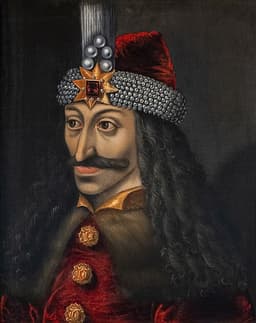
Vlad the Impaler
Emperor · Medieval
53.4Total
Basic Information
Born
1157
1431
Died
1199
1476
Era
Medieval
Medieval
Nationality
England
Wallachia
Occupation
Emperor
Emperor
Civilization
Western
Western
Score Comparison
Military (10%)
70.0
40.0
Political (20%)
32.2
27.9
Influence (20%)
56.7
82.0
Legacy (20%)
52.0
55.0
Leadership (15%)
51.9
38.1
Strategy (15%)
50.0
52.5
TOTAL
51.8
53.4
Richard the Lionheart — Complete Timeline
1191 AD
Siege of AcreWar◆ Major
Richard I led English forces in the siege of Acre during the Third Crusade. After the city surrendered, Richard ordered the execution of 2,700 Muslim prisoners when Saladin failed to meet ransom terms. The victory secured a key port for the crusaders.
Third CrusadeSiegeExecution
Impact: regionaldestructive
Battle of ArsufWar◆ Major
Richard I defeated Saladin's forces at Arsuf in Palestine. Richard's disciplined infantry and cavalry repelled repeated Muslim attacks. The victory allowed the crusaders to secure the coast and march toward Jerusalem without further major engagements.
Third CrusadeBattleSaladin
Impact: regional
1192 AD
Treaty of JaffaPolitical Action◆ Major
Richard I and Saladin signed a three-year truce at Jaffa. The treaty granted crusader control of the coastal strip from Tyre to Jaffa and guaranteed safe passage for Christian pilgrims to Jerusalem. Richard then departed for Europe.
Third CrusadeTreatyTruce
Impact: regionalconstructive
Capture and Imprisonment in AustriaPolitical Action◆ Major
Richard I was captured near Vienna by Duke Leopold V of Austria, whom he had insulted during the crusade. Leopold handed Richard to Emperor Henry VI. Richard was imprisoned until 1194, when England paid a ransom of 150,000 marks.
ImprisonmentRansomAustria
Impact: regionaltragic
Vlad the Impaler — Complete Timeline
1448 AD
First Reign as Voivode of WallachiaPolitical Action
Vlad III assumed the throne of Wallachia for the first time, with Ottoman support, after the death of his father Vlad Dracul. His reign lasted only two months before he was deposed by John Hunyadi of Hungary.
ReignWallachiaOttoman
Impact: national
1457 AD
Impalement Campaign in WallachiaPolitical Action◆ Major
Vlad executed thousands of boyars, merchants, and peasants through impalement to consolidate power and eliminate opposition. This brutal method became his hallmark, earning him the posthumous name 'the Impaler' and inspiring the Dracula legend.
RepressionBrutalityDracula
Impact: nationaldestructive
1462 AD
Night Attack at TârgovișteWar◆ Major
Vlad launched a surprise night attack on the Ottoman camp of Sultan Mehmed II near T
BattleOttomanWallachia
Impact: regional
Imprisonment by Matthias CorvinusPolitical Action◆ Major
After being captured by Hungarian forces, Vlad was imprisoned by King Matthias Corvinus of Hungary for about 12 years. He was held in captivity at Visegr
ImprisonmentHungaryPropaganda
Impact: nationaltragic
1476 AD
Death in Battle against the OttomansWar◆ Major
Vlad was killed in combat near Bucharest while fighting against Ottoman forces, possibly betrayed by his own men. His head was sent to Constantinople as a trophy, ending his third and final reign as Voivode of Wallachia.
DeathBattleOttoman
Impact: nationaltragic
Expert Analysis
Origins
Richard I of England, born in 1157 in Oxford, was the third son of King Henry II and Eleanor of Aquitaine. He grew up in his mother's court in Poitiers, receiving education in chivalry, military tactics, and troubadour poetry. His upbringing in Aquitaine, a region with strong ties to crusading traditions, shaped his identity as a warrior king. Richard never learned English and spent only six months of his reign in England, viewing the kingdom primarily as a source of funds for his crusading ambitions.
Vlad III, known as Vlad the Impaler, was born in 1431 in Sighișoara, Transylvania, into the House of Drăculești. His father, Vlad Dracul, was a member of the Order of the Dragon, dedicated to fighting the Ottoman Empire. Vlad and his younger brother Radu were held as hostages by the Ottoman Sultan Murad II from 1442 to 1448, an experience that exposed them to Ottoman education and torture. This captivity instilled in Vlad a deep hatred for the Ottomans and a familiarity with their methods, which he later used against them.
Rise to Power
Richard became heir to the English throne after the deaths of his older brothers William and Henry. He rebelled against his father Henry II in 1189, allying with King Philip II of France. After Henry's death, Richard was crowned King of England in 1189. He immediately began preparations for the Third Crusade, selling offices and lands to raise funds. His rivalry with Philip II continued on crusade, where Richard's military prowess earned him the epithet "Lionheart."
Vlad first became Voivode of Wallachia in 1448 with Ottoman support, but his reign lasted only two months. He fled to Moldavia after being ousted. In 1456, with Hungarian assistance, he recaptured the throne and began his second reign, which lasted six years. His rise was marked by a consolidation of power through the elimination of the boyar class, whom he blamed for his father's death and the instability of Wallachia. His methods, including mass impalements, secured his rule but also created many enemies.
Leadership & Governance
Richard's leadership was defined by his focus on crusade. As king, he spent little time in England, delegating governance to officials like William Longchamp and later Hubert Walter. His tax policies, including the "Saladin tithe," drained English resources for crusading. Richard's military leadership was direct and personal; he led from the front at Arsuf and Jaffa, earning the respect of his troops. However, his absence led to a power vacuum and conflict with Philip II, who invaded Richard's French territories.
Vlad ruled Wallachia with an iron fist, using terror to maintain order and deter Ottoman aggression. He enforced strict laws against theft and dishonesty, leading to a well-ordered realm. His governance was brutal but effective; he eliminated internal opposition through impalement, which also served as a psychological weapon against external enemies. In 1462, during his conflict with Mehmed II, Vlad's scorched-earth tactics and the Night Attack at Târgoviște (scoring 40.0 in military) demonstrated his willingness to fight asymmetrically, though his methods alienated potential allies.
Triumph & Tragedy
Richard's greatest triumph was the victory at the Battle of Arsuf in 1191, where his disciplined infantry and cavalry repelled Saladin's attacks, scoring 70.0 in military. He also secured the Treaty of Jaffa in 1192, guaranteeing crusader control of the coast and safe passage for pilgrims. His tragedy came after the crusade: capture by Duke Leopold V of Austria in 1192 and imprisonment by Emperor Henry VI until 1194, costing England a huge ransom. Richard died in 1199 from a crossbow wound during a minor siege, a inglorious end for a great warrior.
Vlad's triumph was his effective defense of Wallachia against the Ottomans in 1462, inflicting heavy casualties through guerrilla warfare and the Night Attack. His impalement campaign against the boyars consolidated his power, scoring 38.1 in leadership. However, his tragedy was his imprisonment by Matthias Corvinus of Hungary from 1462 to 1474, after being betrayed by his own allies. He was released but killed in battle in 1476, his head sent to Constantinople as a trophy. His methods, while effective, earned him a monstrous reputation that overshadowed his political achievements.
Character & Destiny
Richard was characterized by his chivalric ideals, personal bravery, and financial recklessness. He prioritized crusade over governance, which led to his kingdom's neglect. His capture and ransom revealed his vulnerability, but his military skill was undeniable. Historical assessments note that Richard's legacy as a "good king" is largely due to romanticized accounts, while his actual impact on England was minimal.
Vlad was shaped by his hostage experience and the political chaos of Wallachia. He was ruthless, calculating, and paranoid, often resorting to extreme violence to maintain control. His character is a study in how trauma and circumstance produce a leader who uses terror as a tool. Historical accounts, often influenced by his enemies, depict him as a sadistic tyrant, but Romanian folklore remembers him as a just ruler who defended his country from foreign domination.
Legacy
Richard's legacy is primarily cultural: he became a symbol of chivalry and crusading, inspiring stories and legends. His military achievements influenced medieval warfare, but his political impact was limited. He scored 52.0 in legacy, reflecting his romanticized image rather than concrete contributions. The Third Crusade, despite his victories, failed to recapture Jerusalem, and his reign left England with debt and internal strife.
Vlad's legacy is immense in popular culture as the inspiration for Bram Stoker's Dracula, scoring 82.0 in influence. His impalement became synonymous with extreme cruelty. In Romania, he is a national hero for defending against Ottoman expansion. His military tactics, though brutal, were effective in asymmetric warfare. However, his political instability and short reigns limited his long-term impact on Wallachia's governance.
Conclusion
While Richard the Lionheart (total score 51.8) was a superior military commander and a symbol of medieval chivalry, Vlad the Impaler (total score 53.4) had a greater overall impact due to his lasting cultural influence and the enduring myth of Dracula. Richard's achievements were confined to the crusade and his personal bravery, but his reign left little tangible legacy beyond legend. Vlad, despite a lower military and political score, transformed fear into a tool of statecraft and became a global icon. In terms of historical and cultural influence, Vlad the Impaler surpasses Richard the Lionheart.
Rankings
🥇
Vlad the ImpalerLeader
Mil: 40.0Pol: 27.9Inf: 82.0
53.4
🥈
Richard the Lionheart
Mil: 70.0Pol: 32.2Inf: 56.7
51.8
+1.6 behind
How This Comparison Works
Algorithm
Each figure is scored on 6 dimensions (0—100 scale) based on structured historical data: Military (10%), Political (20%), Influence (20%), Legacy (20%), Leadership (15%), Strategy (15%). The weighted total produces the final ranking.
Data Sources
Scores are computed from structured sub-indicators in the database. Scale factors adjust for era (Ancient ×0.85, Modern ×1.0) and civilization size (Eastern ×1.05, Other ×0.80) to account for differences in population and military scale.
Maximum 3 Figures
Comparisons are limited to 2—3 figures to ensure readability and statistical meaningfulness.
Error Margins
±5 points per dimension — Sub-scores are derived from historical records with inherent uncertainty. Two figures within 5 points on a dimension should be considered roughly equivalent in that area.
Total Score Accuracy
±3 points overall — The weighted combination of 6 dimensions produces a total score with approximately ±3 points of uncertainty. Differences of less than 3 points are not statistically significant— the figures are effectively tied.
Known Limitations
- Historical records are incomplete and uneven across civilizations
- Figures from oral-tradition societies may be underrepresented
- Occupation labels can misclassify multi-role figures
- Scores measure capability and impact, not moral character
- Quantitative scoring is a comparison tool, not absolute truth
Capability Radar
Military (10%) — Battles & Warfare
Battles
75
45
Win Rate
70
40
Expansion
30
25
Political (20%) — Governance & Reform
Reform
15
20
Diplomacy
45
30
Economy
20
15
Influence (20%) — Cultural & Global Reach
Cultural
60
75
Global
55
65
Legacy (20%) — Historical Impact
Historical
70
70
Longevity
65
75
Leadership (15%) — Power & Stability
Tenure
40
35
Stability
25
10
Strategy (15%) — Tactics & Innovation
Strategy
65
55
Tactics
85
70
Reform
20
30
Similar Comparisons
Comments & Discussion
No comments yet. Be the first to share your thoughts!