Loading...
Richard the Lionheart vs William II Rufus
Richard the Lionheart leads by 2.0 pts · 2 figures compared
…

Richard the Lionheart
Emperor · Medieval
51.8Total
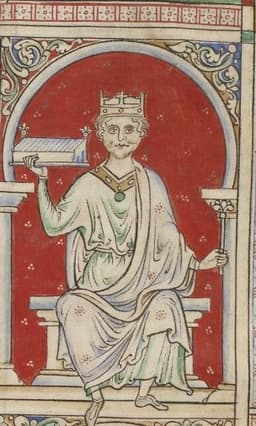
William II Rufus
Emperor · Medieval
49.8Total
Basic Information
Born
1157
1056
Died
1199
1100
Era
Medieval
Medieval
Nationality
England
England
Occupation
Emperor
Emperor
Civilization
Western
Western
Score Comparison
Military (10%)
70.0
55.0
Political (20%)
32.2
48.0
Influence (20%)
56.7
50.2
Legacy (20%)
52.0
41.7
Leadership (15%)
51.9
64.0
Strategy (15%)
50.0
45.0
TOTAL
51.8
49.8
Richard the Lionheart — Complete Timeline
1191 AD
Siege of AcreWar◆ Major
Richard I led English forces in the siege of Acre during the Third Crusade. After the city surrendered, Richard ordered the execution of 2,700 Muslim prisoners when Saladin failed to meet ransom terms. The victory secured a key port for the crusaders.
Third CrusadeSiegeExecution
Impact: regionaldestructive
Battle of ArsufWar◆ Major
Richard I defeated Saladin's forces at Arsuf in Palestine. Richard's disciplined infantry and cavalry repelled repeated Muslim attacks. The victory allowed the crusaders to secure the coast and march toward Jerusalem without further major engagements.
Third CrusadeBattleSaladin
Impact: regional
1192 AD
Treaty of JaffaPolitical Action◆ Major
Richard I and Saladin signed a three-year truce at Jaffa. The treaty granted crusader control of the coastal strip from Tyre to Jaffa and guaranteed safe passage for Christian pilgrims to Jerusalem. Richard then departed for Europe.
Third CrusadeTreatyTruce
Impact: regionalconstructive
Capture and Imprisonment in AustriaPolitical Action◆ Major
Richard I was captured near Vienna by Duke Leopold V of Austria, whom he had insulted during the crusade. Leopold handed Richard to Emperor Henry VI. Richard was imprisoned until 1194, when England paid a ransom of 150,000 marks.
ImprisonmentRansomAustria
Impact: regionaltragic
William II Rufus — Complete Timeline
1087 AD
Coronation of William IIPolitical Action◆ Major
William was crowned king of England on September 26, 1087, after the death of his father William the Conqueror. He inherited the English throne while his brother Robert Curthose received Normandy.
CoronationSuccessionNorman Dynasty
Impact: national
1088 AD
Rebellion of 1088War◆ Major
William faced a rebellion led by Norman barons supporting his brother Robert Curthose. William suppressed the revolt by promising reforms and confiscating rebel lands.
RebellionCivil WarBarons
Impact: nationaldestructive
1097 AD
Conflict with Anselm of CanterburyPolitical Action◆ Major
William quarreled with Archbishop Anselm over church revenues and authority. Anselm went into exile in 1097, and William seized the revenues of the archbishopric.
Church-State ConflictExilePower Struggle
Impact: nationaldestructive
1100 AD
Death of William IIPolitical Action◆ Major
William was killed by an arrow while hunting in the New Forest on August 2, 1100. The circumstances were suspicious, and his brother Henry I quickly seized the throne.
DeathHunting AccidentSuccession
Impact: nationaltragic
Expert Analysis
Origins
Richard I was born on September 8, 1157, in Oxford, England, the third son of King Henry II and Eleanor of Aquitaine. He was raised in his mother's court in Poitiers, where he received a knightly education and developed a passion for chivalry and warfare. William II, known as Rufus, was born around 1056 in Normandy, the second son of William the Conqueror and Matilda of Flanders. He grew up in the shadow of his father's conquest, learning military and administrative skills. Unlike Richard, William had a closer relationship with his father and was designated as the heir to the English throne.
Rise to Power
Richard's rise began with his rebellion against his father in 1173-1174, joining his brothers in a failed revolt. After Henry II's death in 1189, Richard became king and immediately embarked on the Third Crusade, leaving England under the control of various regents. His reputation was forged on the battlefield, particularly at the Siege of Acre in 1191 and the Battle of Arsuf, where he defeated Saladin's forces. William II's rise was more straightforward: he was crowned on September 26, 1087, after his father's death, inheriting England while his older brother Robert Curthose received Normandy. William faced an immediate rebellion in 1088 from barons supporting Robert, but he suppressed it by promising reforms and confiscating rebel lands.
Leadership & Governance
Richard's leadership was focused on military campaigns and crusading. He spent only six months of his ten-year reign in England, delegating governance to officials like William Longchamp. His tax policies, including the 'Saladin tithe', funded his crusade but alienated many subjects. William II, in contrast, was more engaged in English administration. He strengthened royal authority, reclaimed lands lost after the Conquest, and fought to regain Normandy from his brother. However, his conflict with Archbishop Anselm over church revenues (1095-1097) damaged his relationship with the clergy. William's leadership score of 64.0 reflects his ability to control the nobility, while Richard's score of 51.9 indicates a more absentee style.
Triumph & Tragedy
Richard's greatest triumph was the Treaty of Jaffa in 1192, securing a three-year truce with Saladin and guaranteeing crusader control of the coastal strip. His military prowess scored 70.0, the highest among his metrics. However, his capture near Vienna in 1192 by Duke Leopold V led to a massive ransom of 150,000 marks, draining England's treasury. William's triumph was his effective suppression of rebellions and his successful campaigns in Normandy, which he recovered by 1091. His tragedy was his sudden death on August 2, 1100, killed by an arrow while hunting in the New Forest, likely a murder orchestrated by his brother Henry I. William's military score of 55.0 and political score of 48.0 reflect his moderate success.
Character & Destiny
Richard was characterized by his chivalric ideals, personal bravery, and obsession with crusading. He was a tactical commander but a poor administrator, leading to financial strain. His personality scored 56.7 in influence, as he became a legendary figure in folklore. William was pragmatic, ruthless, and focused on consolidating power. His leadership score of 64.0 suggests effectiveness, but his confrontations with the church and barons created enemies. His death, suspiciously convenient for Henry I, shows the perils of court intrigue. Richard's destiny was shaped by his crusading fame, while William's was cut short by assassination.
Legacy
Richard's legacy is that of a symbol of medieval chivalry and crusading. His military tactics, such as the disciplined infantry at Arsuf, influenced later warfare. His score of 52.0 in legacy reflects his enduring fame, but his actual political impact was limited. William's legacy is more administrative: he strengthened the English monarchy and secured Normandy, but his reign is overshadowed by his father's conquest and his brother's founding of the Plantagenet dynasty. William's legacy score of 41.7 indicates less historical prominence. The score gap of 2.0 points (Richard 51.8 vs William 49.8) is narrow, but Richard's global recognition outweighs William's regional importance.
Conclusion
Richard the Lionheart had a greater impact on world history due to his role in the Third Crusade and his status as a cultural icon. While William II was a competent ruler who stabilized England, his influence was limited to the Anglo-Norman realm. Richard's military score of 70.0 against William's 55.0 demonstrates his superior strategic achievements. Despite his political failures, Richard's legacy as a crusader king transcends his era, whereas William's death in a hunting accident relegated him to a footnote. Therefore, Richard's impact is greater.
Rankings
🥇
Richard the LionheartLeader
Mil: 70.0Pol: 32.2Inf: 56.7
51.8
🥈
William II Rufus
Mil: 55.0Pol: 48.0Inf: 50.2
49.8
+2.0 behind
How This Comparison Works
Algorithm
Each figure is scored on 6 dimensions (0—100 scale) based on structured historical data: Military (10%), Political (20%), Influence (20%), Legacy (20%), Leadership (15%), Strategy (15%). The weighted total produces the final ranking.
Data Sources
Scores are computed from structured sub-indicators in the database. Scale factors adjust for era (Ancient ×0.85, Modern ×1.0) and civilization size (Eastern ×1.05, Other ×0.80) to account for differences in population and military scale.
Maximum 3 Figures
Comparisons are limited to 2—3 figures to ensure readability and statistical meaningfulness.
Error Margins
±5 points per dimension — Sub-scores are derived from historical records with inherent uncertainty. Two figures within 5 points on a dimension should be considered roughly equivalent in that area.
Total Score Accuracy
±3 points overall — The weighted combination of 6 dimensions produces a total score with approximately ±3 points of uncertainty. Differences of less than 3 points are not statistically significant— the figures are effectively tied.
Known Limitations
- Historical records are incomplete and uneven across civilizations
- Figures from oral-tradition societies may be underrepresented
- Occupation labels can misclassify multi-role figures
- Scores measure capability and impact, not moral character
- Quantitative scoring is a comparison tool, not absolute truth
Capability Radar
Military (10%) — Battles & Warfare
Battles
75
35
Win Rate
70
40
Expansion
30
30
Political (20%) — Governance & Reform
Reform
15
40
Diplomacy
45
45
Economy
20
50
Influence (20%) — Cultural & Global Reach
Cultural
60
25
Global
55
15
Legacy (20%) — Historical Impact
Historical
70
30
Longevity
65
20
Leadership (15%) — Power & Stability
Tenure
40
55
Stability
25
40
Strategy (15%) — Tactics & Innovation
Strategy
65
35
Tactics
85
30
Reform
20
20
Similar Comparisons
Comments & Discussion
No comments yet. Be the first to share your thoughts!