Loading...
This comparison has not been analyzed yet.
One-time AI generation (~1 minute). Scores and timeline are already available below.
Rudolf II vs Sultan Agung of Mataram
Sultan Agung of Mataram leads by 23.2 pts · 2 figures compared
…

Rudolf II
Emperor · Modern
46.1Total
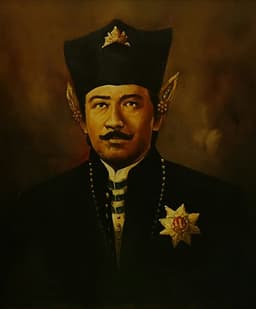
Sultan Agung of Mataram
Emperor · Modern
69.3Total
Basic Information
Born
1552
1593
Died
1612
1645
Era
Modern
Modern
Nationality
Holy Roman Empire
Indonesia
Occupation
Emperor
Emperor
Civilization
Western
Eastern
Score Comparison
Military (10%)
20.0
82.0
Political (20%)
33.6
70.3
Influence (20%)
58.0
72.0
Legacy (20%)
43.3
55.0
Leadership (15%)
55.3
80.0
Strategy (15%)
54.3
68.1
TOTAL
46.1
69.3
Rudolf II — Complete Timeline
1580 AD
Patronage of Alchemy and the ArtsCultural◆ Major
Rudolf II established a renowned court in Prague, attracting alchemists, astronomers, and artists from across Europe. He employed Tycho Brahe and Johannes Kepler, and his art collection was one of the largest in Europe. However, his obsession with the occult and neglect of governance led to political instability.
PatronageAlchemyPrague Court
Impact: globalconstructive
1593 AD
Long Turkish WarWar◆ Major
Rudolf II's reign saw the outbreak of the Long Turkish War against the Ottoman Empire, which lasted from 1593 to 1606. The war was costly and indecisive, draining the imperial treasury and leading to unrest among the nobility. Rudolf's inability to effectively manage the war contributed to his declining authority.
Long Turkish WarOttoman EmpireMilitary Conflict
Impact: regionaldestructive
1609 AD
Letter of MajestyPolitical Action◆ Major
Rudolf II issued the Letter of Majesty, granting religious freedom to the Protestant estates of Bohemia. This was a concession forced upon him by the Bohemian nobility, who threatened rebellion. The Letter of Majesty became a key document in the lead-up to the Thirty Years' War, as it was later revoked by Rudolf's successor.
Letter of MajestyReligious FreedomBohemia
Impact: regionalprogressive
1611 AD
Deposition as King of BohemiaPolitical Action◆ Major
Rudolf II was deposed as King of Bohemia by his brother Matthias, who had the support of the Habsburg family and the Bohemian estates. Rudolf was forced to cede the crown of Bohemia to Matthias, retaining only the imperial title. This marked the end of his effective rule and a humiliating defeat.
DepositionHabsburg Family FeudBohemia
Impact: regionaltragic
Sultan Agung of Mataram — Complete Timeline
1613 AD
Establishment of Mataram as a Centralized KingdomPolitical Action◆ Major
Upon ascending the throne, Sultan Agung centralized political power by subduing rebellious vassals and reorganizing the administration. He established a strong bureaucracy and military structure, transforming Mataram from a fragmented state into a unified and powerful kingdom in Java.
CentralizationState BuildingMataram Kingdom
Impact: nationalconstructive
1625 AD
Conquest of Surabaya (1625)War◆ Major
Sultan Agung conquered the powerful city-state of Surabaya, a major trading port in eastern Java. This victory unified most of Java under Mataram's control, consolidating his rule and expanding the empire's territory and influence.
Javanese UnificationConquestMataram Expansion
Impact: regionalconstructive
1628 AD
Siege of Batavia (1628-1629)War◆ Major
Sultan Agung launched a major military campaign to expel the Dutch East India Company (VOC) from Batavia (present-day Jakarta). The Mataram army besieged the city but failed due to logistical issues and Dutch naval superiority, marking a significant setback for Javanese expansion.
Dutch Colonial WarSiegeMataram-VOC Conflict
Impact: regionaldestructive
1633 AD
Reform of the Javanese Calendar (1633)Cultural◆ Major
Sultan Agung introduced a new Javanese calendar system that combined the Islamic lunar calendar with the existing Hindu-Javanese Saka calendar. This reform aimed to unify the kingdom under a single timekeeping system and strengthen Islamic identity while preserving local traditions.
Calendar ReformIslamic InfluenceCultural Synthesis
Impact: nationalconstructive
This comparison has not been analyzed yet.
One-time AI generation (~1 minute). Scores and timeline are already available below.
Rankings
🥇
Sultan Agung of MataramLeader
Mil: 82.0Pol: 70.3Inf: 72.0
69.3
🥈
Rudolf II
Mil: 20.0Pol: 33.6Inf: 58.0
46.1
+23.2 behind
How This Comparison Works
Algorithm
Each figure is scored on 6 dimensions (0—100 scale) based on structured historical data: Military (10%), Political (20%), Influence (20%), Legacy (20%), Leadership (15%), Strategy (15%). The weighted total produces the final ranking.
Data Sources
Scores are computed from structured sub-indicators in the database. Scale factors adjust for era (Ancient ×0.85, Modern ×1.0) and civilization size (Eastern ×1.05, Other ×0.80) to account for differences in population and military scale.
Maximum 3 Figures
Comparisons are limited to 2—3 figures to ensure readability and statistical meaningfulness.
Error Margins
±5 points per dimension — Sub-scores are derived from historical records with inherent uncertainty. Two figures within 5 points on a dimension should be considered roughly equivalent in that area.
Total Score Accuracy
±3 points overall — The weighted combination of 6 dimensions produces a total score with approximately ±3 points of uncertainty. Differences of less than 3 points are not statistically significant— the figures are effectively tied.
Known Limitations
- Historical records are incomplete and uneven across civilizations
- Figures from oral-tradition societies may be underrepresented
- Occupation labels can misclassify multi-role figures
- Scores measure capability and impact, not moral character
- Quantitative scoring is a comparison tool, not absolute truth
Capability Radar
Military (10%) — Battles & Warfare
Battles
5
75
Win Rate
5
70
Expansion
5
80
Political (20%) — Governance & Reform
Reform
20
80
Diplomacy
20
70
Economy
15
75
Influence (20%) — Cultural & Global Reach
Cultural
60
75
Global
30
60
Legacy (20%) — Historical Impact
Historical
40
80
Longevity
30
70
Leadership (15%) — Power & Stability
Tenure
40
85
Stability
10
70
Strategy (15%) — Tactics & Innovation
Strategy
5
85
Tactics
5
80
Reform
5
75
Similar Comparisons
Comments & Discussion
No comments yet. Be the first to share your thoughts!