Loading...
Sultan Agung of Mataram vs Sultan Qaboos of Oman
Sultan Agung of Mataram leads by 14.6 pts · 2 figures compared
…
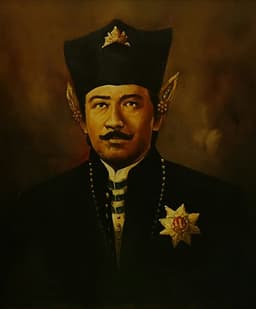
Sultan Agung of Mataram
Emperor · Modern
69.3Total
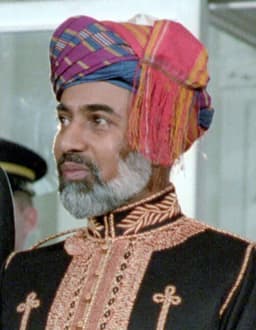
Sultan Qaboos of Oman
Emperor · Modern
54.7Total
Basic Information
Born
1593
1940
Died
1645
—
Era
Modern
Modern
Nationality
Indonesia
Oman
Occupation
Emperor
Emperor
Civilization
Eastern
Middle Eastern
Score Comparison
Military (10%)
82.0
14.9
Political (20%)
70.3
72.0
Influence (20%)
72.0
61.0
Legacy (20%)
55.0
47.5
Leadership (15%)
80.0
72.0
Strategy (15%)
68.1
45.0
TOTAL
69.3
54.7
Sultan Agung of Mataram — Complete Timeline
1613 AD
Establishment of Mataram as a Centralized KingdomPolitical Action◆ Major
Upon ascending the throne, Sultan Agung centralized political power by subduing rebellious vassals and reorganizing the administration. He established a strong bureaucracy and military structure, transforming Mataram from a fragmented state into a unified and powerful kingdom in Java.
CentralizationState BuildingMataram Kingdom
Impact: nationalconstructive
1625 AD
Conquest of Surabaya (1625)War◆ Major
Sultan Agung conquered the powerful city-state of Surabaya, a major trading port in eastern Java. This victory unified most of Java under Mataram's control, consolidating his rule and expanding the empire's territory and influence.
Javanese UnificationConquestMataram Expansion
Impact: regionalconstructive
1628 AD
Siege of Batavia (1628-1629)War◆ Major
Sultan Agung launched a major military campaign to expel the Dutch East India Company (VOC) from Batavia (present-day Jakarta). The Mataram army besieged the city but failed due to logistical issues and Dutch naval superiority, marking a significant setback for Javanese expansion.
Dutch Colonial WarSiegeMataram-VOC Conflict
Impact: regionaldestructive
1633 AD
Reform of the Javanese Calendar (1633)Cultural◆ Major
Sultan Agung introduced a new Javanese calendar system that combined the Islamic lunar calendar with the existing Hindu-Javanese Saka calendar. This reform aimed to unify the kingdom under a single timekeeping system and strengthen Islamic identity while preserving local traditions.
Calendar ReformIslamic InfluenceCultural Synthesis
Impact: nationalconstructive
Sultan Qaboos of Oman — Complete Timeline
1970 AD
Modernization and Infrastructure DevelopmentReform◆ Major
Qaboos used oil revenues to build modern infrastructure: roads, schools, hospitals, and ports. He also established a modern government, including a cabinet and a consultative council, transforming Oman from a feudal state.
DevelopmentInfrastructureEducation
Impact: nationalconstructive
Accession as Sultan of OmanPolitical Action
Qaboos bin Said overthrew his father, Sultan Said bin Taimur, in a bloodless coup with British support. He became Sultan and immediately began modernizing Oman, ending its isolation.
CoupModernizationOman
Impact: national
1975 AD
End of the Dhofar RebellionWar◆ Major
Qaboos successfully ended the Dhofar Rebellion, a Marxist insurgency in southern Oman, through a combination of military force and development programs. This secured his rule and unified the country.
Civil WarDhofarCounterinsurgency
Impact: national
1980 AD
Oman's Neutral Foreign PolicyPolitical Action◆ Major
Qaboos established Oman as a neutral mediator in regional conflicts, maintaining diplomatic ties with both Iran and the West. This policy allowed Oman to host secret talks between the US and Iran.
DiplomacyNeutralityMediation
Impact: regionalconstructive
2020 AD
Death Without HeirOther◆ Major
Qaboos died on January 10, 2020, without a direct heir. He had named his successor, Haitham bin Tariq, in a sealed letter, ensuring a smooth transition. His death marked the end of a 50-year reign.
DeathSuccessionEnd of Era
Impact: nationaltragic
Expert Analysis
Origins
Sultan Agung of Mataram was born in 1593 in Kotagede, the capital of the Mataram Sultanate in central Java. He was the son of Sultan Anyakrakusuma (Panembahan Senapati's successor) and a Javanese noblewoman. His early life was steeped in Javanese court traditions and military training. He ascended the throne in 1613 at age 20, inheriting a kingdom that was still consolidating its power after his grandfather's conquests.
Sultan Qaboos bin Said was born on November 18, 1940, in Salalah, Oman, the only son of Sultan Said bin Taimur. He was educated privately in Salalah, then at the Royal Military Academy Sandhurst in England, and later served in the British Army. His father kept him isolated and under house arrest for years due to fears of a coup. Qaboos's upbringing combined traditional Omani values with Western military and administrative training.
Rise to Power
Sultan Agung's rise was immediate upon his father's death in 1613. He quickly moved to consolidate power by subduing rebellious vassals and conquering neighboring territories. His first major campaign was against the powerful city-state of Surabaya, which he besieged and conquered in 1625 after a five-year war. This victory unified most of Java under Mataram's control, giving him a strong base. He then turned his attention to the Dutch East India Company (VOC) in Batavia, which he saw as a foreign threat to his hegemony.
Sultan Qaboos rose to power through a bloodless coup on July 23, 1970. With British support, he overthrew his father, Sultan Said bin Taimur, who had kept Oman isolated and underdeveloped. Qaboos immediately began modernizing the country, using oil revenues to build infrastructure. He also faced the Dhofar Rebellion, a Marxist insurgency in southern Oman, which he ended by 1975 through a combination of military force and development programs that won over tribal loyalties.
Leadership & Governance
Sultan Agung ruled as an absolute monarch, centralizing power by subduing local lords and reorganizing the administration. He established a bureaucratic system based on Javanese hierarchy, with officials appointed by the sultan. He also reformed the Javanese calendar in 1633, merging Islamic and Hindu-Javanese systems to unify his kingdom culturally. His governance was focused on expansion and consolidation, with a strong emphasis on military campaigns. He led from the front, personally commanding armies, and his leadership was characterized by decisive action and strategic patience.
Sultan Qaboos ruled as an absolute monarch but with a modernizing agenda. He established a cabinet, a consultative council (Majlis al-Shura), and a legal system based on Sharia and civil law. He used oil wealth to build schools, hospitals, roads, and ports, transforming Oman from a medieval state into a modern nation. His foreign policy was neutral, mediating regional disputes between Iran and the West. He maintained tight personal control over decision-making, but his leadership was less militaristic and more focused on development and diplomacy. In terms of political score, Qaboos scored 72.0 compared to Agung's 70.3, reflecting his effective state-building.
Triumph & Tragedy
Sultan Agung's greatest triumph was the conquest of Surabaya in 1625, which unified Java under Mataram. His siege of Batavia in 1628-1629, though ultimately a failure, demonstrated his ambition and military capability. His reform of the Javanese calendar had lasting cultural impact. However, his failure to expel the Dutch from Batavia was a major setback. The siege failed due to logistical problems, disease, and Dutch naval superiority. This failure prevented Mataram from becoming a maritime power. His later years saw declining health and the rebellion of his son, leading to a succession crisis after his death in 1645.
Sultan Qaboos's triumph was the modernization of Oman. He ended the Dhofar Rebellion, brought stability, and built a modern state. His neutral foreign policy gave Oman a role as a mediator. He also ensured a smooth succession by naming his successor in a sealed letter. However, his failure to produce an heir or establish a clear succession mechanism created uncertainty. His absolute rule meant that his death in 2020 left a leadership vacuum, though the transition to Haitham bin Tariq was smooth. His military score of 14.9 reflects his lack of emphasis on military expansion; his focus was on development.
Character & Destiny
Sultan Agung was ambitious, strategic, and determined. He was a skilled military commander and a shrewd politician. His character drove him to pursue unification of Java and confrontation with the Dutch. His destiny was shaped by the limits of Javanese military technology and the resilience of the Dutch colonial power. He died without achieving his goal of expelling the Dutch, but his legacy as a unifier and cultural reformer endured. Historical assessments view him as the greatest Mataram sultan, but also as a ruler whose ambition exceeded his resources.
Sultan Qaboos was cautious, pragmatic, and visionary. He was a modernizer who used oil wealth wisely. His character led him to avoid conflict and focus on development. His destiny was to transform Oman peacefully. However, his isolation and absolute rule meant that he did not develop strong democratic institutions. Historians note his success in modernization but also his failure to prepare for a post-oil era. His leadership score of 72.0 is close to Agung's 80.0, but his overall score of 54.7 is lower due to his lack of military achievements.
Legacy
Sultan Agung's legacy is primarily cultural and political. He unified Java, reformed the calendar, and established Mataram as a centralized kingdom. He is remembered as a national hero in Indonesia, a symbol of resistance against colonialism. His military campaigns against the Dutch are celebrated, even though they failed. His influence score of 72.0 reflects his lasting impact on Javanese culture and identity. However, his legacy score of 55.0 is moderate because his state did not survive long after his death; Mataram declined in the 18th century.
Sultan Qaboos's legacy is that of a modernizer. He transformed Oman from a backward, isolated country into a modern, stable state. His neutral foreign policy gave Oman a unique role in the region. He left behind a well-functioning state with infrastructure and institutions. His legacy score of 47.5 seems low but reflects the fact that his achievements are recent and may be overshadowed by future challenges. His influence score of 61.0 is due to his role as a mediator. Overall, his total score of 54.7 is lower than Agung's 69.3.
Conclusion
Sultan Agung had a greater impact on history than Sultan Qaboos. His military score of 82.0 compared to Qaboos's 14.9 is a stark difference. Agung's unification of Java and resistance against European colonialism set a precedent for Indonesian nationalism. Qaboos modernized Oman, but his achievements were more incremental and less transformative on a global scale. Agung's total score of 69.3 versus Qaboos's 54.7 (a gap of 14.6 points) reflects his broader influence and stronger leadership. While Qaboos was an effective modernizer, Agung's ambition and impact on Javanese history make him the more significant figure.
Rankings
🥇
Sultan Agung of MataramLeader
Mil: 82.0Pol: 70.3Inf: 72.0
69.3
🥈
Sultan Qaboos of Oman
Mil: 14.9Pol: 72.0Inf: 61.0
54.7
+14.6 behind
How This Comparison Works
Algorithm
Each figure is scored on 6 dimensions (0—100 scale) based on structured historical data: Military (10%), Political (20%), Influence (20%), Legacy (20%), Leadership (15%), Strategy (15%). The weighted total produces the final ranking.
Data Sources
Scores are computed from structured sub-indicators in the database. Scale factors adjust for era (Ancient ×0.85, Modern ×1.0) and civilization size (Eastern ×1.05, Other ×0.80) to account for differences in population and military scale.
Maximum 3 Figures
Comparisons are limited to 2—3 figures to ensure readability and statistical meaningfulness.
Error Margins
±5 points per dimension — Sub-scores are derived from historical records with inherent uncertainty. Two figures within 5 points on a dimension should be considered roughly equivalent in that area.
Total Score Accuracy
±3 points overall — The weighted combination of 6 dimensions produces a total score with approximately ±3 points of uncertainty. Differences of less than 3 points are not statistically significant— the figures are effectively tied.
Known Limitations
- Historical records are incomplete and uneven across civilizations
- Figures from oral-tradition societies may be underrepresented
- Occupation labels can misclassify multi-role figures
- Scores measure capability and impact, not moral character
- Quantitative scoring is a comparison tool, not absolute truth
Capability Radar
Military (10%) — Battles & Warfare
Battles
75
5
Win Rate
70
5
Expansion
80
10
Political (20%) — Governance & Reform
Reform
80
85
Diplomacy
70
80
Economy
75
80
Influence (20%) — Cultural & Global Reach
Cultural
75
50
Global
60
55
Legacy (20%) — Historical Impact
Historical
80
55
Longevity
70
40
Leadership (15%) — Power & Stability
Tenure
85
95
Stability
70
85
Strategy (15%) — Tactics & Innovation
Strategy
85
15
Tactics
80
10
Reform
75
60
Similar Comparisons
Comments & Discussion
No comments yet. Be the first to share your thoughts!