Loading...
This comparison has not been analyzed yet.
One-time AI generation (~1 minute). Scores and timeline are already available below.
Sahle-Work Zewde vs Shukri al-Quwatli
Shukri al-Quwatli leads by 3.1 pts · 2 figures compared
…

Sahle-Work Zewde
Politician · Modern
48.9Total
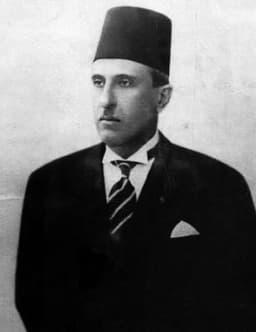
Shukri al-Quwatli
Politician · Modern
52.0Total
Basic Information
Born
1950
1891
Died
—
1967
Era
Modern
Modern
Nationality
Ethiopia
Syria
Occupation
Politician
Politician
Civilization
Other
Middle Eastern
Score Comparison
Military (10%)
24.0
48.6
Political (20%)
45.1
61.3
Influence (20%)
57.2
51.0
Legacy (20%)
41.7
45.0
Leadership (15%)
74.0
65.0
Strategy (15%)
39.4
42.2
TOTAL
48.9
52.0
Sahle-Work Zewde — Complete Timeline
2011 AD
Appointed as United Nations Under-Secretary-GeneralPolitical Action
Sahle-Work was appointed by UN Secretary-General Ban Ki-moon as Under-Secretary-General and Special Representative to the African Union. This role recognized her diplomatic experience, having previously served as Ethiopian ambassador to several countries.
UNDiplomacyAfrican Union
Impact: regionalconstructive
Appointed as Director-General of the UN Office at NairobiPolitical Action
Sahle-Work became the first woman to head the United Nations Office at Nairobi (UNON). She managed the UN's operations in Kenya, overseeing administrative and conference services for UN agencies in the region.
UNNairobiDiplomacy
Impact: regionalconstructive
2018 AD
Elected as first female President of EthiopiaPolitical Action◆ Major
Sahle-Work Zewde was elected by the Ethiopian parliament as the country's first female president. A career diplomat, her election was part of Prime Minister Abiy Ahmed's reforms to promote gender equality in government, though the presidency is largely ceremonial.
First Female PresidentGender EqualityEthiopia
Impact: nationalprogressive
Shukri al-Quwatli — Complete Timeline
1943 AD
Elected first president of independent SyriaPolitical Action
Shukri al-Quwatli was elected as the first president of Syria after the country gained independence from Vichy France. He led the nationalist movement and worked to consolidate Syrian sovereignty, serving from 1943 to 1949.
IndependenceNationalismPresidency
Impact: nationalconstructive
1949 AD
Overthrown in the 1949 Syrian coup d'étatPolitical Action◆ Major
President al-Quwatli was overthrown by a military coup led by Husni al-Zaim on March 30, 1949. The coup was the first in Syria's modern history and ended civilian rule, leading to a period of military interventions in politics.
CoupMilitaryOverthrow
Impact: nationaldestructive
1955 AD
Returned to presidency after Adib Shishakli's fallPolitical Action◆ Major
Al-Quwatli was re-elected as president of Syria in 1955 after the fall of the military regime of Adib Shishakli. He returned to power during a period of political instability and growing influence of the Ba'ath Party.
Return to PowerPresidencyPolitical Instability
Impact: national
1958 AD
Signed the agreement forming the United Arab RepublicPolitical Action◆ Major
President al-Quwatli signed the agreement with Egyptian President Gamal Abdel Nasser to form the United Arab Republic, a union of Syria and Egypt. The union was intended to strengthen Arab unity but lasted only until 1961.
Arab UnityUnionNasser
Impact: regionalconstructive
1961 AD
Resigned after Syrian secession from the UARPolitical Action
After a military coup in Syria ended the United Arab Republic, al-Quwatli resigned from the presidency. He went into exile and died in 1967, having failed to restore his political influence.
ResignationExileUAR Collapse
Impact: nationaltragic
This comparison has not been analyzed yet.
One-time AI generation (~1 minute). Scores and timeline are already available below.
Rankings
🥇
Shukri al-QuwatliLeader
Mil: 48.6Pol: 61.3Inf: 51.0
52.0
🥈
Sahle-Work Zewde
Mil: 24.0Pol: 45.1Inf: 57.2
48.9
+3.1 behind
How This Comparison Works
Algorithm
Each figure is scored on 6 dimensions (0—100 scale) based on structured historical data: Military (10%), Political (20%), Influence (20%), Legacy (20%), Leadership (15%), Strategy (15%). The weighted total produces the final ranking.
Data Sources
Scores are computed from structured sub-indicators in the database. Scale factors adjust for era (Ancient ×0.85, Modern ×1.0) and civilization size (Eastern ×1.05, Other ×0.80) to account for differences in population and military scale.
Maximum 3 Figures
Comparisons are limited to 2—3 figures to ensure readability and statistical meaningfulness.
Error Margins
±5 points per dimension — Sub-scores are derived from historical records with inherent uncertainty. Two figures within 5 points on a dimension should be considered roughly equivalent in that area.
Total Score Accuracy
±3 points overall — The weighted combination of 6 dimensions produces a total score with approximately ±3 points of uncertainty. Differences of less than 3 points are not statistically significant— the figures are effectively tied.
Known Limitations
- Historical records are incomplete and uneven across civilizations
- Figures from oral-tradition societies may be underrepresented
- Occupation labels can misclassify multi-role figures
- Scores measure capability and impact, not moral character
- Quantitative scoring is a comparison tool, not absolute truth
Capability Radar
Military (10%) — Battles & Warfare
Battles
21
20
Win Rate
23
27
Expansion
25
27
Political (20%) — Governance & Reform
Reform
30
45
Diplomacy
55
55
Economy
25
30
Influence (20%) — Cultural & Global Reach
Cultural
35
25
Global
40
20
Legacy (20%) — Historical Impact
Historical
30
40
Longevity
20
30
Leadership (15%) — Power & Stability
Tenure
40
60
Stability
45
20
Strategy (15%) — Tactics & Innovation
Strategy
32
30
Tactics
35
36
Reform
38
36
Similar Comparisons
Comments & Discussion
No comments yet. Be the first to share your thoughts!