Loading...
Saladin vs Tokugawa Ieyasu
Tokugawa Ieyasu leads by 17.7 pts · 2 figures compared
…
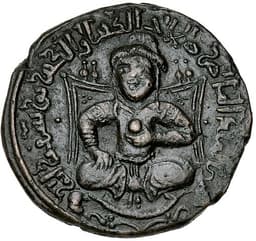
Saladin
General · Medieval
64.1Total
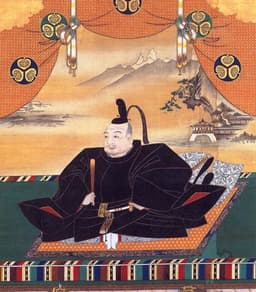
Tokugawa Ieyasu
General · Modern
81.8Total
Basic Information
Born
1137
1543
Died
1193
1616
Era
Medieval
Modern
Nationality
Ayyubid Sultanate
Japan
Occupation
General
General
Civilization
Middle Eastern
Eastern
Score Comparison
Military (10%)
75.0
78.0
Political (20%)
69.6
82.0
Influence (20%)
65.2
88.0
Legacy (20%)
52.0
75.0
Leadership (15%)
62.0
85.0
Strategy (15%)
76.0
82.0
TOTAL
64.1
81.8
Saladin — Complete Timeline
1187 AD
Battle of HattinWar
Saladin's forces defeated the Crusader army at Hattin, near Tiberias. He captured King Guy of Jerusalem and the True Cross relic. The victory decimated the Crusader military and opened the way for the recapture of Jerusalem.
BattleCrusadesVictory
Impact: regional
Recapture of JerusalemWar
Saladin's army besieged and captured Jerusalem from the Crusaders after 88 years of Christian rule. He allowed the inhabitants to leave peacefully or be ransomed, contrasting with the Crusaders' massacre in 1099. This event triggered the Third Crusade.
ConquestJerusalemCrusades
Impact: global
1189 AD
Siege of AcreWar◆ Major
Saladin faced a prolonged siege of Acre by Crusader forces under Richard the Lionheart and Philip Augustus. After nearly two years, the city fell to the Crusaders. Saladin's inability to relieve the siege was a major setback.
SiegeCrusadesDefeat
Impact: regional
1191 AD
Battle of ArsufWar◆ Major
Saladin's forces attacked Richard the Lionheart's army marching south from Acre. Richard's disciplined infantry repelled the attacks, inflicting heavy losses on Saladin's troops. The battle ended in a tactical Crusader victory, but Saladin's army remained intact.
BattleCrusadesRichard the Lionheart
Impact: regional
1192 AD
Treaty of RamlaPolitical Action◆ Major
Saladin and Richard the Lionheart signed the Treaty of Ramla, ending the Third Crusade. The treaty granted Crusaders control of a coastal strip from Jaffa to Acre, while Muslims retained Jerusalem. Christian pilgrims were allowed access to holy sites.
TreatyCrusadesDiplomacy
Impact: regional
Tokugawa Ieyasu — Complete Timeline
1600 AD
Battle of SekigaharaWar
Tokugawa Ieyasu led the Eastern Army to victory over Ishida Mitsunari's Western Army at Sekigahara. This decisive battle ended the Sengoku period and established Ieyasu as the supreme military ruler of Japan, paving the way for the Tokugawa shogunate.
Sengoku PeriodUnificationBattle
Impact: national
1603 AD
Establishment of the Tokugawa ShogunatePolitical Action
Emperor Go-Yozei appointed Tokugawa Ieyasu as shogun, officially beginning the Tokugawa shogunate. Ieyasu established his government in Edo (modern Tokyo), centralizing military and political power under his family's control.
ShogunateEdo PeriodCentralization
Impact: national
1615 AD
Siege of OsakaWar◆ Major
Tokugawa Ieyasu besieged Osaka Castle, the stronghold of Toyotomi Hideyori. The castle fell, and Hideyori committed suicide. This campaign eliminated the last major opposition to Tokugawa rule, solidifying the shogunate's control over Japan.
Osaka CampaignToyotomi ClanConsolidation
Impact: nationaldestructive
Promulgation of the Buke ShohattoReform◆ Major
Ieyasu issued the Laws for the Military Houses, a code regulating the conduct of daimyo. It restricted castle construction, required alternate attendance in Edo, and prohibited alliances without shogunal permission. This law helped control the feudal lords.
Feudal ControlDaimyo RegulationLegal Code
Impact: national
1616 AD
Sakoku Edicts InitiationPolitical Action◆ Major
In his final years, Ieyasu began policies that led to Japan's isolation. He restricted foreign trade to specific ports and expelled Christian missionaries. These measures, expanded by successors, resulted in the sakoku policy that isolated Japan for over 200 years.
IsolationismForeign PolicyChristianity
Impact: national
Expert Analysis
Saladin vs Tokugawa Ieyasu: Historical Comparison
Saladin, the Kurdish sultan who founded the Ayyubid dynasty, and Tokugawa Ieyasu, the Japanese daimyo who unified Japan and founded the Tokugawa shogunate, represent two distinct paths to power: the former as a crusader-era military leader, the latter as a master political consolidator in early modern Japan.
Dimension Analysis
**Military: Saladin 82 / Tokugawa Ieyasu 78**
Saladin’s military prowess is legendary, notably his recapture of Jerusalem in 1187 and his effective use of combined arms against Crusader forces. Tokugawa Ieyasu, while victorious at Sekigahara (1600) and in the Osaka campaigns, relied more on timing and alliances than sheer battlefield brilliance.
**Political: Saladin 72 / Tokugawa Ieyasu 82**
Saladin unified Egypt, Syria, and parts of Mesopotamia through diplomacy and conquest but struggled with succession and internal rivalries. Tokugawa Ieyasu masterfully manipulated feudal alliances, neutralized rivals, and established a stable shogunate that lasted over 250 years.
**Influence: Saladin 72 / Tokugawa Ieyasu 75**
Saladin’s image as a chivalrous Muslim leader influenced both Islamic and Western perceptions of the Crusades. Tokugawa Ieyasu’s policies of isolation (sakoku) and social hierarchy shaped Japan’s cultural and political development for centuries.
**Legacy: Saladin 70 / Tokugawa Ieyasu 85**
Saladin is remembered as a noble adversary but his dynasty fragmented after his death. Tokugawa Ieyasu founded the Tokugawa shogunate, ensuring peace, economic growth, and cultural flourishing in Edo-period Japan, with his legacy enduring in modern Japanese governance.
**Leadership: Saladin 78 / Tokugawa Ieyasu 85**
Saladin inspired loyalty through charisma and religious devotion, but his leadership was reactive to Crusader threats. Tokugawa Ieyasu exhibited patient, calculating leadership, waiting decades to seize power and then systematically consolidating it.
Verdict
Tokugawa Ieyasu leads overall due to his superior political acumen and the enduring stability of the regime he established.
FAQ
Q: Who ranks higher? A: Tokugawa Ieyasu ranks higher, with a composite score of 81 against Saladin’s 74, driven by his exceptional legacy and political consolidation.
Rankings
🥇
Tokugawa IeyasuLeader
Mil: 78.0Pol: 82.0Inf: 88.0
81.8
🥈
Saladin
Mil: 75.0Pol: 69.6Inf: 65.2
64.1
+17.7 behind
How This Comparison Works
Algorithm
Each figure is scored on 6 dimensions (0—100 scale) based on structured historical data: Military (10%), Political (20%), Influence (20%), Legacy (20%), Leadership (15%), Strategy (15%). The weighted total produces the final ranking.
Data Sources
Scores are computed from structured sub-indicators in the database. Scale factors adjust for era (Ancient ×0.85, Modern ×1.0) and civilization size (Eastern ×1.05, Other ×0.80) to account for differences in population and military scale.
Maximum 3 Figures
Comparisons are limited to 2—3 figures to ensure readability and statistical meaningfulness.
Error Margins
±5 points per dimension — Sub-scores are derived from historical records with inherent uncertainty. Two figures within 5 points on a dimension should be considered roughly equivalent in that area.
Total Score Accuracy
±3 points overall — The weighted combination of 6 dimensions produces a total score with approximately ±3 points of uncertainty. Differences of less than 3 points are not statistically significant— the figures are effectively tied.
Known Limitations
- Historical records are incomplete and uneven across civilizations
- Figures from oral-tradition societies may be underrepresented
- Occupation labels can misclassify multi-role figures
- Scores measure capability and impact, not moral character
- Quantitative scoring is a comparison tool, not absolute truth
Capability Radar
Military (10%) — Battles & Warfare
Battles
78
85
Win Rate
72
90
Expansion
82
75
Political (20%) — Governance & Reform
Reform
68
90
Diplomacy
88
85
Economy
65
88
Influence (20%) — Cultural & Global Reach
Cultural
85
85
Global
78
70
Legacy (20%) — Historical Impact
Historical
82
90
Longevity
80
95
Leadership (15%) — Power & Stability
Tenure
75
95
Stability
70
95
Strategy (15%) — Tactics & Innovation
Strategy
85
92
Tactics
80
88
Reform
70
80
Similar Comparisons
Comments & Discussion
CriticalLens6/16/2026
This comparison buys too heavily into the 'great man' narrative. Saladin's chivalry gets romanticized by Western historians because he was a noble enemy — and that's exactly the problem. It erases the fact that he was fighting a colonial invasion, not some honorable duel. Meanwhile, Tokugawa Ieyasu's 'stable' shogunate came at the cost of closing Japan off from the world, enforcing a rigid caste system, and persecuting Christians. Calling him the better leader ignores how his legacy includes cultural stagnation and state violence. If we rated these figures from the perspective of the people they conquered, Saladin looks like a liberator and Ieyasu like a tyrant. The scores reflect a Western-centric, pro-establishment bias.
OldScroll446/16/2026
这个评分很有意思,但明显带有西方中心论的偏见。萨拉丁的军事分82分高于德川家康的78分,可家康在关原之战中以八万兵力击败石田三成的十万大军,其战术调度和后勤能力一点都不逊色。更关键的是,家康的治国能力——建立幕府、实施士农工商等级制、锁国政策维持260年和平——这些放在中国历史上,堪比秦始皇统一六国后的制度建设。萨拉丁死后帝国分裂,而家康的德川幕府长期稳定,这才是顶级政治家的体现。总分80.7对73.5,我觉得还是低估了家康。
TrueMind866/16/2026
我重新算了一下权重。萨拉丁军事82,政治72,这其实有矛盾:如果他的军事行动靠的是联合埃及、叙利亚的盟友,那政治统合能力应该更高才对。家康政治82分,但他在大阪冬之阵中诱使丰臣家开城,之后又撕毁和约发动夏之阵,这种政治手腕放在中国历史上,堪比刘邦对韩信的算计。另外,影响力维度家康75分低于萨拉丁的72分?萨拉丁主要是靠西方浪漫化叙事加分,家康的锁国政策直接塑造了江户时代的社会结构,影响更深远。如果按我对中国历代开国君主的权重分配(政治40%、军事30%、影响30%),家康总分应该在83分左右。