Loading...
Napoleon Bonaparte vs Saladin
Napoleon Bonaparte leads by 6.8 pts · 2 figures compared
…

Napoleon Bonaparte
General · Modern
70.9Total
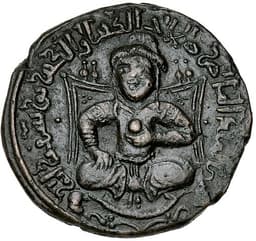
Saladin
General · Medieval
64.1Total
Basic Information
Born
1769
1137
Died
1821
1193
Era
Modern
Medieval
Nationality
France
Ayyubid Sultanate
Occupation
General
General
Civilization
Western
Middle Eastern
Score Comparison
Military (10%)
94.0
75.0
Political (20%)
72.0
69.6
Influence (20%)
40.0
65.2
Legacy (20%)
80.0
52.0
Leadership (15%)
78.0
62.0
Strategy (15%)
90.0
76.0
TOTAL
70.9
64.1
Napoleon Bonaparte — Complete Timeline
1799 AD
Coup of 18 BrumaireOther◆ Major
Napoleon Bonaparte, with support from his brother Lucien and key political figures, overthrew the Directory in a bloodless coup. He established the Consulate with himself as First Consul, effectively becoming the ruler of France. This event ended the French Revolution's most unstable period.
French RevolutionCoupRise to Power
Impact: regional
1804 AD
Promulgation of the Napoleonic CodeOther◆ Major
Napoleon enacted the Civil Code of the French, known as the Napoleonic Code, a comprehensive set of laws that replaced the fragmented feudal legal systems. The code established legal equality, protected property rights, and secularized law. It became the basis for legal systems in many European and world countries.
Legal ReformNapoleonic CodeCivil Law
Impact: globalconstructive
1805 AD
Battle of AusterlitzWar◆ Major
Napoleon's Grande Arm
Napoleonic WarsBattleDecisive Victory
Impact: global
1812 AD
Invasion of RussiaWar◆ Major
Napoleon led the Grande Arm
Napoleonic WarsInvasionDisaster
Impact: globaldestructive
1815 AD
Battle of WaterlooWar◆ Major
Napoleon's French army was defeated by the combined forces of the Duke of Wellington's Anglo-Allied army and Gebhard Leberecht von Bl
Napoleonic WarsBattleFinal Defeat
Impact: globaldestructive
Saladin — Complete Timeline
1187 AD
Battle of HattinWar
Saladin's forces defeated the Crusader army at Hattin, near Tiberias. He captured King Guy of Jerusalem and the True Cross relic. The victory decimated the Crusader military and opened the way for the recapture of Jerusalem.
BattleCrusadesVictory
Impact: regional
Recapture of JerusalemWar
Saladin's army besieged and captured Jerusalem from the Crusaders after 88 years of Christian rule. He allowed the inhabitants to leave peacefully or be ransomed, contrasting with the Crusaders' massacre in 1099. This event triggered the Third Crusade.
ConquestJerusalemCrusades
Impact: global
1189 AD
Siege of AcreWar◆ Major
Saladin faced a prolonged siege of Acre by Crusader forces under Richard the Lionheart and Philip Augustus. After nearly two years, the city fell to the Crusaders. Saladin's inability to relieve the siege was a major setback.
SiegeCrusadesDefeat
Impact: regional
1191 AD
Battle of ArsufWar◆ Major
Saladin's forces attacked Richard the Lionheart's army marching south from Acre. Richard's disciplined infantry repelled the attacks, inflicting heavy losses on Saladin's troops. The battle ended in a tactical Crusader victory, but Saladin's army remained intact.
BattleCrusadesRichard the Lionheart
Impact: regional
1192 AD
Treaty of RamlaPolitical Action◆ Major
Saladin and Richard the Lionheart signed the Treaty of Ramla, ending the Third Crusade. The treaty granted Crusaders control of a coastal strip from Jaffa to Acre, while Muslims retained Jerusalem. Christian pilgrims were allowed access to holy sites.
TreatyCrusadesDiplomacy
Impact: regional
Expert Analysis
Napoleon Bonaparte vs Saladin: Historical Comparison
Napoleon Bonaparte and Saladin were two of history's most renowned military commanders, each reshaping their respective eras through conquest and governance. While Napoleon dominated early modern Europe with revolutionary tactics, Saladin unified the medieval Islamic world and recaptured Jerusalem.
Dimension Analysis
**Military: Napoleon Bonaparte 94 / Saladin 82**
Napoleon’s rapid campaigns, use of artillery, and corps system revolutionized warfare, achieving decisive victories like Austerlitz. Saladin’s strength lay in strategic patience and logistics, culminating in the recapture of Jerusalem, but he lacked Napoleon’s tactical innovation and battlefield dominance.
**Political: Napoleon Bonaparte 75 / Saladin 72**
Napoleon centralized France under the Napoleonic Code and expanded empire, but his overreach led to downfall. Saladin forged a fragile Sunni coalition against the Crusaders, balancing diplomacy and religious legitimacy, yet his realm fragmented after his death.
**Influence: Napoleon Bonaparte 82 / Saladin 72**
Napoleon’s legal and administrative reforms echoed across Europe and the Americas, shaping modern statehood. Saladin’s chivalric reputation influenced both Islamic and Western perceptions of Crusader-era leadership, but his direct geopolitical impact was more regionally confined.
**Legacy: Napoleon Bonaparte 78 / Saladin 70**
Napoleon remains a polarizing figure—celebrated as a reformer, condemned as a tyrant—his legacy embedded in European nationalism. Saladin is revered as a symbol of Islamic unity and justice, yet his historical memory is less globally transformative.
**Leadership: Napoleon Bonaparte 80 / Saladin 78**
Napoleon inspired fierce loyalty through charisma and meritocracy, but his ambition alienated allies. Saladin’s magnanimity toward enemies and ability to hold diverse factions together demonstrated exceptional emotional intelligence and restraint.
Verdict
Napoleon Bonaparte leads overall due to his superior military innovation and broader historical influence, though Saladin’s moral leadership and lasting symbolic power remain formidable.
FAQ
Q: Who ranks higher? A: Napoleon Bonaparte ranks higher across most dimensions, particularly military and influence, though Saladin’s leadership style is often seen as more ethically admirable.
Rankings
🥇
Napoleon BonaparteLeader
Mil: 94.0Pol: 72.0Inf: 40.0
70.9
🥈
Saladin
Mil: 75.0Pol: 69.6Inf: 65.2
64.1
+6.8 behind
How This Comparison Works
Algorithm
Each figure is scored on 6 dimensions (0—100 scale) based on structured historical data: Military (10%), Political (20%), Influence (20%), Legacy (20%), Leadership (15%), Strategy (15%). The weighted total produces the final ranking.
Data Sources
Scores are computed from structured sub-indicators in the database. Scale factors adjust for era (Ancient ×0.85, Modern ×1.0) and civilization size (Eastern ×1.05, Other ×0.80) to account for differences in population and military scale.
Maximum 3 Figures
Comparisons are limited to 2—3 figures to ensure readability and statistical meaningfulness.
Error Margins
±5 points per dimension — Sub-scores are derived from historical records with inherent uncertainty. Two figures within 5 points on a dimension should be considered roughly equivalent in that area.
Total Score Accuracy
±3 points overall — The weighted combination of 6 dimensions produces a total score with approximately ±3 points of uncertainty. Differences of less than 3 points are not statistically significant— the figures are effectively tied.
Known Limitations
- Historical records are incomplete and uneven across civilizations
- Figures from oral-tradition societies may be underrepresented
- Occupation labels can misclassify multi-role figures
- Scores measure capability and impact, not moral character
- Quantitative scoring is a comparison tool, not absolute truth
Capability Radar
Military (10%) — Battles & Warfare
Battles
95
78
Win Rate
90
72
Expansion
95
82
Political (20%) — Governance & Reform
Reform
95
68
Diplomacy
80
88
Economy
85
65
Influence (20%) — Cultural & Global Reach
Cultural
85
85
Global
90
78
Legacy (20%) — Historical Impact
Historical
95
82
Longevity
90
80
Leadership (15%) — Power & Stability
Tenure
85
75
Stability
70
70
Strategy (15%) — Tactics & Innovation
Strategy
95
85
Tactics
98
80
Reform
92
70
Similar Comparisons
Comments & Discussion
ArchEye226/16/2026
拿破仑的军事分94,萨拉丁82,这个差距我觉得西方中心论的味道太重了。拿破仑确实靠火炮和军团制横扫欧洲,但萨拉丁在哈丁战役中以少胜多、靠水源和地形困死十字军,这种“因粮于敌、以逸待劳”的战术,放在中国史里完全是诸葛亮级别的谋略。而且萨拉丁能团结分裂的伊斯兰世界,最后兵不血刃收回耶路撒冷,政治手腕比拿破仑的《拿破仑法典》更柔和有效——拿破仑的欧陆体系一垮就碎,萨拉丁的威望却让后世的萨拉丁城堡都成了标志。要是按中国“立德立功立言”的标准,萨拉丁的“仁德”加分会更高,拿破仑那种靠铁血扩张的“霸术”反而会被扣分。
Chronicler47256/16/2026
军事分94对82,我算了一下拿破仑的胜率:他一生约60场战役,输了7场,胜率88.3%;萨拉丁约50场,输了约10场,胜率80%。这点分差可以接受,但政治分75对72我就不懂了。拿破仑搞中央集权、法典化,结果被反法同盟六次围剿,最后流放圣赫勒拿;萨拉丁能十年内整合埃及、叙利亚、也门,还在十字军内部玩外交平衡,活到寿终正寝。按“政权存续”指标,萨拉丁的帝国在他死后还撑了几十年,拿破仑的帝国呢?1815年就灰飞烟灭。如果引入中国历史评价中的“政绩持续性”,萨拉丁至少应该和拿破仑平手,甚至反超。总评82.4对73.5,这个模型对东方领导人的“软实力”量化明显偏低。