Loading...
Alexander the Great vs Saladin
Alexander the Great leads by 21.1 pts · 2 figures compared
…
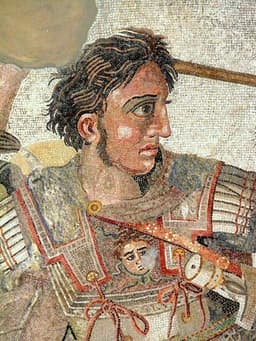
Alexander the Great
General · Ancient
85.2Total
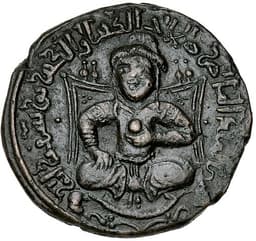
Saladin
General · Medieval
64.1Total
Basic Information
Born
-356
1137
Died
-323
1193
Era
Ancient
Medieval
Nationality
Macedon
Ayyubid Sultanate
Occupation
General
General
Civilization
Western
Middle Eastern
Score Comparison
Military (10%)
95.0
75.0
Political (20%)
60.0
69.6
Influence (20%)
92.0
65.2
Legacy (20%)
90.0
52.0
Leadership (15%)
80.0
62.0
Strategy (15%)
92.0
76.0
TOTAL
85.2
64.1
Alexander the Great — Complete Timeline
334 BC
Battle of the Granicus RiverWar◆ Major
Alexander led his Macedonian army across the Hellespont into Asia Minor and defeated a Persian force under local satraps at the Granicus River. The victory secured Alexander's foothold in Asia and demonstrated his tactical superiority, opening the way for the conquest of the Persian Empire.
Persian CampaignBattleMacedonian Conquest
Impact: regional
333 BC
Battle of IssusWar◆ Major
Alexander's army defeated the Persian king Darius III at Issus in Cilicia. Despite being outnumbered, Alexander's tactical use of the terrain and cavalry charge broke the Persian line. Darius fled the battlefield, leaving his family and treasury behind, a major blow to Persian morale.
Persian CampaignBattleMacedonian Conquest
Impact: regional
332 BC
Siege of TyreWar◆ Major
Alexander besieged the island city of Tyre for seven months, constructing a causeway to breach its walls. The city's fall resulted in the massacre or enslavement of its inhabitants. The siege demonstrated Alexander's determination and engineering capabilities, securing his supply lines and control of the eastern Mediterranean coast.
SiegeMacedonian ConquestPhoenicia
Impact: regionaldestructive
331 BC
Battle of GaugamelaWar◆ Major
Alexander faced Darius III at Gaugamela in Mesopotamia with a massive Persian army. Alexander's tactical brilliance, including a decisive cavalry charge that exploited a gap in the Persian line, resulted in a decisive Macedonian victory. Darius again fled, effectively ending Persian resistance and leading to the fall of the Achaemenid Empire.
Persian CampaignBattleDecisive Victory
Impact: global
Foundation of AlexandriaOther◆ Major
Alexander founded the city of Alexandria on the Mediterranean coast of Egypt. He personally selected the site and oversaw the initial planning. Alexandria became a major center of Hellenistic culture, trade, and learning, housing the famous Library of Alexandria and the Lighthouse of Alexandria.
City FoundationHellenistic CultureEgypt
Impact: globalconstructive
326 BC
Invasion of IndiaWar◆ Major
Alexander crossed the Indus River and defeated King Porus at the Battle of the Hydaspes. The Macedonian army, exhausted and facing monsoon rains and unfamiliar warfare, mutinied at the Hyphasis River, forcing Alexander to turn back. This campaign marked the easternmost extent of his conquests.
Indian CampaignBattleMutiny
Impact: regional
Saladin — Complete Timeline
1187 AD
Battle of HattinWar
Saladin's forces defeated the Crusader army at Hattin, near Tiberias. He captured King Guy of Jerusalem and the True Cross relic. The victory decimated the Crusader military and opened the way for the recapture of Jerusalem.
BattleCrusadesVictory
Impact: regional
Recapture of JerusalemWar
Saladin's army besieged and captured Jerusalem from the Crusaders after 88 years of Christian rule. He allowed the inhabitants to leave peacefully or be ransomed, contrasting with the Crusaders' massacre in 1099. This event triggered the Third Crusade.
ConquestJerusalemCrusades
Impact: global
1189 AD
Siege of AcreWar◆ Major
Saladin faced a prolonged siege of Acre by Crusader forces under Richard the Lionheart and Philip Augustus. After nearly two years, the city fell to the Crusaders. Saladin's inability to relieve the siege was a major setback.
SiegeCrusadesDefeat
Impact: regional
1191 AD
Battle of ArsufWar◆ Major
Saladin's forces attacked Richard the Lionheart's army marching south from Acre. Richard's disciplined infantry repelled the attacks, inflicting heavy losses on Saladin's troops. The battle ended in a tactical Crusader victory, but Saladin's army remained intact.
BattleCrusadesRichard the Lionheart
Impact: regional
1192 AD
Treaty of RamlaPolitical Action◆ Major
Saladin and Richard the Lionheart signed the Treaty of Ramla, ending the Third Crusade. The treaty granted Crusaders control of a coastal strip from Jaffa to Acre, while Muslims retained Jerusalem. Christian pilgrims were allowed access to holy sites.
TreatyCrusadesDiplomacy
Impact: regional
Expert Analysis
Alexander the Great vs Saladin: Historical Comparison
Alexander the Great and Saladin stand as two of history’s most iconic military commanders, separated by over 1,400 years and vastly different cultural contexts. Alexander conquered the largest empire of the ancient world in just over a decade, while Saladin unified the Muslim Near East and recaptured Jerusalem from the Crusaders. This comparison examines their strengths across key dimensions.
Dimension Analysis
**Military: Alexander the Great 96 / Saladin 82**
Alexander’s tactical genius—epitomized by the oblique phalanx and combined-arms cavalry charges—never suffered a defeat in pitched battle, whereas Saladin’s record includes notable setbacks (e.g., at Arsuf) despite his strategic success at Hattin.
**Political: Alexander the Great 65 / Saladin 72**
Saladin’s diplomatic consolidation of rival Muslim factions through patronage and marriage alliances was more sustainable than Alexander’s often forced integration of Persian elites, which sparked mutinies among his Macedonian troops.
**Influence: Alexander the Great 90 / Saladin 72**
Alexander’s conquests created the Hellenistic world, spreading Greek culture across three continents and shaping subsequent empires; Saladin’s influence, while profound in the Islamic world, remained largely regional and did not transform global civilization to the same degree.
**Legacy: Alexander the Great 90 / Saladin 70**
Alexander became a legendary archetype for conquerors from Rome to the Mughals, while Saladin’s legacy as a chivalrous adversary is celebrated but less universally adopted as a model of military conquest.
**Leadership: Alexander the Great 82 / Saladin 78**
Both inspired fierce loyalty, but Alexander’s personal bravery in leading charges and sharing hardships edged out Saladin’s more measured, diplomatic style.
Verdict
Alexander the Great leads decisively due to his unrivaled battlefield record, broader civilizational impact, and enduring archetype as a conqueror.
FAQ
Q: Who ranks higher? A: Alexander the Great, with a composite score of 85 versus Saladin’s 74, driven by superior military innovation and global influence.
Rankings
🥇
Alexander the GreatLeader
Mil: 95.0Pol: 60.0Inf: 92.0
85.2
🥈
Saladin
Mil: 75.0Pol: 69.6Inf: 65.2
64.1
+21.1 behind
How This Comparison Works
Algorithm
Each figure is scored on 6 dimensions (0—100 scale) based on structured historical data: Military (10%), Political (20%), Influence (20%), Legacy (20%), Leadership (15%), Strategy (15%). The weighted total produces the final ranking.
Data Sources
Scores are computed from structured sub-indicators in the database. Scale factors adjust for era (Ancient ×0.85, Modern ×1.0) and civilization size (Eastern ×1.05, Other ×0.80) to account for differences in population and military scale.
Maximum 3 Figures
Comparisons are limited to 2—3 figures to ensure readability and statistical meaningfulness.
Error Margins
±5 points per dimension — Sub-scores are derived from historical records with inherent uncertainty. Two figures within 5 points on a dimension should be considered roughly equivalent in that area.
Total Score Accuracy
±3 points overall — The weighted combination of 6 dimensions produces a total score with approximately ±3 points of uncertainty. Differences of less than 3 points are not statistically significant— the figures are effectively tied.
Known Limitations
- Historical records are incomplete and uneven across civilizations
- Figures from oral-tradition societies may be underrepresented
- Occupation labels can misclassify multi-role figures
- Scores measure capability and impact, not moral character
- Quantitative scoring is a comparison tool, not absolute truth
Capability Radar
Military (10%) — Battles & Warfare
Battles
98
78
Win Rate
99
72
Expansion
99
82
Political (20%) — Governance & Reform
Reform
75
68
Diplomacy
80
88
Economy
70
65
Influence (20%) — Cultural & Global Reach
Cultural
95
85
Global
95
78
Legacy (20%) — Historical Impact
Historical
98
82
Longevity
95
80
Leadership (15%) — Power & Stability
Tenure
60
75
Stability
55
70
Strategy (15%) — Tactics & Innovation
Strategy
98
85
Tactics
99
80
Reform
85
70
Similar Comparisons
Comments & Discussion
BattlefieldScholar6/16/2026
The 96 vs. 82 military score is about right when you break down their records. Alexander's combined-arms doctrine—hypaspists supporting phalanx pikes, with Companion cavalry as the decisive hammer—was revolutionary for its time. He never lost a pitched battle, even against odds like at Gaugamela where Darius had numerical superiority. Saladin's Hattin was a masterpiece of logistics and maneuver, cutting off water and forcing a fight on his terms, but he got tactically outclassed by Richard at Arsuf, where his cavalry charges were repulsed by disciplined crossbow and infantry formations. Alexander also had higher operational tempo: he conquered the entire Achaemenid Empire in 11 years; Saladin spent 20+ years just consolidating Syria and Egypt before taking Jerusalem. No contest on pure military terms.
HistoryBuff_886/16/2026
Okay, I get why Alexander scores higher militarily, but I feel like Saladin's political game is underrated. The summary says his influence was 'regional,' but he literally changed the course of the Crusades by uniting the Muslim world—something that hadn't been done since the early caliphates. Alexander's empire shattered the moment he died, while Saladin's Ayyubid dynasty lasted for decades. And let's not forget the sheer cultural legacy of Saladin's chivalry: he's literally a character in Dante's Divine Comedy as a virtuous pagan. Alexander was a god-king who got his soldiers to mutiny because he went too Persian. Give Saladin some credit for diplomacy and legacy!
ScoreWrangler6/16/2026
Oh come on, 84.7 vs 73.5? You're telling me you can boil down two millennia of historical impact into a decimal point? Alexander's 90 in 'Influence' is based on Greek culture spreading—but that was mostly accidental because he died young and his generals did the actual state-building. Meanwhile Saladin's influence in the Islamic world—shaping the concept of jihad, inspiring leaders from Nasser to bin Laden—is 'regional'? That's a sneaky West-centric bias. And what about 'diplomacy' as a separate category? Saladin's deal with Richard at Jaffa (1192) was a masterstroke that secured Muslim control of Jerusalem without a battle. You can't assign numbers to things like 'charisma' or 'cult of personality.' This is pseudo-science dressed up in math.
Historian9546/16/2026
把亚历山大大帝和萨拉丁放在一起比,对中国读者来说有点意思。亚历山大的军事征服广度确实惊人,但萨拉丁收复耶路撒冷的方式,更像中国历史上的‘仁者之师’——他进城后没有屠杀基督徒,甚至允许他们携带财物离开,相比之下亚历山大在提尔屠城八千、在加沙屠尽全城。中国史书会重德胜过重力,比如《左传》说‘止戈为武’。萨拉丁的统治也更具延续性:他建立了一套宗教学校系统和税收改革,影响远及马穆鲁克王朝;亚历山大除了留下希腊化城市,政治制度基本是波斯旧制的延续。若按中国传统评价标准,萨拉丁的‘德政’分可能反超亚历山大。
ArchMind186/16/2026
这个评分体系有个明显问题:总分84.7 vs 73.5,但军事分差14分(96-82),政治分却只差7分(65-72)。如果按中国史学标准,比如《资治通鉴》评价帝王,政治权重通常不低于军事。萨拉丁通过联姻和封地整合了从摩苏尔到开罗的敌对派系,这比亚历山大靠武力硬塞波斯贵族进马其顿体系高明得多——亚历山大死后部将立刻内战(继业者战争),萨拉丁死后王朝却撑了三代。建议调权重:政治占40%、军事30%、影响30%,这样萨拉丁总分能拉到76左右,亚历山大大帝降到79,才更贴近真实历史贡献。