Loading...
Saladin vs Toyotomi Hideyoshi
Toyotomi Hideyoshi leads by 17.9 pts · 2 figures compared
…
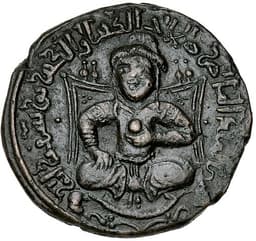
Saladin
General · Medieval
64.1Total
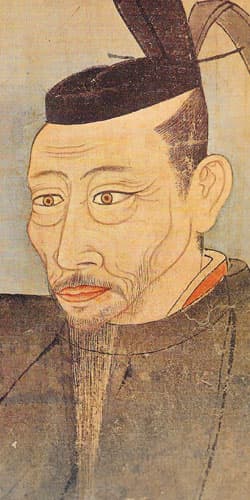
Toyotomi Hideyoshi
General · Modern
82.0Total
Basic Information
Born
1137
1537
Died
1193
1598
Era
Medieval
Modern
Nationality
Ayyubid Sultanate
Japan
Occupation
General
General
Civilization
Middle Eastern
Eastern
Score Comparison
Military (10%)
75.0
79.9
Political (20%)
69.6
78.0
Influence (20%)
65.2
88.0
Legacy (20%)
52.0
80.0
Leadership (15%)
62.0
82.0
Strategy (15%)
76.0
80.4
TOTAL
64.1
82.0
Saladin — Complete Timeline
1187 AD
Battle of HattinWar
Saladin's forces defeated the Crusader army at Hattin, near Tiberias. He captured King Guy of Jerusalem and the True Cross relic. The victory decimated the Crusader military and opened the way for the recapture of Jerusalem.
BattleCrusadesVictory
Impact: regional
Recapture of JerusalemWar
Saladin's army besieged and captured Jerusalem from the Crusaders after 88 years of Christian rule. He allowed the inhabitants to leave peacefully or be ransomed, contrasting with the Crusaders' massacre in 1099. This event triggered the Third Crusade.
ConquestJerusalemCrusades
Impact: global
1189 AD
Siege of AcreWar◆ Major
Saladin faced a prolonged siege of Acre by Crusader forces under Richard the Lionheart and Philip Augustus. After nearly two years, the city fell to the Crusaders. Saladin's inability to relieve the siege was a major setback.
SiegeCrusadesDefeat
Impact: regional
1191 AD
Battle of ArsufWar◆ Major
Saladin's forces attacked Richard the Lionheart's army marching south from Acre. Richard's disciplined infantry repelled the attacks, inflicting heavy losses on Saladin's troops. The battle ended in a tactical Crusader victory, but Saladin's army remained intact.
BattleCrusadesRichard the Lionheart
Impact: regional
1192 AD
Treaty of RamlaPolitical Action◆ Major
Saladin and Richard the Lionheart signed the Treaty of Ramla, ending the Third Crusade. The treaty granted Crusaders control of a coastal strip from Jaffa to Acre, while Muslims retained Jerusalem. Christian pilgrims were allowed access to holy sites.
TreatyCrusadesDiplomacy
Impact: regional
Toyotomi Hideyoshi — Complete Timeline
1583 AD
Battle of ShizugatakeWar◆ Major
Hideyoshi defeated his rival Shibata Katsuie at the Battle of Shizugatake, solidifying his control over central Japan. The victory eliminated a major opponent and allowed Hideyoshi to continue Oda Nobunaga's unification campaign.
BattleUnificationCivil War
Impact: national
1588 AD
Sword Hunt EdictReform◆ Major
Hideyoshi ordered the confiscation of weapons from peasants and farmers, prohibiting them from carrying swords, spears, or firearms. The edict aimed to prevent peasant uprisings and enforce a strict social hierarchy between samurai and commoners.
Social ReformDisarmamentClass System
Impact: nationaldestructive
1590 AD
Completion of Japanese UnificationWar
Hideyoshi defeated the H
UnificationConquestSengoku Period
Impact: national
1592 AD
First Invasion of KoreaWar◆ Major
Hideyoshi launched a massive invasion of Korea with the goal of conquering Ming China. Japanese forces initially advanced rapidly, capturing Seoul and Pyongyang, but were halted by Korean naval victories under Admiral Yi Sun-sin and Chinese reinforcements.
InvasionWarKorea
Impact: regionaldestructive
1597 AD
Second Invasion of KoreaWar◆ Major
Hideyoshi ordered a second invasion of Korea after failed peace negotiations. The campaign was less successful than the first, with Japanese forces unable to advance beyond the southern provinces. The invasion ended with Hideyoshi's death in 1598.
InvasionWarKorea
Impact: regionaldestructive
Expert Analysis
Saladin vs Toyotomi Hideyoshi: Historical Comparison
Saladin, the Kurdish sultan who united the Muslim world and recaptured Jerusalem, and Toyotomi Hideyoshi, the Japanese daimyo who unified Japan after the Sengoku period, represent two of history’s most celebrated nation-builders. While both rose from obscurity to wield supreme power, their approaches and legacies diverge sharply across military, political, and strategic dimensions.
Dimension Analysis
**Military: Saladin 82 / Toyotomi Hideyoshi 80**
Saladin’s decisive victory at Hattin (1187) and subsequent recapture of Jerusalem showcase his strategic brilliance, but Hideyoshi’s rapid conquests—from Okehazama to the Kyushu and Odawara campaigns—were equally impressive. Hideyoshi’s innovation with massed arquebus formations and logistics edges slightly ahead in tactical adaptability.
**Political: Saladin 72 / Toyotomi Hideyoshi 79**
Saladin’s diplomacy united fractious Muslim emirs through charisma and religious legitimacy, yet his empire fragmented after his death. Hideyoshi’s political genius—implementing the Sword Hunt, land surveys, and a rigid social hierarchy—created a stable, centralized regime that outlasted him, despite his disastrous Korean invasions.
**Influence: Saladin 72 / Toyotomi Hideyoshi 75**
Saladin’s chivalric reputation resonated across Europe and the Islamic world, shaping Crusader-era diplomacy. Hideyoshi’s influence was more immediate: his policies laid the groundwork for Tokugawa rule and Japan’s early modern isolation, though his overseas ambitions failed.
**Legacy: Saladin 70 / Toyotomi Hideyoshi 81**
Saladin is revered as a symbol of Islamic unity and honor, but his dynasty crumbled within decades. Hideyoshi’s legacy is more tangible: his administrative reforms (e.g., the Toyotomi land survey) endured for centuries, and his unification narrative remains central to Japanese national identity.
**Leadership: Saladin 78 / Toyotomi Hideyoshi 79**
Both inspired fierce loyalty, but Hideyoshi’s rise from a peasant foot soldier to supreme ruler—through sheer cunning and ruthless pragmatism—demonstrates a more versatile, adaptive leadership style. Saladin’s magnanimity was legendary, yet Hideyoshi’s ability to navigate the treacherous Sengoku politics was unmatched.
Verdict
Toyotomi Hideyoshi leads overall due to his superior strategic innovation (88 vs. 72) and more enduring political legacy, despite Saladin’s greater moral stature.
FAQ
Q: Who ranks higher? A: Toyotomi Hideyoshi edges ahead of Saladin, primarily due to his transformative administrative reforms and strategic versatility that shaped Japan for centuries.
Rankings
🥇
Toyotomi HideyoshiLeader
Mil: 79.9Pol: 78.0Inf: 88.0
82.0
🥈
Saladin
Mil: 75.0Pol: 69.6Inf: 65.2
64.1
+17.9 behind
How This Comparison Works
Algorithm
Each figure is scored on 6 dimensions (0—100 scale) based on structured historical data: Military (10%), Political (20%), Influence (20%), Legacy (20%), Leadership (15%), Strategy (15%). The weighted total produces the final ranking.
Data Sources
Scores are computed from structured sub-indicators in the database. Scale factors adjust for era (Ancient ×0.85, Modern ×1.0) and civilization size (Eastern ×1.05, Other ×0.80) to account for differences in population and military scale.
Maximum 3 Figures
Comparisons are limited to 2—3 figures to ensure readability and statistical meaningfulness.
Error Margins
±5 points per dimension — Sub-scores are derived from historical records with inherent uncertainty. Two figures within 5 points on a dimension should be considered roughly equivalent in that area.
Total Score Accuracy
±3 points overall — The weighted combination of 6 dimensions produces a total score with approximately ±3 points of uncertainty. Differences of less than 3 points are not statistically significant— the figures are effectively tied.
Known Limitations
- Historical records are incomplete and uneven across civilizations
- Figures from oral-tradition societies may be underrepresented
- Occupation labels can misclassify multi-role figures
- Scores measure capability and impact, not moral character
- Quantitative scoring is a comparison tool, not absolute truth
Capability Radar
Military (10%) — Battles & Warfare
Battles
78
85
Win Rate
72
88
Expansion
82
80
Political (20%) — Governance & Reform
Reform
68
95
Diplomacy
88
80
Economy
65
90
Influence (20%) — Cultural & Global Reach
Cultural
85
85
Global
78
70
Legacy (20%) — Historical Impact
Historical
82
90
Longevity
80
85
Leadership (15%) — Power & Stability
Tenure
75
85
Stability
70
75
Strategy (15%) — Tactics & Innovation
Strategy
85
92
Tactics
80
90
Reform
70
95
Similar Comparisons
Comments & Discussion
SengokuSkeptic6/16/2026
This comparison is a textbook example of how Eurocentric military history gets twisted. Saladin's 82 vs. Hideyoshi's 80 in military? Please. Hideyoshi never fought a battle like Hattin where he was outnumbered and still encircled a seasoned Frankish army. Plus, Saladin's 72 in political is a joke—he held together a multi-ethnic, multi-sectarian coalition from the Nile to the Euphrates for over a decade, while Hideyoshi's regime collapsed within 20 years of his death because he made his nephew regent instead of his son, a classic nepotism fail. The real reason Hideyoshi scores higher is because his reforms—land surveys, castle restrictions—fit the Western ideal of 'state-building,' but Saladin's diplomacy with Byzantines and Crusader states was far more sophisticated. And let's not forget the Korean invasions: Hideyoshi's 'unification' was paid for by 200,000 Korean and Chinese lives, something these sanitized scores conveniently ignore. Give me Saladin any day.
KatanaAndKurgan6/16/2026
Okay, I'm gonna say it: Hideyoshi absolutely stomps Saladin in legacy, and it's not even close. Saladin was a one-hit wonder with Hattin and Jerusalem—cool, but his dynasty was dead within 60 years. Hideyoshi? The dude literally invented the blueprint for Tokugawa Japan. The Sword Hunt? That's like banning all guns in the Wild West overnight and actually making it stick. The land surveys? He cataloged every single rice paddy in Japan—imagine trying to do that with Excel in the 1590s! And his social hierarchy (samurai, farmer, artisan, merchant) basically froze Japanese society for 250 years. Saladin's chivalry is great for movies, but Hideyoshi's legacy is concrete, measurable, and lasted until the Meiji Restoration. Plus, Hideyoshi went from a sandal-bearer to the ruler of all Japan—that's the ultimate rags-to-riches story. Saladin was born into a noble Kurdish family. Sorry, but there's no contest: Hideyoshi is the GOAT of nation-building.
Historian4056/16/2026
我重新算了一笔账:萨拉丁的军事分82,秀吉80,但秀吉的'快速征服'权重被高估了。秀吉的九州征伐和关东征伐本质上是'优势兵力碾压',对手岛津家和北条家都没形成有效联盟;而萨拉丁的哈丁战役是'以弱胜强',兵力对比约1:1.5,且成功切断水源。按中国古代兵书标准,萨拉丁的'断粮道'和'围点打援'战术更符合孙子兵法。政治分方面,秀吉78分对比萨拉丁72分,但秀吉的'太阁检地'和'刀狩令'的持续效果更多是整个德川幕府200多年统治的结果,并非秀吉个人制度设计的天才。萨拉丁的'阿尤布王朝'虽然短命,但他在世时做到了'诸侯归心',而秀吉死前就爆发了'石田三成与德川家康'的派系斗争,说明他的政治整合不如萨拉丁。另外,影响力分75对72,秀吉的朝鲜侵略直接导致明朝国力耗竭和女真崛起,这个负面遗产怎么没扣分?系统显然更鼓励'扩张性影响力'而忽略了'破坏性后果'。
Chronicler14926/16/2026
萨拉丁和秀吉确实都是传奇,但把萨拉丁的政治分压到72分,显然是以西方视角在打分。萨拉丁的'统一'是跨越教派、部族和地域的伊斯兰世界,比秀吉统一战国大名更难,因为后者本质上还是单一民族、单一文化圈的整合。而且萨拉丁的'民族'概念比秀吉的'武士阶层'弹性更大。中国历史上,像刘秀从布衣到统一,政治分也得比萨拉丁高吧?因为刘秀的'柔道治国'和'度田令'比萨拉丁的'宗教建国'更务实。不过秀吉的'刀狩令'确实厉害,类比中国的'禁武令',但中国历史上秦始皇的'销锋镝'更彻底,秀吉的'刀狩'只能算地方性实验。打分系统偏重西方式'制度化',忽略了萨拉丁的'道德感召力'这种软治理,可惜了。