Loading...
Sebastian Kurz vs Viktor Yushchenko
Viktor Yushchenko leads by 0.7 pts · 2 figures compared
…

Sebastian Kurz
Politician · Modern
50.7Total
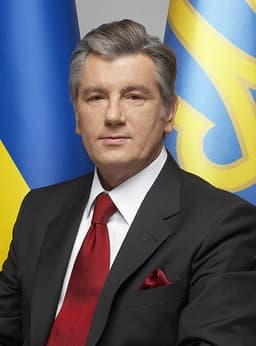
Viktor Yushchenko
Politician · Modern
51.4Total
Basic Information
Born
1986
1954
Died
—
—
Era
Modern
Modern
Nationality
Austria
Ukraine
Occupation
Politician
Politician
Civilization
Western
Western
Score Comparison
Military (10%)
49.3
49.8
Political (20%)
61.3
68.0
Influence (20%)
51.8
58.0
Legacy (20%)
40.0
46.7
Leadership (15%)
62.2
40.0
Strategy (15%)
43.0
40.7
TOTAL
50.7
51.4
Sebastian Kurz — Complete Timeline
2017 AD
Appointed Chancellor of AustriaPolitical Action◆ Major
Sebastian Kurz became Chancellor of Austria on December 18, 2017, at age 31, the youngest in Austrian history. He led a coalition between his Austrian People's Party and the Freedom Party of Austria.
ChancellorshipYoungest Chancellor
Impact: national
2019 AD
Ibiza Affair and Government CollapsePolitical Action◆ Major
On May 18, 2019, a video surfaced showing Freedom Party leader Heinz-Christian Strache offering government contracts. Kurz ended the coalition on May 20, leading to a snap election. The scandal severely damaged the FP
ScandalCoalition Collapse
Impact: nationaldestructive
First Vote of No DefeatPolitical Action◆ Major
On May 27, 2019, Kurz lost a vote of no confidence in the National Council, the first successful such vote in Austrian history. He was removed from office and replaced by a caretaker government led by Brigitte Bierlein.
Vote of No ConfidenceRemoval from Office
Impact: nationaldestructive
2020 AD
Second Chancellorship and Corruption InvestigationPolitical Action◆ Major
Kurz returned as Chancellor on January 7, 2020, leading a coalition with the Greens. In October 2021, prosecutors raided his offices as part of a corruption investigation into alleged misuse of public funds for positive media coverage.
Corruption InvestigationCoalition with Greens
Impact: nationaldestructive
2021 AD
Resignation Amid Corruption ProbePolitical Action◆ Major
Kurz resigned as Chancellor on October 9, 2021, following the corruption investigation. He was succeeded by Alexander Schallenberg. Kurz remained party leader but stepped down from government to avoid further instability.
ResignationCorruption Scandal
Impact: nationaltragic
Viktor Yushchenko — Complete Timeline
2004 AD
Orange Revolution and Election as PresidentPolitical Action
Yushchenko won the 2004 Ukrainian presidential election after the Orange Revolution overturned a fraudulent runoff. He defeated Viktor Yanukovych in a re-run election, taking office in January 2005.
Orange RevolutionElectionDemocracy
Impact: nationalconstructive
Dioxin PoisoningOther◆ Major
Yushchenko was poisoned with dioxin during the presidential campaign, causing severe facial disfigurement and health issues. The poisoning was widely attributed to political opponents, though no one was convicted.
PoisoningAssassination AttemptHealth
Impact: nationaltragic
2005 AD
Pro-European Union PoliciesPolitical Action◆ Major
Yushchenko pursued EU and NATO integration for Ukraine, though progress was slow. He advocated for democratic reforms and anti-corruption measures, but faced internal political opposition.
EUNATOReform
Impact: nationalconstructive
2007 AD
Political Crisis and Early ElectionsPolitical Action◆ Major
Yushchenko dissolved parliament and called early elections after a prolonged political crisis with Prime Minister Viktor Yanukovych. The crisis weakened his presidency and led to a loss of public support.
Political CrisisEarly ElectionsYanukovych
Impact: nationaldestructive
2010 AD
Lost Re-election to Viktor YanukovychPolitical Action◆ Major
Yushchenko lost the 2010 Ukrainian presidential election, receiving only 5.5% of the vote in the first round. Viktor Yanukovych won the presidency, marking a reversal of the Orange Revolution.
ElectionDefeatOrange Revolution
Impact: nationaltragic
Expert Analysis
Origins
Sebastian Kurz was born on August 27, 1986, in Vienna, Austria, into a middle-class family. His father was an engineer, his mother a teacher. Kurz attended the University of Vienna but did not complete his law degree, instead entering politics early through the youth wing of the Austrian People's Party (ÖVP). By age 24, he was a city councilor in Vienna. Viktor Yushchenko was born on February 23, 1954, in Khoruzhivka, Ukraine, to a teacher mother and a father who was a Soviet soldier. He studied economics at the Ternopil National Economic University and later worked in banking, rising to become head of the National Bank of Ukraine in 1993. His background was technocratic rather than political, shaped by Ukraine's post-Soviet transition.
Rise to Power
Kurz rose rapidly through the ÖVP ranks. In 2011, he became State Secretary for Integration, gaining attention for his tough stance on immigration. In 2013, at age 27, he was appointed Foreign Minister, the youngest in the EU. He rebranded the ÖVP as "List Sebastian Kurz" and won the 2017 election, becoming Chancellor on December 18, 2017, at age 31. Yushchenko rose as a reformist technocrat. As Prime Minister in 1999-2001, he implemented economic reforms. His presidential campaign in 2004 was marred by the dioxin poisoning on September 5, 2004, which left him disfigured. The subsequent Orange Revolution, triggered by a fraudulent runoff, propelled him to the presidency on January 23, 2005. He defeated Viktor Yanukovych in a revote.
Leadership & Governance
Kurz governed with a center-right coalition with the Freedom Party (2017-2019) and later with the Greens (2020-2021). He focused on tax cuts, immigration restrictions, and digitization. His style was centralizing and media-savvy, often bypassing traditional party structures. Yushchenko pursued pro-European policies, seeking NATO and EU membership. He faced constant political infighting, especially with Prime Minister Yulia Tymoshenko. His presidency was marked by gridlock, and he dissolved parliament in 2007. Both leaders struggled with corruption: Kurz faced a corruption investigation over alleged misuse of public funds for positive media coverage, leading to his resignation on October 9, 2021. Yushchenko failed to curb corruption in Ukraine, and his administration was seen as ineffective.
Triumph & Tragedy
Kurz's greatest success was becoming the youngest chancellor at 31 and modernizing the ÖVP. He achieved a 50.7 total score, with leadership at 62.2. His tragedy was the Ibiza Affair in May 2019, which collapsed his first government, and the corruption probe that ended his chancellorship. Yushchenko's triumph was the Orange Revolution and his survival of dioxin poisoning, scoring 51.4 total, with political influence at 68.0. His tragedy was his poor re-election performance in 2010 (5.5% of the vote) and his failure to implement lasting reforms, leaving Ukraine vulnerable to Yanukovych's authoritarian turn.
Character & Destiny
Kurz was disciplined, ambitious, and pragmatic. He cultivated a clean image but was accused of authoritarian tendencies within his party. His character led to rapid rise but also isolation and scandal. Yushchenko was idealistic but indecisive, often failing to capitalize on his popular mandate. His poisoning made him a symbol of resistance, but his health issues and political naivete weakened his presidency. Both were shaped by their eras: Kurz by Europe's migration crisis, Yushchenko by Ukraine's post-Soviet identity struggle.
Legacy
Kurz's legacy is mixed. He reshaped Austrian conservatism but ended under a cloud. His influence score of 51.8 reflects his brief but impactful tenure. Yushchenko's legacy is more symbolic: he is a martyr for Ukraine's European aspirations, but his practical achievements are limited. His legacy score of 46.7 shows his impact waned. Both have political scores above 60, but Yushchenko's influence (58.0) edges Kurz's (51.8).
Conclusion
While Kurz scored 50.7 total and Yushchenko 51.4, Yushchenko had greater impact due to the historical weight of the Orange Revolution and his role in Ukraine's democratic awakening. Kurz's changes were more ephemeral, tied to his personality. Yushchenko's poisoning and revolution changed Ukraine's trajectory, even if his presidency failed to deliver. Therefore, Viktor Yushchenko had a greater historical impact.
Rankings
🥇
Viktor YushchenkoLeader
Mil: 49.8Pol: 68.0Inf: 58.0
51.4
🥈
Sebastian Kurz
Mil: 49.3Pol: 61.3Inf: 51.8
50.7
+0.7 behind
How This Comparison Works
Algorithm
Each figure is scored on 6 dimensions (0—100 scale) based on structured historical data: Military (10%), Political (20%), Influence (20%), Legacy (20%), Leadership (15%), Strategy (15%). The weighted total produces the final ranking.
Data Sources
Scores are computed from structured sub-indicators in the database. Scale factors adjust for era (Ancient ×0.85, Modern ×1.0) and civilization size (Eastern ×1.05, Other ×0.80) to account for differences in population and military scale.
Maximum 3 Figures
Comparisons are limited to 2—3 figures to ensure readability and statistical meaningfulness.
Error Margins
±5 points per dimension — Sub-scores are derived from historical records with inherent uncertainty. Two figures within 5 points on a dimension should be considered roughly equivalent in that area.
Total Score Accuracy
±3 points overall — The weighted combination of 6 dimensions produces a total score with approximately ±3 points of uncertainty. Differences of less than 3 points are not statistically significant— the figures are effectively tied.
Known Limitations
- Historical records are incomplete and uneven across civilizations
- Figures from oral-tradition societies may be underrepresented
- Occupation labels can misclassify multi-role figures
- Scores measure capability and impact, not moral character
- Quantitative scoring is a comparison tool, not absolute truth
Capability Radar
Military (10%) — Battles & Warfare
Battles
29
32
Win Rate
34
31
Expansion
33
33
Political (20%) — Governance & Reform
Reform
40
55
Diplomacy
50
50
Economy
40
40
Influence (20%) — Cultural & Global Reach
Cultural
20
45
Global
30
45
Legacy (20%) — Historical Impact
Historical
25
50
Longevity
15
30
Leadership (15%) — Power & Stability
Tenure
30
60
Stability
30
35
Strategy (15%) — Tactics & Innovation
Strategy
39
37
Tactics
43
39
Reform
43
42
Similar Comparisons
Comments & Discussion
No comments yet. Be the first to share your thoughts!