Loading...
This comparison has not been analyzed yet.
One-time AI generation (~1 minute). Scores and timeline are already available below.
Sejo of Joseon vs Seongjong of Joseon
Sejo of Joseon leads by 0.3 pts · 2 figures compared
…
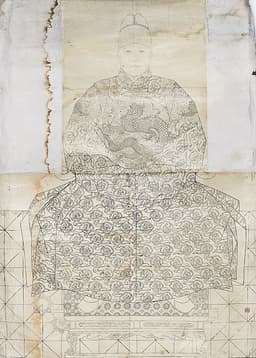
Sejo of Joseon
Emperor · Medieval
55.6Total

Seongjong of Joseon
Emperor · Medieval
55.3Total
Basic Information
Born
1417
1457
Died
1468
1494
Era
Medieval
Medieval
Nationality
Korea
Korea
Occupation
Emperor
Emperor
Civilization
Eastern
Eastern
Score Comparison
Military (10%)
38.3
21.2
Political (20%)
68.0
59.3
Influence (20%)
55.7
62.0
Legacy (20%)
48.3
52.0
Leadership (15%)
64.0
78.0
Strategy (15%)
60.0
41.0
TOTAL
55.6
55.3
Sejo of Joseon — Complete Timeline
1455 AD
Coup d'état against DanjongPolitical Action
Grand Prince Suyang (later Sejo) staged a coup, forcing his nephew King Danjong to abdicate. Sejo assumed the throne, initiating a reign marked by consolidation of power and elimination of rivals.
CoupUsurpationJoseon Dynasty
Impact: nationaldestructive
1456 AD
Execution of the Six Loyalist MinistersPolitical Action◆ Major
Sejo discovered a plot by six loyalist ministers to restore Danjong. He had them executed, along with their families, in a brutal purge that eliminated opposition to his rule.
PurgeLoyalistsJoseon Dynasty
Impact: nationaldestructive
1457 AD
Murder of DanjongPolitical Action◆ Major
Sejo ordered the murder of his deposed nephew Danjong, who was then 16. This act removed the last legitimate claimant to the throne and secured Sejo's dynasty.
AssassinationJoseon DynastyUsurpation
Impact: nationaldestructive
1460 AD
Military campaigns against the JurchensWar
Sejo led military campaigns against Jurchen tribes in the northern border regions. These campaigns secured Joseon's northern frontier and expanded territory.
Military CampaignBorder ConflictJoseon Dynasty
Impact: regional
Compilation of the Gyeongguk DaejeonReform◆ Major
Sejo initiated the compilation of the Gyeongguk Daejeon, a comprehensive legal code that would later be completed under Seongjong. This code systematized Joseon's government and laws.
Legal CodeReformJoseon Dynasty
Impact: nationalconstructive
Seongjong of Joseon — Complete Timeline
1470 AD
Promotion of Confucian scholarshipCultural◆ Major
Seongjong actively promoted Confucian scholarship and education, establishing the Hongmungwan (Royal Library) and encouraging the study of Neo-Confucian texts. This strengthened the ideological foundation of the Joseon state.
ConfucianismEducationJoseon Dynasty
Impact: nationalconstructive
1485 AD
Completion of the Gyeongguk DaejeonReform
Seongjong completed and promulgated the Gyeongguk Daejeon, the comprehensive legal code initiated by his grandfather Sejo. This code became the foundational law of Joseon, governing administration, taxation, and social order for centuries.
Legal CodeReformJoseon Dynasty
Impact: nationalconstructive
Compilation of the Dongguk TonggamCultural◆ Major
Seongjong ordered the compilation of the Dongguk Tonggam, a comprehensive history of Korea. This work was a major achievement in Korean historiography.
HistoriographyCultural AchievementJoseon Dynasty
Impact: nationalconstructive
This comparison has not been analyzed yet.
One-time AI generation (~1 minute). Scores and timeline are already available below.
Rankings
🥇
Sejo of JoseonLeader
Mil: 38.3Pol: 68.0Inf: 55.7
55.6
🥈
Seongjong of Joseon
Mil: 21.2Pol: 59.3Inf: 62.0
55.3
+0.3 behind
How This Comparison Works
Algorithm
Each figure is scored on 6 dimensions (0—100 scale) based on structured historical data: Military (10%), Political (20%), Influence (20%), Legacy (20%), Leadership (15%), Strategy (15%). The weighted total produces the final ranking.
Data Sources
Scores are computed from structured sub-indicators in the database. Scale factors adjust for era (Ancient ×0.85, Modern ×1.0) and civilization size (Eastern ×1.05, Other ×0.80) to account for differences in population and military scale.
Maximum 3 Figures
Comparisons are limited to 2—3 figures to ensure readability and statistical meaningfulness.
Error Margins
±5 points per dimension — Sub-scores are derived from historical records with inherent uncertainty. Two figures within 5 points on a dimension should be considered roughly equivalent in that area.
Total Score Accuracy
±3 points overall — The weighted combination of 6 dimensions produces a total score with approximately ±3 points of uncertainty. Differences of less than 3 points are not statistically significant— the figures are effectively tied.
Known Limitations
- Historical records are incomplete and uneven across civilizations
- Figures from oral-tradition societies may be underrepresented
- Occupation labels can misclassify multi-role figures
- Scores measure capability and impact, not moral character
- Quantitative scoring is a comparison tool, not absolute truth
Capability Radar
Military (10%) — Battles & Warfare
Battles
30
10
Win Rate
40
10
Expansion
30
10
Political (20%) — Governance & Reform
Reform
60
80
Diplomacy
50
60
Economy
55
70
Influence (20%) — Cultural & Global Reach
Cultural
45
60
Global
30
40
Legacy (20%) — Historical Impact
Historical
50
70
Longevity
40
65
Leadership (15%) — Power & Stability
Tenure
55
70
Stability
40
75
Strategy (15%) — Tactics & Innovation
Strategy
40
10
Tactics
35
10
Reform
45
30
Similar Comparisons
Comments & Discussion
No comments yet. Be the first to share your thoughts!