Loading...
This comparison has not been analyzed yet.
One-time AI generation (~1 minute). Scores and timeline are already available below.
Stefan Lofven vs Zhao Ziyang
Stefan Lofven leads by 5.5 pts · 2 figures compared
…

Stefan Lofven
Politician · Modern
53.2Total
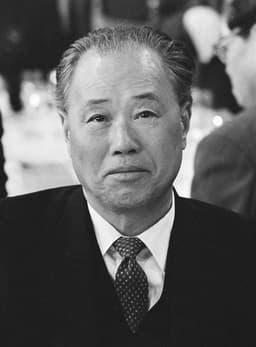
Zhao Ziyang
Politician · Modern
47.7Total
Basic Information
Born
1957
1919
Died
—
2005
Era
Modern
Modern
Nationality
Sweden
China
Occupation
Politician
Politician
Civilization
Western
Eastern
Score Comparison
Military (10%)
49.7
13.4
Political (20%)
62.7
45.0
Influence (20%)
53.3
56.4
Legacy (20%)
41.7
46.7
Leadership (15%)
72.0
74.0
Strategy (15%)
42.9
27.5
TOTAL
53.2
47.7
Stefan Lofven — Complete Timeline
2014 AD
Election as Prime Minister of SwedenPolitical Action◆ Major
Stefan Lofven became Prime Minister of Sweden after leading the Social Democrats to victory in the general election, forming a minority coalition government with the Green Party. His tenure focused on immigration, welfare, and security.
Swedish PoliticsSocial Democratic PartyCoalition Government
Impact: nationalconstructive
2015 AD
Handling of the 2015 European Migrant CrisisPolitical Action◆ Major
Sweden initially adopted an open-door policy for asylum seekers, accepting over 160,000 migrants in 2015. Lofven's government later introduced border controls and stricter asylum laws in response to the strain on public services and political backlash.
Immigration PolicyMigrant CrisisAsylum
Impact: national
2021 AD
Resignation as Prime MinisterPolitical Action◆ Major
Stefan Lofven resigned as Prime Minister after losing a no-confidence vote in the Riksdag, triggered by the Left Party's opposition to proposed rent deregulation. He was succeeded by Magdalena Andersson.
Swedish PoliticsNo-Confidence VoteResignation
Impact: national
Zhao Ziyang — Complete Timeline
1980 AD
Appointed Premier of the People's Republic of ChinaPolitical Action◆ Major
Zhao Ziyang succeeded Hua Guofeng as Premier. He implemented Deng Xiaoping's economic reforms, including the household responsibility system and the opening of Special Economic Zones.
Economic ReformPremiership
Impact: nationalconstructive
1987 AD
Appointed General Secretary of the Communist PartyPolitical Action◆ Major
Zhao Ziyang became General Secretary after Hu Yaobang's resignation. He continued economic reforms but faced growing pressure from conservative factions within the party.
Party LeadershipReform Era
Impact: national
1989 AD
Sympathized with Tiananmen Square ProtestersPolitical Action
During the Tiananmen Square protests, Zhao Ziyang visited the protesters and expressed sympathy, opposing the use of force. This led to his purge and house arrest for the rest of his life.
Tiananmen SquarePurge
Impact: globaltragic
Purged and Placed Under House ArrestPolitical Action◆ Major
Zhao Ziyang was removed from all posts and placed under house arrest after the Tiananmen Square crackdown. He was replaced by Jiang Zemin and lived in seclusion until his death in 2005.
PurgeHouse Arrest
Impact: nationaltragic
This comparison has not been analyzed yet.
One-time AI generation (~1 minute). Scores and timeline are already available below.
Rankings
🥇
Stefan LofvenLeader
Mil: 49.7Pol: 62.7Inf: 53.3
53.2
🥈
Zhao Ziyang
Mil: 13.4Pol: 45.0Inf: 56.4
47.7
+5.5 behind
How This Comparison Works
Algorithm
Each figure is scored on 6 dimensions (0—100 scale) based on structured historical data: Military (10%), Political (20%), Influence (20%), Legacy (20%), Leadership (15%), Strategy (15%). The weighted total produces the final ranking.
Data Sources
Scores are computed from structured sub-indicators in the database. Scale factors adjust for era (Ancient ×0.85, Modern ×1.0) and civilization size (Eastern ×1.05, Other ×0.80) to account for differences in population and military scale.
Maximum 3 Figures
Comparisons are limited to 2—3 figures to ensure readability and statistical meaningfulness.
Error Margins
±5 points per dimension — Sub-scores are derived from historical records with inherent uncertainty. Two figures within 5 points on a dimension should be considered roughly equivalent in that area.
Total Score Accuracy
±3 points overall — The weighted combination of 6 dimensions produces a total score with approximately ±3 points of uncertainty. Differences of less than 3 points are not statistically significant— the figures are effectively tied.
Known Limitations
- Historical records are incomplete and uneven across civilizations
- Figures from oral-tradition societies may be underrepresented
- Occupation labels can misclassify multi-role figures
- Scores measure capability and impact, not moral character
- Quantitative scoring is a comparison tool, not absolute truth
Capability Radar
Military (10%) — Battles & Warfare
Battles
29
17
Win Rate
30
16
Expansion
37
19
Political (20%) — Governance & Reform
Reform
55
65
Diplomacy
60
55
Economy
55
60
Influence (20%) — Cultural & Global Reach
Cultural
30
30
Global
30
40
Legacy (20%) — Historical Impact
Historical
30
45
Longevity
20
35
Leadership (15%) — Power & Stability
Tenure
65
60
Stability
60
30
Strategy (15%) — Tactics & Innovation
Strategy
40
25
Tactics
41
28
Reform
43
30
Similar Comparisons
Comments & Discussion
No comments yet. Be the first to share your thoughts!