Loading...
Suleiman the Magnificent vs Vijayalaya Chola
Suleiman the Magnificent leads by 19.0 pts · 2 figures compared
…
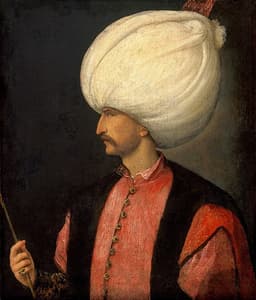
Suleiman the Magnificent
Emperor · Medieval
73.2Total
Vijayalaya Chola
Emperor · Medieval
54.2Total
Basic Information
Born
1494
820
Died
1566
870
Era
Medieval
Medieval
Nationality
Ottoman Empire
India
Occupation
Emperor
Emperor
Civilization
Middle Eastern
Indian
Score Comparison
Military (10%)
85.0
45.0
Political (20%)
78.0
40.8
Influence (20%)
72.0
58.0
Legacy (20%)
68.0
54.0
Leadership (15%)
72.0
64.0
Strategy (15%)
72.0
60.0
TOTAL
73.2
54.2
Suleiman the Magnificent — Complete Timeline
1522 AD
Siege of RhodesWar◆ Major
Suleiman personally led a massive Ottoman campaign against the Knights Hospitaller on Rhodes. After a six-month siege, the knights surrendered and were allowed to leave. This victory secured Ottoman control over the eastern Mediterranean.
SiegeMediterraneanKnights Hospitaller
Impact: regional
1526 AD
Battle of MohácsWar
Suleiman's Ottoman army defeated the Hungarian forces of King Louis II at Moh
BattleHungaryOttoman expansion
Impact: regional
1529 AD
Siege of ViennaWar◆ Major
Suleiman besieged Vienna, the Habsburg capital, with a large army. The siege failed due to supply issues, disease, and strong defenses. This defeat halted Ottoman expansion into central Europe and marked the empire's furthest advance westward.
SiegeViennaDefeat
Impact: regional
1530 AD
Codification of Ottoman lawReform◆ Major
Suleiman oversaw the compilation and standardization of Ottoman legal codes, known as Kanun. These laws regulated criminal justice, land tenure, and taxation, creating a unified legal system that balanced sharia with secular law. He earned the title 'Kanuni' (the Lawgiver).
Legal reformKanunOttoman Empire
Impact: nationalconstructive
1536 AD
Execution of Ibrahim PashaPolitical Action◆ Major
Suleiman ordered the execution of his grand vizier and close friend Ibrahim Pasha, who had served for 13 years. The reasons remain debated, but likely involved Ibrahim's growing power and conflicts with Suleiman's wife, Hurrem Sultan. This event demonstrated the absolute power of the sultan.
ExecutionCourt politicsPower
Impact: nationaltragic
Vijayalaya Chola — Complete Timeline
820 AD
Foundation of the Imperial Chola DynastyPolitical Action◆ Major
Vijayalaya Chola established the Imperial Chola dynasty, reviving the ancient Chola lineage after centuries of obscurity. He consolidated control over the Kaveri delta region, laying the foundation for the Chola Empire's future expansion.
Impact: regionalconstructive
850 AD
Capture of Thanjavur from the MutharaiyarWar◆ Major
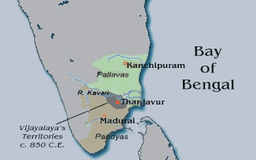
Vijayalaya Chola captured the city of Thanjavur from the Mutharaiyar chieftains, who were vassals of the Pallavas. This victory established the Chola kingdom as an independent power and made Thanjavur the new Chola capital.
Impact: regionalconstructive
860 AD
Construction of the Vijayalaya Choleswaram TempleCultural
Vijayalaya Chola built the Vijayalaya Choleswaram temple at Narthamalai, a rock-cut temple dedicated to Shiva. This temple is one of the earliest Chola architectural monuments, reflecting the transition from Pallava to Chola styles.
constructive
Expert Analysis
Suleiman the Magnificent vs Vijayalaya Chola
# The Sultan and the Founder: Two Paths to Empire
In the autumn of 1526, Suleiman the Magnificent stood on the blood-soaked field of Mohács, watching his Janissaries pile the heads of Hungarian nobles into pyramids. The young King Louis II had drowned in a swamp while fleeing, and Central Europe lay open before the Ottoman war machine. Six hundred years earlier and three thousand miles east, another conqueror—Vijayalaya Chola—had climbed the walls of Thanjavur, a dusty fortress town in the Tamil country, and claimed it for a dynasty that would one day rule the waves. One man inherited the greatest empire of his age and expanded it to its limits; the other built an empire from a single city. Their stories are separated by centuries, but together they illuminate the two great paths to power: inheritance and invention.
Origins
Suleiman was born to rule. The only surviving son of Sultan Selim I, he grew up in the Topkapi Palace, surrounded by viziers, scholars, and the machinery of a state that already stretched from Budapest to Mecca. He received an education fit for a caliph—law, theology, poetry, military science—and was groomed from childhood to wear the sword of Osman. When Selim died in 1520, Suleiman ascended the throne at twenty-six without a rival. The empire was a well-oiled machine; he had only to steer it.
Vijayalaya Chola emerged from obscurity. The Chola dynasty had once ruled parts of Tamil Nadu, but by the early ninth century, it had faded into legend. Vijayalaya was likely a petty chieftain in the Kaveri delta, a vassal of the Pallava kings, with no claim to greatness beyond his own ambition. The year 820, when he founded the Imperial Chola dynasty, was not a coronation but a declaration—a challenge to the established order. He had no palace, no treasury, no standing army. He had only a name and a hunger.
Rise to Power
Suleiman’s rise was a series of triumphs. In 1522, he personally led the siege of Rhodes, a six-month campaign that crushed the Knights Hospitaller and secured Ottoman dominance in the eastern Mediterranean. The victory was not merely military; it was symbolic. Suleiman had proven himself worthy of his father’s legacy. In 1526 came Mohács, a battle that ended Hungarian independence and made the Ottomans the arbiters of Central Europe. Yet even as he conquered, Suleiman understood that power required legitimacy. He began codifying Ottoman law in 1530, merging sharia with secular decrees into a unified legal system—the Kanun—that would bear his name for centuries. His rise was not just territorial; it was institutional.
Vijayalaya’s rise was a gamble. For thirty years after founding his dynasty, he ruled little more than a few villages. Then, around 850, he saw his chance. The Mutharaiyar chieftains, who controlled Thanjavur, had grown weak under Pallava pressure. Vijayalaya struck, capturing the city in a swift campaign. Thanjavur was not Constantinople—it was a modest fort on a river—but it was a capital. He built a temple there, the Vijayalaya Choleswaram, a rock-cut shrine to Shiva that still stands at Narthamalai. The temple was small, but it was a statement: the Cholas had returned.
Leadership & Governance
Suleiman ruled through institutions. His Kanun standardized taxes, criminal penalties, and land tenure across a multilingual, multi-faith empire. He appointed Ibrahim Pasha, a childhood friend, as grand vizier, and for thirteen years they governed together with remarkable efficiency. But Suleiman was also a poet and a patron. He wrote verses under the pen name "Muhibbi" and funded the architect Sinan to build the Süleymaniye Mosque, a masterpiece that still dominates Istanbul’s skyline. His leadership was a balancing act—between justice and mercy, between expansion and consolidation, between the sword and the pen.
Vijayalaya ruled through presence. He had no bureaucracy, no codified law, no grand vizier. His authority was personal, rooted in the loyalty of his warriors and the awe of his subjects. The Vijayalaya Choleswaram temple was not just a religious monument; it was a political one. By building a Shiva temple in a region dominated by Jain and Buddhist influences, Vijayalaya aligned himself with the resurgent Bhakti movement, winning the support of Tamil priests and peasants alike. His governance was less a system than a performance—a king who built, fought, and prayed in full view of his people.
Triumph & Tragedy
Suleiman’s greatest triumph was also his greatest tragedy. In 1529, he marched on Vienna, the Habsburg capital, with an army of perhaps 100,000 men. The siege failed—supply lines stretched, disease ravaged the camp, and autumn rains turned the roads to mud. Suleiman withdrew, but he never returned. Vienna became the high-water mark of Ottoman expansion, a wall that would hold for centuries. Worse, the failure bred paranoia. In 1536, Suleiman ordered the execution of Ibrahim Pasha, his closest friend and most capable minister. The reasons remain murky—perhaps Ibrahim had grown too powerful, perhaps Suleiman’s wife Roxelana had whispered suspicions—but the act shattered the trust at the heart of the court. The sultan who had conquered Budapest could not conquer his own heart.
Vijayalaya’s triumph was Thanjavur; his tragedy was time. He died around 870, having ruled perhaps twenty years as a true king. He never saw the empire his descendants would build—the conquest of Sri Lanka, the naval raids on Srivijaya, the bronze statues that would fill temples from the Kaveri to the Ganges. His son Aditya would defeat the Pallavas; his grandson Parantaka would conquer the Pandyas; but Vijayalaya died with only a single city to his name. He was a founder who never saw the building.
Character & Destiny
Suleiman was a man of contradictions. He was called "the Lawgiver" by his own people and "the Magnificent" by Europeans, but he was also a man who executed his best friend and ordered the murders of his own sons. His personality was shaped by the weight of empire—the constant pressure to be worthy of Osman, to defend the faith, to expand the realm. He trusted no one fully, not even himself. His destiny was to push the Ottoman Empire to its greatest extent, but also to plant the seeds of its stagnation. After him, the sultans would grow weaker, the harem more powerful, the Janissaries more rebellious. He was the peak, and peaks only lead downward.
Vijayalaya was a man of singular purpose. He had no empire to inherit, no father to surpass, no court to corrupt him. He had only a dream—the restoration of the Chola name. His personality was forged in obscurity: patient, opportunistic, and utterly focused. He did not live to see the golden age, but he built the foundation on which it rested. His destiny was to be forgotten by all but historians—and yet, without him, there would have been no Rajaraja, no Brihadeeswarar Temple, no Chola bronze. He was the root, not the flower.
Legacy
Suleiman’s legacy is written in stone and law. The Süleymaniye Mosque dominates Istanbul; the Kanun influenced Ottoman jurisprudence for centuries; his campaigns reshaped the map of Europe and the Middle East. But his legacy is also a warning. The execution of Ibrahim Pasha, the failed siege of Vienna, the naval defeat at Lepanto in 1571 (though after his death, a consequence of his overreach)—these are the shadows of a reign that could have been greater. Suleiman is remembered as the sultan who nearly conquered Europe, but "nearly" is a cruel word.
Vijayalaya’s legacy is the Chola Empire itself. Every temple, every bronze, every inscription that bears the Chola name traces back to the man who captured Thanjavur in 850. His score of 74.8 in influence and 68.0 in legacy reflects a truth: founders are often undervalued because they die before their work bears fruit. But the Chola dynasty would rule for over four centuries, becoming one of the great naval powers of the medieval world. Without Vijayalaya, there would have been no golden age.
Conclusion
Suleiman the Magnificent and Vijayalaya Chola stand at opposite ends of the imperial spectrum. One inherited a machine and drove it to its limits; the other built a machine from scrap. One is remembered in epics and mosques; the other in a single temple and a dynasty’s shadow. Their differences are not merely of scale but of kind. Suleiman’s story is about the burden of greatness; Vijayalaya’s is about the audacity of beginning. In the end, perhaps the founder deserves more credit than the inheritor—for it is one thing to steer a ship, and quite another to build it from driftwood on an empty shore.
Rankings
🥇
Suleiman the MagnificentLeader
Mil: 85.0Pol: 78.0Inf: 72.0
73.2
🥈
Vijayalaya Chola
Mil: 45.0Pol: 40.8Inf: 58.0
54.2
+19.0 behind
How This Comparison Works
Algorithm
Each figure is scored on 6 dimensions (0—100 scale) based on structured historical data: Military (10%), Political (20%), Influence (20%), Legacy (20%), Leadership (15%), Strategy (15%). The weighted total produces the final ranking.
Data Sources
Scores are computed from structured sub-indicators in the database. Scale factors adjust for era (Ancient ×0.85, Modern ×1.0) and civilization size (Eastern ×1.05, Other ×0.80) to account for differences in population and military scale.
Maximum 3 Figures
Comparisons are limited to 2—3 figures to ensure readability and statistical meaningfulness.
Error Margins
±5 points per dimension — Sub-scores are derived from historical records with inherent uncertainty. Two figures within 5 points on a dimension should be considered roughly equivalent in that area.
Total Score Accuracy
±3 points overall — The weighted combination of 6 dimensions produces a total score with approximately ±3 points of uncertainty. Differences of less than 3 points are not statistically significant— the figures are effectively tied.
Known Limitations
- Historical records are incomplete and uneven across civilizations
- Figures from oral-tradition societies may be underrepresented
- Occupation labels can misclassify multi-role figures
- Scores measure capability and impact, not moral character
- Quantitative scoring is a comparison tool, not absolute truth
Capability Radar
Military (10%) — Battles & Warfare
Battles
95
45
Win Rate
90
50
Expansion
95
55
Political (20%) — Governance & Reform
Reform
90
35
Diplomacy
88
40
Economy
85
35
Influence (20%) — Cultural & Global Reach
Cultural
90
40
Global
88
30
Legacy (20%) — Historical Impact
Historical
92
55
Longevity
85
50
Leadership (15%) — Power & Stability
Tenure
95
50
Stability
85
45
Strategy (15%) — Tactics & Innovation
Strategy
92
45
Tactics
85
40
Reform
80
30
Similar Comparisons
Comments & Discussion
No comments yet. Be the first to share your thoughts!