Loading...
Taejo of Joseon vs Tailapa II
Taejo of Joseon leads by 10.0 pts · 2 figures compared
…
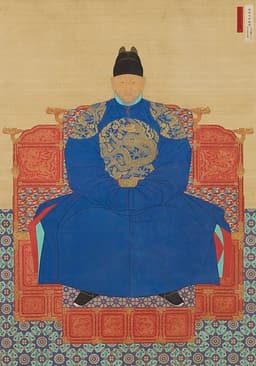
Taejo of Joseon
Emperor · Medieval
70.4Total
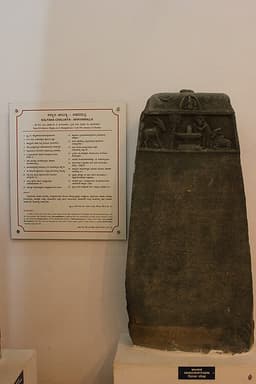
Tailapa II
Emperor · Medieval
60.4Total
Basic Information
Born
1335
957
Died
1408
997
Era
Medieval
Medieval
Nationality
Korea
India
Occupation
Emperor
Emperor
Civilization
Eastern
Indian
Score Comparison
Military (10%)
74.7
74.7
Political (20%)
65.0
53.8
Influence (20%)
65.0
61.0
Legacy (20%)
80.0
52.0
Leadership (15%)
72.0
72.0
Strategy (15%)
61.2
58.0
TOTAL
70.4
60.4
Taejo of Joseon — Complete Timeline
1380 AD
Battle of HwangsanWar
General Yi Seong-gye defeated a Japanese pirate (wokou) force at Hwangsan. This victory enhanced his military reputation and demonstrated his capability as a commander.
WokouGoryeo Military
1388 AD
Wihwado RetreatPolitical Action
General Yi Seong-gye, ordered to invade the Ming dynasty's Liaodong region, turned his army back at Wihwado Island. This act of defiance against the Goryeo court led to a coup that eventually brought him to power.
CoupGoryeo-Ming RelationsPower Shift
Impact: national
1391 AD
Land Reform and the Gwajeon LawReform◆ Major
Taejo implemented the Gwajeon Law, a land reform that redistributed land from the old Goryeo aristocracy to his supporters and the state. This weakened the old elite and strengthened the new Joseon ruling class.
Land ReformSocial ChangeJoseon
Impact: nationalconstructive
1392 AD
Founding of the Joseon DynastyPolitical Action
Yi Seong-gye deposed the last Goryeo king and founded the Joseon dynasty, with its capital at Hanyang (modern Seoul). He established a new ruling class based on Confucian ideology, replacing the Buddhist-influenced Goryeo system.
Joseon DynastyConfucianismKorean History
Impact: regionalconstructive
1394 AD
Promulgation of the Gyeongguk DaejeonReform◆ Major
Taejo of Joseon ordered the compilation of the Gyeongguk Daejeon, a comprehensive legal code that established the administrative and social structure of the Joseon dynasty. This code remained in effect for centuries.
Legal CodeGovernanceConfucianism
Impact: nationalconstructive
Tailapa II — Complete Timeline
973 AD
Founding of the Western Chalukya DynastyPolitical Action◆ Major
Tailapa II overthrew the Rashtrakuta ruler Karka II and established the Western Chalukya dynasty. This marked the end of Rashtrakuta rule in the Deccan and the beginning of a new Chalukya era.
Impact: regional
995 AD
Defeat of the Paramara King MunjaWar◆ Major
Tailapa II defeated and captured the Paramara king Munja of Malwa. This victory consolidated Western Chalukya control over the northern Deccan and established their military reputation.
Impact: regional
Expert Analysis
Taejo of Joseon vs Tailapa II
### The Rebel and the Restorer
On a dusty battlefield in the Deccan plateau, circa 995 CE, a captured king named Munja of Malwa was paraded before his conqueror. The victor, Tailapa II, had just crushed the last great threat to his fledgling dynasty. Half a world away and four centuries later, on the frozen Yalu River in 1388, a Korean general named Yi Seong-gye made a decision that would shatter one kingdom and birth another. He ordered his army to turn back, refusing to invade China for a corrupt court. Two men, two worlds, yet both faced the same fundamental question: when does a commander become a founder? Their answers, shaped by radically different circumstances, reveal how personality and era conspire to forge history.
### Origins
Taejo of Joseon was born Yi Seong-gye in 1335, a time when the Goryeo dynasty was rotting from within. His father, a minor official, served a state besieged by Mongol influence, Japanese pirates, and internal decay. The young Yi grew up on the northern frontier, a harsh region where survival demanded martial skill and political cunning. He learned archery, swordsmanship, and the art of reading men—a education forged in blood, not books.
Tailapa II, born in 957, emerged from a different crucible. He was a scion of the Chalukya royal line, a dynasty that had once ruled the Deccan but had been overthrown by the Rashtrakutas a century earlier. His upbringing was steeped in court intrigue and the memory of lost glory. Where Yi Seong-gye learned to fight pirates, Tailapa learned to scheme in the shadows. The Indian subcontinent was a chessboard of warring kingdoms—Rashtrakutas, Paramaras, Cholas—and every move carried deadly stakes.
### Rise to Power
Yi Seong-gye’s ascent was a masterclass in opportunism. His military reputation soared in 1380 at the Battle of Hwangsan, where he annihilated a Japanese pirate force that had terrorized the coast. The victory made him a national hero, but it also made him a threat to the Goryeo court. In 1388, the king ordered him to invade Ming China’s Liaodong region—a suicidal mission. At Wihwado Island, Yi Seong-gye halted his army and faced a choice: obey a decaying king or defy him. He chose defiance. Turning his army back toward the capital, he marched not as a rebel but as a reformer, sweeping away a dynasty that had lost its mandate.
Tailapa II’s path was more direct but no less daring. In 973, he raised a revolt against the Rashtrakuta emperor Karka II, a ruler weakened by internal strife. Tailapa’s claim was not one of revolution but restoration: he was reclaiming the Chalukya throne. His victory was swift, and he crowned himself king of a new Western Chalukya dynasty. Where Yi Seong-gye had to navigate a complex political landscape of Confucian legitimacy, Tailapa simply seized the moment, relying on the raw power of his sword and the loyalty of his clan.
### Leadership & Governance
Taego of Joseon was a builder of systems. In 1391, he enacted the Gwajeon Law, a land reform that stripped the old Goryeo aristocracy of their estates and redistributed them to his supporters—a stroke of political genius that cemented loyalty and broke the back of the old order. He moved the capital to Hanyang (modern Seoul), a site chosen for its geomantic harmony, and in 1394 ordered the compilation of the Gyeongguk Daejeon, a legal code that would govern Joseon for centuries. His rule was Confucian at its core: order, hierarchy, and the primacy of the state.
Tailapa II governed differently. He was a warrior-king first, a legislator second. His military campaigns were relentless: in 995, he defeated and captured the Paramara king Munja, crushing a rival who had threatened his northern borders. But he left no grand legal code, no sweeping land reform. His rule was personal, built on the loyalty of his generals and the fear of his enemies. The Western Chalukya dynasty he founded would last two centuries, but it never achieved the institutional stability of Joseon. Tailapa governed like a chieftain writ large; Taejo governed like a philosopher-king.
### Triumph & Tragedy
For Taejo, the triumph was the founding itself. In 1392, he deposed the last Goryeo king and established Joseon, a dynasty that would endure for over 500 years. His tragedy came later: torn between his sons in a succession crisis, he abdicated in 1398 and watched his family tear itself apart in a bloody struggle for the throne. The founder of a new order died in 1408, haunted by the chaos he had unleashed.
Tailapa’s triumph was the restoration of Chalukya glory. He died in 997, still on the throne, his dynasty secure. But his tragedy was one of scale: his kingdom never expanded beyond the Deccan, and his successors would face the rising power of the Chola Empire. He founded a house, not a world.
### Character & Destiny
Taejo was a man of contradictions: a ruthless warrior who dreamed of a Confucian utopia, a rebel who became a lawgiver. His scores—Political 76.1, Leadership 81.6—reflect a ruler who understood that power must be institutionalized, not just wielded. Tailapa, with a Military score of 67.3 and Strategy of 55.4, was a simpler creature: a fighter who restored his family’s name. Taejo’s destiny was to create a civilization; Tailapa’s was to reclaim a throne.
### Legacy
Taejo of Joseon is remembered as the father of modern Korea. His dynasty shaped Korean identity, language, and culture for half a millennium. The legacy score of 85.0 reflects this profound impact. Tailapa II, with a legacy of 66.9, is a footnote in Indian history—important to specialists, but overshadowed by the Cholas and Mughals. One founded a nation; the other founded a family.
### Conclusion
Standing on the banks of the Yalu or the battlefields of the Deccan, both men asked the same question: “What comes next?” Taejo answered with a legal code and a capital city. Tailapa answered with a sword and a crown. The difference between them is not one of merit but of circumstance. Taejo ruled at the dawn of a new Confucian age, where institutions could be built from scratch. Tailapa ruled in a world of shifting alliances and eternal war, where a kingdom was only as strong as its latest victory. History remembers the builder more than the warrior—but both, in their own way, shaped the earth.
Rankings
🥇
Taejo of JoseonLeader
Mil: 74.7Pol: 65.0Inf: 65.0
70.4
🥈
Tailapa II
Mil: 74.7Pol: 53.8Inf: 61.0
60.4
+10.0 behind
How This Comparison Works
Algorithm
Each figure is scored on 6 dimensions (0—100 scale) based on structured historical data: Military (10%), Political (20%), Influence (20%), Legacy (20%), Leadership (15%), Strategy (15%). The weighted total produces the final ranking.
Data Sources
Scores are computed from structured sub-indicators in the database. Scale factors adjust for era (Ancient ×0.85, Modern ×1.0) and civilization size (Eastern ×1.05, Other ×0.80) to account for differences in population and military scale.
Maximum 3 Figures
Comparisons are limited to 2—3 figures to ensure readability and statistical meaningfulness.
Error Margins
±5 points per dimension — Sub-scores are derived from historical records with inherent uncertainty. Two figures within 5 points on a dimension should be considered roughly equivalent in that area.
Total Score Accuracy
±3 points overall — The weighted combination of 6 dimensions produces a total score with approximately ±3 points of uncertainty. Differences of less than 3 points are not statistically significant— the figures are effectively tied.
Known Limitations
- Historical records are incomplete and uneven across civilizations
- Figures from oral-tradition societies may be underrepresented
- Occupation labels can misclassify multi-role figures
- Scores measure capability and impact, not moral character
- Quantitative scoring is a comparison tool, not absolute truth
Capability Radar
Military (10%) — Battles & Warfare
Battles
75
70
Win Rate
80
75
Expansion
65
75
Political (20%) — Governance & Reform
Reform
85
65
Diplomacy
70
60
Economy
65
65
Influence (20%) — Cultural & Global Reach
Cultural
80
55
Global
60
40
Legacy (20%) — Historical Impact
Historical
85
60
Longevity
80
50
Leadership (15%) — Power & Stability
Tenure
70
70
Stability
75
60
Strategy (15%) — Tactics & Innovation
Strategy
75
70
Tactics
70
65
Reform
60
60
Similar Comparisons
Comments & Discussion
YALU TURNER6/16/2026
The frozen Yalu River decision wasn't just strategic genius—it was the single most consequential "turn back" in East Asian military history. While history obsesses over Napoleon's retreat from Moscow, Yi Seong-gye's refusal to invade Liaodong essentially *created* a nation. He understood that invading Ming China was suicide, but more importantly, he knew when to disobey orders that served a dying dynasty. That's not cowardice—that's military prescience. Tailapa's battlefield victory is impressiv
血书将军6/16/2026
拿马穆贾被俘说事有意思吗?塔拉帕二世不过是在印度南部一亩三分地打了个胜仗,而李成桂可是亲手终结了500年高丽王朝!一个地方势力的宫廷政变,怎能和东亚权力格局的地震相比?别忘了,李成桂废黜的是与蒙古结盟的腐败王室,他的朝鲜王朝活到了1910年。塔拉帕的遮娄其王朝呢?连300年都没撑到就碎了一地。
DUDLEY DO-RIGHT6/16/2026
Classic revisionist nonsense. Both men were power-hungry warlords who wrapped themselves in convenient narratives. Taejo didn't "turn back" to save Korea—he turned back because he saw his chance to grab power when Goryeo was weak. And Tailapa? Please. The "restorer" myth is a joke. He was a Rashtrakuta vassal who exploited their civil war. The only difference is geography and centuries. Both founded dynasties on broken oaths and battlefield luck. History books just polish the daggers they used.
断代考据派6/16/2026
严肃地说,这两个人的历史档案完全不对称。高丽王朝有详密的《高丽史》和《朝鲜王朝实录》记载李成桂的每一步,而塔拉帕二世的早期记录几乎全是后世遮娄其宫廷诗人和碑铭编出来的。我们把一个近乎神话的“复国英雄”和一个有可靠史料支撑的“叛将建国者”放在天平两端,从一开始就犯了比较史学的忌讳。语境差异如此之大,这根本不是公平对决。
BOOTLEG BUDDHA6/16/2026
Come on—let's call it what it is: Taejo's legitimacy came from Buddhist patronage and Confucian scholars, while Tailapa's came from Jain temples and Sanskrit inscriptions. That's not just trivia—it reveals how each man *sold* his revolution. Taejo rebranded Goryeo's sinicized bureaucracy into a neo-Confucian machine that would choke Korea for centuries. Tailapa revived an archaic Chalukya identity, essentially running a historical cosplay campaign. Neither was a genuine populist—they were both e