Loading...
Zhang Xueliang vs Zia-ul-Haq
Zia-ul-Haq leads by 0.8 pts · 2 figures compared
…
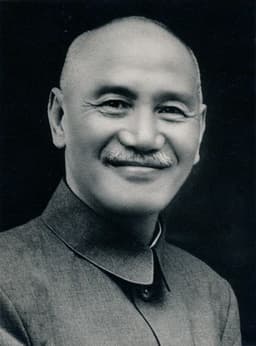
Zhang Xueliang
General · Modern
52.0Total

Zia-ul-Haq
General · Modern
52.8Total
Basic Information
Born
1901
1924
Died
2001
—
Era
Modern
Modern
Nationality
China
Pakistan
Occupation
General
General
Civilization
Eastern
Indian
Score Comparison
Military (10%)
46.7
25.9
Political (20%)
43.7
68.0
Influence (20%)
58.0
55.0
Legacy (20%)
54.0
49.2
Leadership (15%)
50.7
64.0
Strategy (15%)
51.7
43.3
TOTAL
52.0
52.8
Zhang Xueliang — Complete Timeline
1928 AD
Inheritance of the Fengtian ArmyPolitical Action◆ Major
Zhang Xueliang inherited command of the Fengtian Army after his father Zhang Zuolin was assassinated by the Japanese. He became the Young Marshal and controlled Manchuria, one of China's most strategic regions.
Fengtian CliqueInheritanceMilitary Command
Impact: national
Northeast Flag ReplacementPolitical Action
Zhang Xueliang declared allegiance to the Nationalist government by replacing the Fengtian flag with the Kuomintang flag in Manchuria. This act nominally unified China under Chiang Kai-shek's rule and ended the warlord era in the northeast.
Chinese UnificationNationalist GovernmentPolitics
Impact: nationalconstructive
1931 AD
Loss of Manchuria to JapanWar
Zhang Xueliang's forces withdrew from Manchuria following the Mukden Incident, allowing Japan to occupy the region. His decision not to resist led to the establishment of Manchukuo and widespread criticism of his leadership.
Japanese InvasionManchuriaMilitary Decision
Impact: globaltragic
1936 AD
Xi'an IncidentPolitical Action
Zhang Xueliang kidnapped Chiang Kai-shek in Xi'an to force him to form a united front against Japan. The incident ended with Chiang's release and the establishment of the Second United Front between the KMT and CCP.
Xi'an IncidentUnited FrontKidnapping
Impact: globalconstructive
1937 AD
House Arrest by Chiang Kai-shekPolitical Action◆ Major
After the Xi'an Incident, Zhang Xueliang was placed under house arrest by Chiang Kai-shek. He remained in captivity for over 50 years, first in mainland China and later in Taiwan, until his release in 1990.
House ArrestPolitical PrisonerChiang Kai-shek
Impact: nationaltragic
Zia-ul-Haq — Complete Timeline
1977 AD
Seized Power in a Military CoupPolitical Action
General Zia-ul-Haq led a military coup that overthrew Prime Minister Zulfikar Ali Bhutto. Zia imposed martial law, suspended the constitution, and arrested Bhutto. The coup ended Pakistan's democratic experiment and began over a decade of military rule.
CoupMartial Law
Impact: nationaldestructive
1979 AD
Supported the Afghan Mujahideen Against the Soviet UnionWar◆ Major
Zia's government became a key ally of the U.S. in supporting Afghan mujahideen fighters against the Soviet invasion of Afghanistan. Pakistan provided training, arms, and sanctuary. This policy strengthened the military's role and later contributed to the rise of militant groups.
Afghan WarProxy War
Impact: regional
Introduced Islamization PoliciesReform◆ Major
Zia implemented a series of Islamization measures, including the introduction of Hudood Ordinances, Islamic courts, and compulsory zakat. He also enforced strict Islamic dress codes and media censorship. These policies reshaped Pakistan's legal and social fabric, increasing sectarian tensions.
IslamizationLegal Reform
Impact: nationaldestructive
Executed Zulfikar Ali BhuttoPolitical Action◆ Major
Zia ordered the execution of former Prime Minister Zulfikar Ali Bhutto after a controversial murder trial. Bhutto was hanged despite international appeals for clemency. The execution deepened political polarization and created a lasting legacy of enmity between the military and the PPP.
ExecutionPolitical Repression
Impact: nationaltragic
1984 AD
Held a Referendum on His PresidencyPolitical Action
Zia held a controversial referendum asking voters to endorse his Islamization policies and his continuation as president. The referendum was widely criticized as a sham, with official results claiming over 97% approval. It allowed Zia to extend his rule without elections.
ReferendumAuthoritarianism
Impact: nationaldestructive
1988 AD
Died in a Plane CrashOther
Zia-ul-Haq died in a mysterious plane crash near Bahawalpur along with several senior generals and the U.S. ambassador. The cause of the crash remains disputed, with theories ranging from sabotage to mechanical failure. His death ended military rule and led to democratic elections.
DeathMystery
Impact: nationaltragic
Expert Analysis
Origins
Zhang Xueliang was born on June 3, 1901, in Haicheng, Fengtian (now Liaoning), China, as the eldest son of the warlord Zhang Zuolin. He received a traditional Chinese education mixed with modern military training, becoming a general in the Fengtian Army by his early twenties. His father's assassination by the Japanese in 1928 thrust him into leadership at age 27. Zia-ul-Haq was born on August 12, 1924, in Jalandhar, Punjab, British India, into a lower-middle-class family. He joined the British Indian Army in 1943 and later the Pakistan Army after partition. He trained at the Command and Staff College in Quetta and the US Army Command and General Staff College at Fort Leavenworth. His rise was gradual through the military hierarchy, becoming a brigadier in 1969.
Rise to Power
Zhang Xueliang rose to power by inheriting the Fengtian Army after his father's assassination. He quickly consolidated control over Manchuria and, in 1928, declared allegiance to the Nationalist government by replacing the Fengtian flag with the Kuomintang flag, known as the Northeast Flag Replacement. This action nominally unified China under Chiang Kai-shek but alienated Japanese interests. Zia-ul-Haq's rise was abrupt: on July 5, 1977, he led a military coup against Prime Minister Zulfikar Ali Bhutto, imposing martial law. He justified the coup by citing widespread unrest and alleged electoral fraud. Zia's political scores (68.0) reflect his adeptness at consolidating power, contrasting with Zhang's lower political score (43.7), as Zhang relied on inheritance rather than political maneuvering.
Leadership & Governance
Zhang Xueliang's leadership was marked by indecision and internal conflict. His pivotal decision during the Mukden Incident (1931) to withdraw without resistance led to the loss of Manchuria to Japan, scoring low in military (46.7) and strategy (51.7). In contrast, his Xi'an Incident (1936) showed bold political action: he kidnapped Chiang Kai-shek to force a united front against Japan. However, his governance style was inconsistent. Zia-ul-Haq governed with iron discipline, implementing Islamization policies including Hudood Ordinances, Islamic courts, and compulsory zakat. He scored 64.0 in leadership and 68.0 in political, reflecting his ability to reshape Pakistan's legal and social framework. His support for Afghan mujahideen against the Soviet Union (1980s) boosted his influence (55.0).
Triumph & Tragedy
Zhang Xueliang's greatest triumph was the Xi'an Incident, which led to a temporary united front against Japan and is credited with saving the Communist forces. However, his tragedy was twofold: the loss of Manchuria in 1931 and his subsequent 54-year house arrest by Chiang Kai-shek. He died in 2001 at age 100, having outlived his captors. Zia-ul-Haq's triumph was orchestrating Pakistan's role in the Soviet-Afghan War, securing U.S. support and elevating Pakistan's strategic importance. His tragedy includes the execution of Zulfikar Ali Bhutto in 1979, which deepened political divisions and led to his own death in a mysterious plane crash in 1988. While Zhang's legacy scores 54.0, Zia's legacy scores 49.2, reflecting mixed assessments.
Character & Destiny
Zhang Xueliang was described as impulsive and emotional, often swayed by loyalty and patriotism. His decision to release Chiang Kai-shek after the Xi'an Incident demonstrated his trust in Chiang's promises, a naivety that cost him his freedom. Zia-ul-Haq was pragmatic and calculating, using Islam as a tool for legitimacy. His military scores (25.9) are low because he rarely led troops in battle, but his political acumen was high. Their destinies were shaped by their choices: Zhang's idealistic gamble led to a life of captivity, while Zia's authoritarian rule ended abruptly in a crash, leaving many questions.
Legacy
Zhang Xueliang is remembered in China as a patriotic hero for his role in the Xi'an Incident, but his early failures in Manchuria tarnish his reputation. His scores: Influence 58.0, Legacy 54.0. Zia-ul-Haq's legacy is deeply contested: his Islamization policies transformed Pakistani society and law, but also fueled sectarianism. His scores: Influence 55.0, Legacy 49.2. Zhang's actions arguably altered the course of Chinese history, while Zia's impact on Pakistan and Afghanistan remains profound.
Conclusion
While Zia-ul-Haq scores higher overall (52.8 vs 52.0), Zhang Xueliang's impact on world history, particularly the Xi'an Incident's role in the Chinese Civil War and WWII, gives him a more significant legacy. Zia's Islamization affected millions but within a narrower scope. Zhang's decision to force a united front against Japan arguably changed the balance of power in Asia. Therefore, Zhang Xueliang had greater historical impact despite similar total scores.
Rankings
🥇
Zia-ul-HaqLeader
Mil: 25.9Pol: 68.0Inf: 55.0
52.8
🥈
Zhang Xueliang
Mil: 46.7Pol: 43.7Inf: 58.0
52.0
+0.8 behind
How This Comparison Works
Algorithm
Each figure is scored on 6 dimensions (0—100 scale) based on structured historical data: Military (10%), Political (20%), Influence (20%), Legacy (20%), Leadership (15%), Strategy (15%). The weighted total produces the final ranking.
Data Sources
Scores are computed from structured sub-indicators in the database. Scale factors adjust for era (Ancient ×0.85, Modern ×1.0) and civilization size (Eastern ×1.05, Other ×0.80) to account for differences in population and military scale.
Maximum 3 Figures
Comparisons are limited to 2—3 figures to ensure readability and statistical meaningfulness.
Error Margins
±5 points per dimension — Sub-scores are derived from historical records with inherent uncertainty. Two figures within 5 points on a dimension should be considered roughly equivalent in that area.
Total Score Accuracy
±3 points overall — The weighted combination of 6 dimensions produces a total score with approximately ±3 points of uncertainty. Differences of less than 3 points are not statistically significant— the figures are effectively tied.
Known Limitations
- Historical records are incomplete and uneven across civilizations
- Figures from oral-tradition societies may be underrepresented
- Occupation labels can misclassify multi-role figures
- Scores measure capability and impact, not moral character
- Quantitative scoring is a comparison tool, not absolute truth
Capability Radar
Military (10%) — Battles & Warfare
Battles
35
10
Win Rate
30
15
Expansion
20
5
Political (20%) — Governance & Reform
Reform
20
70
Diplomacy
55
50
Economy
15
30
Influence (20%) — Cultural & Global Reach
Cultural
30
60
Global
40
45
Legacy (20%) — Historical Impact
Historical
60
55
Longevity
45
40
Leadership (15%) — Power & Stability
Tenure
40
55
Stability
10
20
Strategy (15%) — Tactics & Innovation
Strategy
45
25
Tactics
40
20
Reform
25
60
Similar Comparisons
Comments & Discussion
No comments yet. Be the first to share your thoughts!