Loading...
Todor Zhivkov vs Uhuru Kenyatta
Todor Zhivkov leads by 0.2 pts · 2 figures compared
…

Todor Zhivkov
Politician · Modern
54.9Total
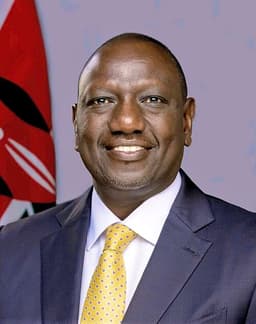
Uhuru Kenyatta
Politician · Modern
54.7Total
Basic Information
Born
1911
1961
Died
1998
—
Era
Modern
Modern
Nationality
Bulgaria
Kenya
Occupation
Politician
Politician
Civilization
Western
Other
Score Comparison
Military (10%)
50.0
50.0
Political (20%)
68.0
62.7
Influence (20%)
51.0
57.2
Legacy (20%)
44.2
46.7
Leadership (15%)
78.0
66.0
Strategy (15%)
41.5
44.2
TOTAL
54.9
54.7
Todor Zhivkov — Complete Timeline
1954 AD
Appointment as First Secretary of the Bulgarian Communist PartyPolitical Action◆ Major
Zhivkov became First Secretary of the Bulgarian Communist Party, succeeding Vulko Chervenkov. He would hold this position for 35 years, making him the longest-serving leader of any Eastern Bloc country.
Communist leadership
Impact: national
1979 AD
Introduction of the New Economic MechanismReform
Zhivkov introduced limited market-oriented reforms to the Bulgarian economy, allowing some private enterprise and decentralization. The reforms aimed to improve efficiency but were constrained by the communist system and ultimately had limited impact.
Economic reformMarket socialism
Impact: nationalconstructive
1984 AD
Forced Assimilation of Ethnic TurksPolitical Action◆ Major
Zhivkov's regime launched a campaign to forcibly assimilate Bulgaria's ethnic Turkish minority, requiring them to adopt Slavic names and banning Turkish language and cultural practices. This led to widespread protests and a mass exodus of Turks from Bulgaria.
AssimilationHuman rights
Impact: nationaldestructive
1989 AD
Resignation from PowerPolitical Action◆ Major
Facing mass protests and the collapse of communist regimes across Eastern Europe, Zhivkov was forced to resign as party leader and head of state. He was later arrested and tried for corruption and abuse of power.
Fall of communismRegime change
Impact: national
Uhuru Kenyatta — Complete Timeline
2013 AD
2013 Kenyan general electionPolitical Action◆ Major
Uhuru Kenyatta won the presidential election as candidate of the Jubilee Alliance, defeating Raila Odinga. The election was largely peaceful, though Odinga challenged the result at the Supreme Court, which upheld Kenyatta's victory. Kenyatta became Kenya's fourth president.
ElectionPeaceful TransitionJubilee
Impact: national
2014 AD
ICC trial for post-election violencePolitical Action◆ Major
Kenyatta faced charges at the International Criminal Court (ICC) for crimes against humanity related to the 2007-2008 post-election violence. The case was withdrawn in 2014 due to insufficient evidence and witness interference, but it marked a significant international legal challenge to a sitting head of state.
ICCInternational JusticeElection Violence
Impact: global
Standard Gauge Railway projectOther◆ Major
Kenyatta launched the construction of the Standard Gauge Railway (SGR) from Mombasa to Nairobi, funded by Chinese loans. The project, completed in 2017, aimed to modernize Kenya's transport infrastructure and boost trade, but also raised concerns about debt sustainability.
InfrastructureChinaRailway
Impact: nationalconstructive
2018 AD
Handshake with Raila OdingaPolitical Action◆ Major
Kenyatta and opposition leader Raila Odinga publicly reconciled in a 'handshake' event, ending months of political tension following the disputed 2017 election. This led to the Building Bridges Initiative (BBI), which proposed constitutional changes aimed at reducing political conflict.
ReconciliationPolitical DialogueBBI
Impact: nationalconstructive
2020 AD
COVID-19 pandemic responsePolitical Action◆ Major
Kenyatta's government implemented measures to combat the COVID-19 pandemic, including curfews, lockdowns, and economic stimulus packages. The response was praised for its early action but criticized for economic impact and enforcement issues. Kenya recorded over 300,000 cases by 2022.
PandemicPublic HealthEconomic Response
Impact: national
Expert Analysis
Origins
Todor Zhivkov was born on September 7, 1911, in the village of Pravets, Bulgaria, into a poor peasant family. He received limited formal education, attending secondary school in Botevgrad, but was largely self-taught. He joined the Bulgarian Communist Party in 1932 and became active in the resistance during World War II, earning a reputation as a loyal party functionary. His early life was marked by poverty and the struggle for survival, which shaped his pragmatic and authoritarian approach to leadership.
Uhuru Kenyatta was born on October 26, 1961, in Nairobi, Kenya, to Jomo Kenyatta, the founding president of Kenya, and Mama Ngina Kenyatta. He grew up in privilege, attending prestigious schools like St. Mary's School in Nairobi and later studying economics and political science at Amherst College in the United States. His background as the son of a national icon provided him with political connections and a sense of destiny, but also burdened him with high expectations. He entered politics in the early 2000s, serving as a member of parliament and minister before becoming president.
Rise to Power
Zhivkov rose through the ranks of the Bulgarian Communist Party after World War II, serving as a police officer and later as head of the Sofia city party organization. In 1954, he was appointed First Secretary of the Bulgarian Communist Party, succeeding Vulko Chervenkov, who had been purged. Zhivkov consolidated power by aligning with Soviet leader Nikita Khrushchev and removing rivals through purges. He maintained control by balancing factions within the party and repressing dissent, becoming the longest-serving leader of the Eastern Bloc, with 35 years in power.
Kenyatta's rise was accelerated by his family name. He became a member of parliament in 2002 and served as Minister for Local Government and later Minister for Finance. In the 2013 general election, he won the presidency as the candidate of the Jubilee Alliance, defeating Raila Odinga. His campaign emphasized economic development and national unity, though the election was marred by allegations of irregularities. His rise was also shaped by his trial at the International Criminal Court (ICC) for crimes against humanity related to the 2007-2008 post-election violence, which ironically bolstered his support among some Kenyans who saw it as foreign interference.
Leadership & Governance
Zhivkov's leadership style was authoritarian and centralized. He maintained control through the communist party apparatus and secret police, suppressing dissent and promoting a cult of personality. He introduced limited economic reforms, such as the New Economic Mechanism in the 1980s, which allowed some private enterprise and decentralization, but these were insufficient to address systemic inefficiencies. His government also pursued a forced assimilation campaign against ethnic Turks in 1984-1985, requiring them to adopt Slavic names and banning Turkish language and customs. This policy led to international condemnation and internal unrest. Zhivkov scored 78.0 in leadership, reflecting his ability to maintain power, but his strategy score of 41.5 indicates poor long-term planning.
Kenyatta's leadership style was more consensual and technocratic. He promoted economic development through large infrastructure projects, such as the Standard Gauge Railway (SGR) funded by Chinese loans, which aimed to boost trade and connectivity. He also launched the 'Big Four Agenda' focusing on affordable housing, manufacturing, healthcare, and food security. However, his governance was criticized for corruption and rising public debt. His political strategy included the 'handshake' with opposition leader Raila Odinga in 2018, which reduced political tensions but also consolidated his power. Kenyatta scored 66.0 in leadership, lower than Zhivkov, but his political score of 62.7 reflects a more democratic context.
Triumph & Tragedy
Zhivkov's greatest success was maintaining stability and loyalty to the Soviet Union, keeping Bulgaria a reliable communist ally. He also achieved some economic growth through industrialization and limited reforms. However, his greatest failure was the forced assimilation of ethnic Turks, which caused a mass exodus of 300,000 Turks in 1989 and damaged Bulgaria's international reputation. Additionally, his economic policies failed to prevent stagnation, and he was forced to resign in 1989 as communist regimes collapsed across Eastern Europe. He was later put on trial for embezzlement and died under house arrest in 1998.
Kenyatta's triumphs include the successful completion of the SGR, which reduced transport costs and travel time between Mombasa and Nairobi. His COVID-19 response included curfews and stimulus packages that mitigated economic damage. However, his greatest failure was the ICC trial, which tarnished his image and highlighted his role in the 2007-2008 violence. His government also faced criticism for human rights abuses, such as the forced evictions of informal settlements and crackdowns on opposition. The national debt increased significantly under his watch, raising concerns about economic sustainability.
Character & Destiny
Zhivkov was pragmatic, ruthless, and adaptable. He survived purges and maintained power by aligning with Soviet leaders, shifting from Stalinism to a more moderate line. His character was shaped by his peasant origins, making him distrustful of intellectuals and focused on loyalty. His destiny was tied to the rise and fall of the Soviet Union; when the Eastern Bloc collapsed, he fell with it. Historians often view him as a symbol of communist stagnation and repression.
Kenyatta is characterized by his aristocratic background and diplomatic skills. He is seen as calm and measured, but also aloof and disconnected from ordinary Kenyans. His destiny was shaped by his father's legacy and the burden of historical violence. The ICC trial defined his early presidency, but he managed to survive politically through strategic alliances. His legacy is still unfolding, with mixed assessments of his economic achievements and governance.
Legacy
Zhivkov's legacy is largely negative in Bulgaria, where he is remembered as a repressive dictator who held back the country's development. The forced assimilation campaign remains a stain on his record. However, some older Bulgarians recall the stability and modest economic progress under his rule. His political score of 68.0 reflects his long tenure, but his legacy score of 44.2 indicates limited enduring impact.
Kenyatta's legacy is mixed. He modernized Kenya's infrastructure and promoted national cohesion, but his tenure was marred by corruption and debt. The 'handshake' with Odinga is seen as a positive step for political stability. His influence score of 57.2 reflects his role in East African politics. Ultimately, his legacy will depend on how his successors manage the debt and sustain development.
Conclusion
Todor Zhivkov had a greater impact on his country's trajectory due to his 35-year rule and the profound changes he imposed, such as forced assimilation and alignment with the Soviet bloc. While Kenyatta's infrastructure projects are significant, they occur within a democratic framework that limits personal power. Zhivkov's total score of 54.9 slightly edges out Kenyatta's 54.7, but the difference is marginal. However, Zhivkov's legacy is more enduring because he reshaped Bulgaria's ethnic composition and political system, even if negatively. Thus, Zhivkov had a greater, albeit more destructive, impact.
Rankings
🥇
Todor ZhivkovLeader
Mil: 50.0Pol: 68.0Inf: 51.0
54.9
🥈
Uhuru Kenyatta
Mil: 50.0Pol: 62.7Inf: 57.2
54.7
+0.2 behind
How This Comparison Works
Algorithm
Each figure is scored on 6 dimensions (0—100 scale) based on structured historical data: Military (10%), Political (20%), Influence (20%), Legacy (20%), Leadership (15%), Strategy (15%). The weighted total produces the final ranking.
Data Sources
Scores are computed from structured sub-indicators in the database. Scale factors adjust for era (Ancient ×0.85, Modern ×1.0) and civilization size (Eastern ×1.05, Other ×0.80) to account for differences in population and military scale.
Maximum 3 Figures
Comparisons are limited to 2—3 figures to ensure readability and statistical meaningfulness.
Error Margins
±5 points per dimension — Sub-scores are derived from historical records with inherent uncertainty. Two figures within 5 points on a dimension should be considered roughly equivalent in that area.
Total Score Accuracy
±3 points overall — The weighted combination of 6 dimensions produces a total score with approximately ±3 points of uncertainty. Differences of less than 3 points are not statistically significant— the figures are effectively tied.
Known Limitations
- Historical records are incomplete and uneven across civilizations
- Figures from oral-tradition societies may be underrepresented
- Occupation labels can misclassify multi-role figures
- Scores measure capability and impact, not moral character
- Quantitative scoring is a comparison tool, not absolute truth
Capability Radar
Military (10%) — Battles & Warfare
Battles
29
23
Win Rate
30
22
Expansion
34
30
Political (20%) — Governance & Reform
Reform
40
55
Diplomacy
55
60
Economy
45
55
Influence (20%) — Cultural & Global Reach
Cultural
20
40
Global
25
45
Legacy (20%) — Historical Impact
Historical
35
45
Longevity
30
35
Leadership (15%) — Power & Stability
Tenure
85
65
Stability
60
50
Strategy (15%) — Tactics & Innovation
Strategy
38
30
Tactics
40
33
Reform
42
36
Similar Comparisons
Comments & Discussion
No comments yet. Be the first to share your thoughts!