Loading...
Mohammad Karim Khalili vs Uhuru Kenyatta
Uhuru Kenyatta leads by 3.2 pts · 2 figures compared
…

Mohammad Karim Khalili
Politician · Modern
51.5Total
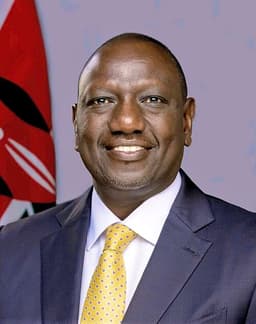
Uhuru Kenyatta
Politician · Modern
54.7Total
Basic Information
Born
1950
1961
Died
—
—
Era
Modern
Modern
Nationality
Afghanistan
Kenya
Occupation
Politician
Politician
Civilization
Middle Eastern
Other
Score Comparison
Military (10%)
50.0
50.0
Political (20%)
48.0
62.7
Influence (20%)
56.4
57.2
Legacy (20%)
45.0
46.7
Leadership (15%)
65.0
66.0
Strategy (15%)
42.3
44.2
TOTAL
51.5
54.7
Mohammad Karim Khalili — Complete Timeline
1990 AD
Leadership of the Hezb-e Wahdat PartyPolitical Action◆ Major
Khalili became a leader of Hezb-e Wahdat, a political party representing Afghanistan's Hazara community. The party aimed to secure Hazara rights and autonomy during the civil war, and Khalili played a key role in its negotiations with other factions.
Hazara PoliticsEthnic RepresentationCivil War
Impact: nationalconstructive
2001 AD
Role in the Bonn Agreement (2001)Political Action◆ Major
Khalili participated in the Bonn Conference that established the post-Taliban interim government in Afghanistan. He represented Hazara interests and helped shape the political framework that included ethnic minorities in the new administration.
Bonn AgreementPost-TalibanPeace Process
Impact: nationalconstructive
2004 AD
Service as Vice President of Afghanistan (2004-2014)Political Action◆ Major
Khalili served as Vice President under President Hamid Karzai from 2004 to 2014. His tenure focused on representing Hazara interests in the post-Taliban government and promoting national unity, though his influence was limited by factional politics.
Vice PresidencyKarzai GovernmentNational Unity
Impact: nationalconstructive
Uhuru Kenyatta — Complete Timeline
2013 AD
2013 Kenyan general electionPolitical Action◆ Major
Uhuru Kenyatta won the presidential election as candidate of the Jubilee Alliance, defeating Raila Odinga. The election was largely peaceful, though Odinga challenged the result at the Supreme Court, which upheld Kenyatta's victory. Kenyatta became Kenya's fourth president.
ElectionPeaceful TransitionJubilee
Impact: national
2014 AD
ICC trial for post-election violencePolitical Action◆ Major
Kenyatta faced charges at the International Criminal Court (ICC) for crimes against humanity related to the 2007-2008 post-election violence. The case was withdrawn in 2014 due to insufficient evidence and witness interference, but it marked a significant international legal challenge to a sitting head of state.
ICCInternational JusticeElection Violence
Impact: global
Standard Gauge Railway projectOther◆ Major
Kenyatta launched the construction of the Standard Gauge Railway (SGR) from Mombasa to Nairobi, funded by Chinese loans. The project, completed in 2017, aimed to modernize Kenya's transport infrastructure and boost trade, but also raised concerns about debt sustainability.
InfrastructureChinaRailway
Impact: nationalconstructive
2018 AD
Handshake with Raila OdingaPolitical Action◆ Major
Kenyatta and opposition leader Raila Odinga publicly reconciled in a 'handshake' event, ending months of political tension following the disputed 2017 election. This led to the Building Bridges Initiative (BBI), which proposed constitutional changes aimed at reducing political conflict.
ReconciliationPolitical DialogueBBI
Impact: nationalconstructive
2020 AD
COVID-19 pandemic responsePolitical Action◆ Major
Kenyatta's government implemented measures to combat the COVID-19 pandemic, including curfews, lockdowns, and economic stimulus packages. The response was praised for its early action but criticized for economic impact and enforcement issues. Kenya recorded over 300,000 cases by 2022.
PandemicPublic HealthEconomic Response
Impact: national
Expert Analysis
Origins
Mohammad Karim Khalili was born in 1950 in the Wardak province of Afghanistan, into a Hazara family. His early life was shaped by the ethnic marginalization of Hazaras, who faced discrimination under various Afghan regimes. He received religious education and became involved in political activism, joining the Hezb-e Wahdat party, which represented Hazara interests. His background as a Shia Muslim in a predominantly Sunni country influenced his political trajectory.
Uhuru Kenyatta was born on October 26, 1961, in Nairobi, Kenya, as the son of Jomo Kenyatta, Kenya's first president. He grew up in privilege, attending prestigious schools like St. Mary's School in Nairobi and later Amherst College in Massachusetts. His family background gave him a direct entry into politics, but also burdened him with expectations and scrutiny. Unlike Khalili, Kenyatta's origins were in the elite, not an oppressed minority.
Rise to Power
Khalili rose to prominence as a leader of Hezb-e Wahdat during the Afghan Civil War in the 1990s. He became the party's leader after the death of Abdul Ali Mazari in 1995. His key turning point was the Bonn Agreement in 2001, where he represented Hazara interests in negotiations for post-Taliban Afghanistan. This led to his appointment as Vice President under Hamid Karzai in 2004, a position he held until 2014.
Kenyatta's rise was more conventional. He entered politics in the 1990s, serving as a Member of Parliament and later as a minister under President Daniel arap Moi. He ran for president in 2013, winning against Raila Odinga with 50.07% of the vote. His victory was challenged in court but upheld. Unlike Khalili, Kenyatta's rise was marked by electoral politics and alliance-building, including the formation of the Jubilee Coalition. However, his path was shadowed by the ICC indictment for his role in the 2007-2008 post-election violence.
Leadership & Governance
Khalili's leadership focused on representing Hazara interests within the Afghan government. As Vice President, he had limited executive power but served as a symbolic figure for Hazaras. He advocated for Hazara inclusion in the constitution and government appointments. His governance style was cautious and diplomatic, often acting as a mediator between factions. However, his influence was constrained by the dominance of Pashtun leaders like Karzai.
Kenyatta exercised more direct power as President of Kenya. He pursued an ambitious infrastructure agenda, notably the Standard Gauge Railway (SGR) funded by Chinese loans, which cost $3.6 billion. He also focused on economic development, with GDP growth averaging 5-6% during his first term. His leadership style was pragmatic, forming a 'handshake' with opponent Raila Odinga in 2018 to quell political unrest. However, critics point to rising public debt and corruption scandals. In terms of scores, Kenyatta's political score of 62.7 exceeds Khalili's 48.0, reflecting his greater executive authority.
Triumph & Tragedy
Khalili's greatest triumph was his role in the Bonn Agreement, securing Hazara representation in the post-Taliban government. He also successfully maintained Hazara unity during a turbulent period. His tragedy was the inability to prevent the resurgence of the Taliban, which reversed many gains for Hazaras. After 2014, he faded from national politics, and Hazaras faced renewed persecution. His legacy score of 45.0 reflects this limited long-term impact.
Kenyatta's triumphs include the peaceful 2013 election (despite challenges), the SGR completion, and the 'handshake' that reduced political violence. However, his tenure was marred by the ICC trial, which damaged Kenya's international reputation. The trial collapsed in 2014 due to lack of evidence, but it highlighted issues of impunity. Additionally, his COVID-19 response faced criticism for heavy-handed lockdowns. Kenyatta's influence score of 57.2 is slightly higher than Khalili's 56.4, but his legacy is still debated.
Character & Destiny
Khalili is known for his calm demeanor and strategic patience. He avoided direct confrontation, instead working within the system. This allowed him to survive political shifts, but also limited his impact. His destiny was tied to the Hazara community's fate, which remained precarious despite his efforts.
Kenyatta is more assertive and pragmatic. He skillfully navigated ethnic politics and international pressure. His character was shaped by his family legacy, driving him to prove his own capability. However, his leadership score of 66.0 is only slightly above Khalili's 65.0, indicating similar perceived effectiveness. His destiny was to lead Kenya during a period of growth but also to face accountability issues.
Legacy
Khalili's legacy is primarily as a symbol of Hazara political aspirations. He helped integrate Hazaras into the Afghan state, but the gains were fragile. His legacy score of 45.0 reflects this unfulfilled potential. He is respected within his community but largely unknown internationally.
Kenyatta's legacy is more complex. He modernized Kenya's infrastructure and maintained stability, but his tenure also saw increased debt and corruption. The 'handshake' with Odinga may be his most enduring achievement, fostering political stability. His legacy score of 46.7 is slightly above Khalili's. However, both figures have legacies that are still evolving.
Conclusion
While both leaders influenced their nations, Uhuru Kenyatta had a greater impact due to his executive power and tangible infrastructure projects. His total score of 54.7 surpasses Khalili's 51.5, reflecting his broader influence. Khalili's role as a minority representative was important but ultimately limited by Afghanistan's instability. Kenyatta's leadership in a more stable country allowed him to implement policies that affect millions. Therefore, Kenyatta's impact is more substantial.
Rankings
🥇
Uhuru KenyattaLeader
Mil: 50.0Pol: 62.7Inf: 57.2
54.7
🥈
Mohammad Karim Khalili
Mil: 50.0Pol: 48.0Inf: 56.4
51.5
+3.2 behind
How This Comparison Works
Algorithm
Each figure is scored on 6 dimensions (0—100 scale) based on structured historical data: Military (10%), Political (20%), Influence (20%), Legacy (20%), Leadership (15%), Strategy (15%). The weighted total produces the final ranking.
Data Sources
Scores are computed from structured sub-indicators in the database. Scale factors adjust for era (Ancient ×0.85, Modern ×1.0) and civilization size (Eastern ×1.05, Other ×0.80) to account for differences in population and military scale.
Maximum 3 Figures
Comparisons are limited to 2—3 figures to ensure readability and statistical meaningfulness.
Error Margins
±5 points per dimension — Sub-scores are derived from historical records with inherent uncertainty. Two figures within 5 points on a dimension should be considered roughly equivalent in that area.
Total Score Accuracy
±3 points overall — The weighted combination of 6 dimensions produces a total score with approximately ±3 points of uncertainty. Differences of less than 3 points are not statistically significant— the figures are effectively tied.
Known Limitations
- Historical records are incomplete and uneven across civilizations
- Figures from oral-tradition societies may be underrepresented
- Occupation labels can misclassify multi-role figures
- Scores measure capability and impact, not moral character
- Quantitative scoring is a comparison tool, not absolute truth
Capability Radar
Military (10%) — Battles & Warfare
Battles
23
23
Win Rate
26
22
Expansion
30
30
Political (20%) — Governance & Reform
Reform
40
55
Diplomacy
50
60
Economy
30
55
Influence (20%) — Cultural & Global Reach
Cultural
45
40
Global
25
45
Legacy (20%) — Historical Impact
Historical
40
45
Longevity
30
35
Leadership (15%) — Power & Stability
Tenure
60
65
Stability
20
50
Strategy (15%) — Tactics & Innovation
Strategy
28
30
Tactics
31
33
Reform
38
36
Similar Comparisons
Comments & Discussion
No comments yet. Be the first to share your thoughts!