Loading...
Sarvepalli Radhakrishnan vs Uhuru Kenyatta
Sarvepalli Radhakrishnan leads by 5.0 pts · 2 figures compared
…

Sarvepalli Radhakrishnan
Politician · Modern
59.7Total
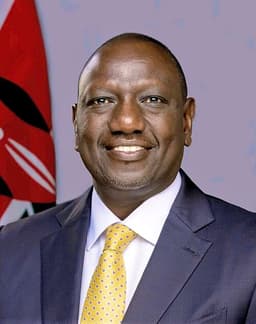
Uhuru Kenyatta
Politician · Modern
54.7Total
Basic Information
Born
1888
1961
Died
1975
—
Era
Modern
Modern
Nationality
India
Kenya
Occupation
Politician
Politician
Civilization
Indian
Other
Score Comparison
Military (10%)
48.4
50.0
Political (20%)
53.8
62.7
Influence (20%)
65.0
57.2
Legacy (20%)
55.0
46.7
Leadership (15%)
72.0
66.0
Strategy (15%)
60.0
44.2
TOTAL
59.7
54.7
Sarvepalli Radhakrishnan — Complete Timeline
1949 AD
Appointed Ambassador to the Soviet UnionPolitical Action◆ Major
Sarvepalli Radhakrishnan was appointed as India's Ambassador to the Soviet Union, serving from 1949 to 1952. He played a key role in establishing diplomatic relations and promoting cultural exchange.
DiplomacyAmbassadorUSSR
Impact: nationalconstructive
1952 AD
Elected Vice President of IndiaPolitical Action◆ Major
Sarvepalli Radhakrishnan was elected as the first Vice President of India, serving from 1952 to 1962. He also served as Chairman of the Rajya Sabha, presiding over the upper house.
Vice PresidentRajya SabhaConstitutional
Impact: nationalconstructive
1954 AD
Awarded Bharat RatnaCultural◆ Major
Sarvepalli Radhakrishnan was awarded the Bharat Ratna, India's highest civilian award, in 1954. He was one of the first recipients, honored for his contributions to philosophy and public life.
AwardHonorCivilian
Impact: nationalconstructive
1962 AD
Elected President of IndiaPolitical Action◆ Major
Sarvepalli Radhakrishnan was elected as the 2nd President of India, serving from 1962 to 1967. He was a renowned philosopher and scholar, and his presidency was marked by intellectual leadership.
PresidencyPhilosopherElection
Impact: nationalconstructive
Teachers' Day established in his honorCultural◆ Major
India's Teachers' Day is celebrated on September 5, the birthday of Sarvepalli Radhakrishnan, in recognition of his contributions to education and philosophy. The tradition began during his presidency.
Teachers' DayEducationHonor
Impact: nationalconstructive
Uhuru Kenyatta — Complete Timeline
2013 AD
2013 Kenyan general electionPolitical Action◆ Major
Uhuru Kenyatta won the presidential election as candidate of the Jubilee Alliance, defeating Raila Odinga. The election was largely peaceful, though Odinga challenged the result at the Supreme Court, which upheld Kenyatta's victory. Kenyatta became Kenya's fourth president.
ElectionPeaceful TransitionJubilee
Impact: national
2014 AD
ICC trial for post-election violencePolitical Action◆ Major
Kenyatta faced charges at the International Criminal Court (ICC) for crimes against humanity related to the 2007-2008 post-election violence. The case was withdrawn in 2014 due to insufficient evidence and witness interference, but it marked a significant international legal challenge to a sitting head of state.
ICCInternational JusticeElection Violence
Impact: global
Standard Gauge Railway projectOther◆ Major
Kenyatta launched the construction of the Standard Gauge Railway (SGR) from Mombasa to Nairobi, funded by Chinese loans. The project, completed in 2017, aimed to modernize Kenya's transport infrastructure and boost trade, but also raised concerns about debt sustainability.
InfrastructureChinaRailway
Impact: nationalconstructive
2018 AD
Handshake with Raila OdingaPolitical Action◆ Major
Kenyatta and opposition leader Raila Odinga publicly reconciled in a 'handshake' event, ending months of political tension following the disputed 2017 election. This led to the Building Bridges Initiative (BBI), which proposed constitutional changes aimed at reducing political conflict.
ReconciliationPolitical DialogueBBI
Impact: nationalconstructive
2020 AD
COVID-19 pandemic responsePolitical Action◆ Major
Kenyatta's government implemented measures to combat the COVID-19 pandemic, including curfews, lockdowns, and economic stimulus packages. The response was praised for its early action but criticized for economic impact and enforcement issues. Kenya recorded over 300,000 cases by 2022.
PandemicPublic HealthEconomic Response
Impact: national
Expert Analysis
Origins
Sarvepalli Radhakrishnan was born on September 5, 1888, in Tiruttani, Madras Presidency, British India, into a Telugu-speaking Brahmin family. His father, Sarvepalli Veeraswami, was a subordinate revenue official. Radhakrishnan was educated at Christian missionary schools and later at Madras Christian College, where he earned a Master's degree in Philosophy. He was deeply influenced by Indian philosophy and Western thinkers like Plato and Kant, which shaped his academic career.
Uhuru Kenyatta was born on October 26, 1961, in Nairobi, Kenya, to Jomo Kenyatta, Kenya's first President, and Mama Ngina Kenyatta. He was raised in privilege, attending St. Mary's School in Nairobi and later studying economics and political science at Amherst College in the United States. His father's legacy as a founding father of Kenya heavily influenced his political ambitions.
Rise to Power
Radhakrishnan's rise was academic and diplomatic. He became a professor of philosophy at the University of Mysore in 1918, then at Calcutta University in 1921. He published influential works like 'The Philosophy of the Upanishads' (1924) and 'Eastern Religions and Western Thought' (1939). His reputation led to diplomatic roles: he was India's Ambassador to the Soviet Union from 1949 to 1952, then elected Vice President in 1952. In 1962, he became President of India.
Kenyatta's rise was political and familial. He entered Parliament in 2002 as a member of the Kenya African National Union (KANU), appointed Minister for Local Government. He ran for President in 2002 but lost to Mwai Kibaki. In 2013, he won the presidency as candidate of the Jubilee Alliance, defeating Raila Odinga with 50.07% of the vote. His victory was contested but upheld by the Supreme Court.
Leadership & Governance
Radhakrishnan's presidency was largely ceremonial, but he used his moral authority to advise Prime Ministers Jawaharlal Nehru and Lal Bahadur Shastri. He advocated for education and philosophy, delivering lectures worldwide. He scored 72.0 in Leadership, reflecting his influence as a scholar-statesman. However, his political score of 53.8 shows limited direct governance.
Kenyatta, with a Political score of 62.7, actively governed. He launched the Standard Gauge Railway (SGR) in 2014, funded by Chinese loans, connecting Mombasa to Nairobi. His government implemented the 'Big Four Agenda' focusing on manufacturing, universal healthcare, affordable housing, and food security. He also faced criticism for high public debt and corruption. His Strategy score of 44.2 indicates less effective long-term planning.
Triumph & Tragedy
Radhakrishnan's greatest triumph was his philosophical legacy. His books bridged Eastern and Western thought, earning him the Bharat Ratna in 1954. His birthday is celebrated as Teachers' Day in India, reflecting his impact on education. His tragedy was his limited political power; as President, he could not implement policies, and his influence waned after leaving office.
Kenyatta's triumph includes the SGR, which improved transport, and the 'handshake' with Raila Odinga in 2018, which reduced political tension after the disputed 2017 election. His tragedy was the ICC trial for crimes against humanity related to the 2007-2008 post-election violence. The case was dropped in 2015 due to lack of evidence, but it tainted his reputation. His Legacy score of 46.7 reflects mixed perceptions.
Character & Destiny
Radhakrishnan was contemplative, diplomatic, and scholarly. His character as a philosopher-president shaped his destiny as a unifier of ideas rather than a political power. He scored 60.0 in Strategy, indicating thoughtful but indirect influence.
Kenyatta was pragmatic and ambitious. His character as a political heir drove him to seek power and implement infrastructure projects. However, his 44.2 Strategy score suggests reactive decision-making. His destiny was shaped by his father's legacy and the challenges of leading a diverse nation.
Legacy
Radhakrishnan's legacy endures through Teachers' Day and his philosophical works. He influenced generations of Indian thinkers and diplomats. His Impact score of 65.0 reflects his cultural and educational contributions.
Kenyatta's legacy is mixed: the SGR and handshake are positive, but the ICC case and debt burden are negative. His Influence score of 57.2 indicates regional impact but limited global recognition. He stepped down in 2022 after two terms, respecting term limits.
Conclusion
Sarvepalli Radhakrishnan, with a TOTAL score of 59.7, had a greater long-term impact through philosophy and education, which transcend politics. Uhuru Kenyatta (TOTAL 54.7) achieved infrastructure and stability but faced legal and economic challenges. Radhakrishnan's intellectual legacy endures globally, while Kenyatta's is confined to Kenya's recent history. Radhakrishnan's influence on education and philosophy scores higher in historical significance.
Rankings
🥇
Sarvepalli RadhakrishnanLeader
Mil: 48.4Pol: 53.8Inf: 65.0
59.7
🥈
Uhuru Kenyatta
Mil: 50.0Pol: 62.7Inf: 57.2
54.7
+5.0 behind
How This Comparison Works
Algorithm
Each figure is scored on 6 dimensions (0—100 scale) based on structured historical data: Military (10%), Political (20%), Influence (20%), Legacy (20%), Leadership (15%), Strategy (15%). The weighted total produces the final ranking.
Data Sources
Scores are computed from structured sub-indicators in the database. Scale factors adjust for era (Ancient ×0.85, Modern ×1.0) and civilization size (Eastern ×1.05, Other ×0.80) to account for differences in population and military scale.
Maximum 3 Figures
Comparisons are limited to 2—3 figures to ensure readability and statistical meaningfulness.
Error Margins
±5 points per dimension — Sub-scores are derived from historical records with inherent uncertainty. Two figures within 5 points on a dimension should be considered roughly equivalent in that area.
Total Score Accuracy
±3 points overall — The weighted combination of 6 dimensions produces a total score with approximately ±3 points of uncertainty. Differences of less than 3 points are not statistically significant— the figures are effectively tied.
Known Limitations
- Historical records are incomplete and uneven across civilizations
- Figures from oral-tradition societies may be underrepresented
- Occupation labels can misclassify multi-role figures
- Scores measure capability and impact, not moral character
- Quantitative scoring is a comparison tool, not absolute truth
Capability Radar
Military (10%) — Battles & Warfare
Battles
41
23
Win Rate
49
22
Expansion
48
30
Political (20%) — Governance & Reform
Reform
55
55
Diplomacy
70
60
Economy
50
55
Influence (20%) — Cultural & Global Reach
Cultural
75
40
Global
70
45
Legacy (20%) — Historical Impact
Historical
70
45
Longevity
65
35
Leadership (15%) — Power & Stability
Tenure
60
65
Stability
65
50
Strategy (15%) — Tactics & Innovation
Strategy
55
30
Tactics
56
33
Reform
58
36
Similar Comparisons
Comments & Discussion
No comments yet. Be the first to share your thoughts!