Loading...
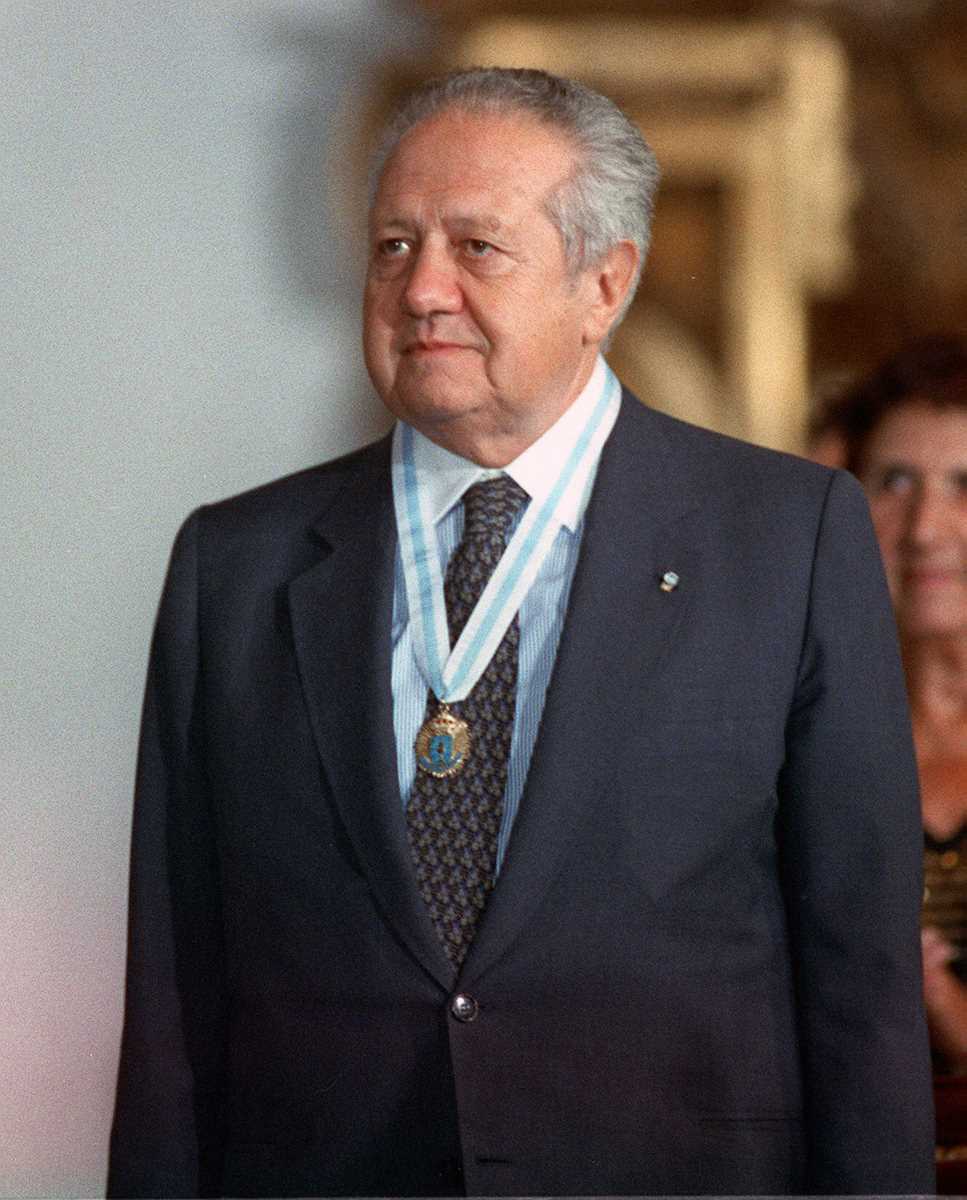
Mario Soares
ModernPoliticianPortugal1924 — ?
Father of Portuguese democracy.
Compare Mario Soares with another historical figure:
Quick Facts
Born
1924
Country
Portugal
Era
Modern
Occupation
Politician
Score Overview
Military (10%)15
Political (20%)84
Influence (20%)68
Legacy (20%)68
Leadership (15%)78
Strategy (15%)41
Total Score63.8
Mario Soares — Complete Timeline
1973 AD
Founding of the Portuguese Socialist PartyPolitical Action◆ Major
Soares co-founded the Portuguese Socialist Party (PS) in West Germany, in exile from the Estado Novo regime. The party became a key force in the democratic transition after the Carnation Revolution.
Political PartyDemocracyExile
Impact: nationalconstructive
1974 AD
Return from Exile after Carnation RevolutionPolitical Action◆ Major
After the Carnation Revolution overthrew the Estado Novo, Soares returned from exile to Portugal. He was greeted by large crowds and immediately entered the political negotiations for the new democratic regime.
Carnation RevolutionDemocracyReturn
Impact: nationalconstructive
1976 AD
Election as Prime MinisterPolitical Action◆ Major
Soares became the first democratically elected Prime Minister of Portugal after the Carnation Revolution, leading a minority Socialist government. His election marked the consolidation of democratic institutions.
ElectionDemocracyGovernment
Impact: nationalconstructive
1985 AD
Negotiation of Portugal's Accession to the EECPolitical Action◆ Major
As Prime Minister, Soares led the negotiations for Portugal's accession to the European Economic Community (EEC). The treaty was signed in 1985, integrating Portugal into the European project and modernizing its economy.
European UnionIntegrationTreaty
Impact: regionalconstructive
1986 AD
Election as President of PortugalPolitical Action◆ Major
Soares was elected President of the Republic, becoming the first civilian president since the Carnation Revolution. He served two five-year terms, providing stability and continuity during Portugal's consolidation of democracy.
PresidencyDemocracyElection
Impact: nationalconstructive
Detailed Scores
▶View all detailed scores
Military
Strategy
6
Tactics
5
Battles
5
Army Scale
5
War Impact
5
Political
Governance
8
Reform
8
Stability
8
Policy
8
Power
8
Influence
History
9
Global
8
Culture
9
Ideology
9
Legacy
8
People often compare with
See how Mario Soares stacks up against other historical figures
Popular Comparisons
Mario Soares vs Sir Thomas Stamford Raffles
vs Sir Thomas Stamford Raffles55
Mario Soares vs Fernando Lugo
vs Fernando Lugo54
Mario Soares vs Abdoulaye Wade
vs Abdoulaye Wade52
Mario Soares vs Ku Hung-ming
vs Ku Hung-ming51
Mario Soares vs Andrew Fisher
vs Andrew Fisher51
Mario Soares vs O. Panneerselvam
vs O. Panneerselvam50