Loading...
Analysis will be generated on first visit.
Scores and timeline are available below. The page will refresh automatically when ready.
Afonso de Albuquerque vs Qin Shi Huang
Qin Shi Huang leads by 6.4 pts · 2 figures compared
…
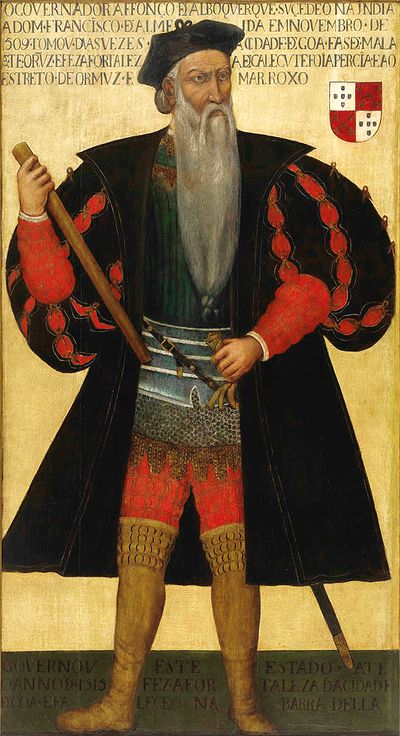
Afonso de Albuquerque
General · Medieval
77.1Total
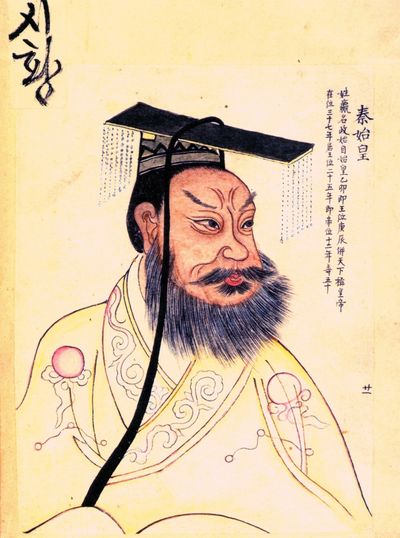
Qin Shi Huang
Emperor · Ancient
83.5Total
Basic Information
Born
1453
-259
Died
1515
-210
Era
Medieval
Ancient
Nationality
Portugal
China
Occupation
General
Emperor
Civilization
Western
Eastern
Score Comparison
Military (10%)
82.2
80.0
Political (20%)
80.0
88.0
Influence (20%)
77.3
82.0
Legacy (20%)
67.4
85.0
Leadership (15%)
84.3
88.0
Strategy (15%)
75.5
75.0
TOTAL
77.1
83.5
Rankings
🥇
Qin Shi HuangLeader
Mil: 80.0Pol: 88.0Inf: 82.0
83.5
🥈
Afonso de Albuquerque
Mil: 82.2Pol: 80.0Inf: 77.3
77.1
+6.4 behind
How This Comparison Works
Algorithm
Each figure is scored on 6 dimensions (0—100 scale) based on structured historical data: Military (10%), Political (20%), Influence (20%), Legacy (20%), Leadership (15%), Strategy (15%). The weighted total produces the final ranking.
Data Sources
Scores are computed from structured sub-indicators in the database. Scale factors adjust for era (Ancient ×0.85, Modern ×1.0) and civilization size (Eastern ×1.05, Other ×0.80) to account for differences in population and military scale.
Maximum 3 Figures
Comparisons are limited to 2—3 figures to ensure readability and statistical meaningfulness.
Error Margins
±5 points per dimension — Sub-scores are derived from historical records with inherent uncertainty. Two figures within 5 points on a dimension should be considered roughly equivalent in that area.
Total Score Accuracy
±3 points overall — The weighted combination of 6 dimensions produces a total score with approximately ±3 points of uncertainty. Differences of less than 3 points are not statistically significant— the figures are effectively tied.
Known Limitations
- Historical records are incomplete and uneven across civilizations
- Figures from oral-tradition societies may be underrepresented
- Occupation labels can misclassify multi-role figures
- Scores measure capability and impact, not moral character
- Quantitative scoring is a comparison tool, not absolute truth
Capability Radar
Military (10%) — Battles & Warfare
Battles
85
85
Win Rate
80
90
Expansion
95
90
Political (20%) — Governance & Reform
Reform
80
95
Diplomacy
85
75
Economy
80
90
Influence (20%) — Cultural & Global Reach
Cultural
70
95
Global
85
85
Legacy (20%) — Historical Impact
Historical
85
95
Longevity
80
95
Leadership (15%) — Power & Stability
Tenure
70
70
Stability
65
65
Strategy (15%) — Tactics & Innovation
Strategy
95
85
Tactics
90
80
Reform
75
95
Analysis will be generated on first visit.
Scores and timeline are available below. The page will refresh automatically when ready.
Afonso de Albuquerque — Complete Timeline
1503 AD
First voyage to IndiaWar◆ Major
Afonso de Albuquerque led a fleet to India, establishing the first Portuguese fort at Cochin. This voyage laid the foundation for Portuguese control of the Indian Ocean trade.
ExplorationColonialismIndia
Impact: global
1510 AD
Conquest of GoaWar◆ Major
Albuquerque captured Goa from the Sultan of Bijapur. He made Goa the capital of Portuguese India, a position it held for over 400 years.
ConquestColonialismIndia
Impact: regional
1511 AD
Conquest of MalaccaWar◆ Major
Albuquerque led a Portuguese fleet to capture the strategic port of Malacca. This gave Portugal control of the spice trade route between the Indian Ocean and the Pacific.
ConquestSpice TradeSoutheast Asia
Impact: global
1513 AD
Siege of AdenWar
Albuquerque attempted to capture Aden in Yemen but failed. This failure prevented Portugal from controlling the entrance to the Red Sea and limited their influence in the region.
SiegeFailureRed Sea
Impact: regional
1515 AD
Death at seaOther◆ Major
Afonso de Albuquerque died at sea off the coast of Goa, possibly from illness or poison. His death left the Portuguese Empire in the Indian Ocean without its most capable leader.
DeathLeadershipEmpire
Impact: regionaltragic
Qin Shi Huang — Complete Timeline
246 BC
Construction of the Mausoleum and Terracotta ArmyOther◆ Major
Qin Shi Huang commissioned a vast mausoleum complex near Xi'an, guarded by thousands of life-sized terracotta soldiers, horses, and chariots. The project employed hundreds of thousands of workers and reflected his obsession with immortality and imperial power.
Impact: global
230 BC
Conquest of the Six Warring StatesWar
From 230 to 221 BCE, Ying Zheng led the Qin state in a series of campaigns that conquered the Han, Zhao, Wei, Chu, Yan, and Qi states. This unified China under a single ruler for the first time, ending the Warring States period.
Impact: global
221 BC
Standardization of Writing, Currency, and MeasurementsReform◆ Major
Qin Shi Huang ordered the standardization of Chinese script, currency, and weights and measures across the unified empire. This facilitated administration, trade, and cultural integration, laying a foundation for future dynasties.
Impact: globalconstructive
Proclamation of the Qin DynastyPolitical Action
After conquering the last independent state, Ying Zheng declared himself Shi Huangdi (First Emperor), founding the Qin Dynasty. He adopted a new title to signify his supreme authority and initiated centralized imperial rule.
Impact: global
214 BC
Initiation of the Great Wall ConstructionOther◆ Major
Qin Shi Huang ordered the connection and extension of existing northern fortifications to create a unified defensive wall against nomadic Xiongnu raids. This project involved massive conscripted labor and became the precursor to the later Great Wall.
Impact: regional
213 BC
Burning of Books and Burying of ScholarsPolitical Action◆ Major
On the advice of Li Si, Qin Shi Huang ordered the burning of historical records and philosophical texts not aligned with Legalist doctrine. He also had 460 Confucian scholars buried alive to suppress dissent and consolidate ideological control.
Impact: nationaldestructive
Similar Comparisons
Comments & Discussion
火与墨6/17/2026
"Qin built walls to keep the world out; Albuquerque built forts to keep himself in. Both succeeded—and failed, for the same reason. Qin's Great Wall never stopped the Xiongnu raiders, and Albuquerque's 1513 siege of Aden failed to seal the Red Sea. Walls and fortresses are not empires; they're confessions of fear dressed as stone."
铁血考据6/17/2026
"拿秦始皇后宫两千人对比阿尔布开克娶印度寡妇,纯属时代错位。一个是统一帝国的合法性工具,一个是殖民地生存的务实策略。要我选?秦朝修驰道直道七千公里,比葡萄牙舰队航程更震撼——毕竟驰道至今路基还在,葡萄牙的堡垒多少沦为旅游景点?数据上,秦朝完胜。"
Skeptical Sailor6/17/2026
"Look, Albuquerque's 'genius' was just burning down the right spice ports at the right time. He gets credit for thinking globally? Please. Qin Shihuang standardized writing, axle widths, even law codes across an entire continent. Meanwhile, Albuquerque's grand Malacca conquest in 1511 was basically a pirate raid with better ships. One created a civilization, the other a trade route."
阴阳家6/17/2026
"阿尔布开克学韩信?别逗了。葡萄牙海军封锁印度洋靠的是卡利卡特海战(1502)后达·伽马留下的恐怖名声,而非什么战略创新。反观秦始皇,书同文车同轨,连法律都统一标准——这可比殖民贸易深刻得多。一个在阴影中造穹顶,一个在阳光下搭棚子。"
Classicist Curmudgeon6/17/2026
"Qin Shihuang centralized power through standardized measures and a unified script—that’s empire-building. Albuquerque was a colonial thug with a navy, burning Malacca and Goa for profit. The First Emperor's Terracotta Army alone outlasts any Portuguese fortress. Different leagues, different eras."