Loading...
Analysis will be generated on first visit.
Scores and timeline are available below. The page will refresh automatically when ready.
Kgalema Motlanthe vs Qin Shi Huang
Qin Shi Huang leads by 27.0 pts · 2 figures compared
…

Kgalema Motlanthe
Politician · Modern
56.5Total
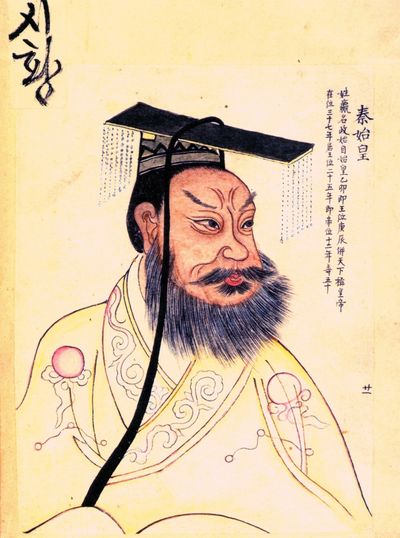
Qin Shi Huang
Emperor · Ancient
83.5Total
Basic Information
Born
1949
-259
Died
—
-210
Era
Modern
Ancient
Nationality
South Africa
China
Occupation
Politician
Emperor
Civilization
Other
Eastern
Score Comparison
Military (10%)
30.2
80.0
Political (20%)
50.0
88.0
Influence (20%)
65.0
82.0
Legacy (20%)
51.2
85.0
Leadership (15%)
78.7
88.0
Strategy (15%)
56.4
75.0
TOTAL
56.5
83.5
Rankings
🥇
Qin Shi HuangLeader
Mil: 80.0Pol: 88.0Inf: 82.0
83.5
🥈
Kgalema Motlanthe
Mil: 30.2Pol: 50.0Inf: 65.0
56.5
+27.0 behind
How This Comparison Works
Algorithm
Each figure is scored on 6 dimensions (0—100 scale) based on structured historical data: Military (10%), Political (20%), Influence (20%), Legacy (20%), Leadership (15%), Strategy (15%). The weighted total produces the final ranking.
Data Sources
Scores are computed from structured sub-indicators in the database. Scale factors adjust for era (Ancient ×0.85, Modern ×1.0) and civilization size (Eastern ×1.05, Other ×0.80) to account for differences in population and military scale.
Maximum 3 Figures
Comparisons are limited to 2—3 figures to ensure readability and statistical meaningfulness.
Error Margins
±5 points per dimension — Sub-scores are derived from historical records with inherent uncertainty. Two figures within 5 points on a dimension should be considered roughly equivalent in that area.
Total Score Accuracy
±3 points overall — The weighted combination of 6 dimensions produces a total score with approximately ±3 points of uncertainty. Differences of less than 3 points are not statistically significant— the figures are effectively tied.
Known Limitations
- Historical records are incomplete and uneven across civilizations
- Figures from oral-tradition societies may be underrepresented
- Occupation labels can misclassify multi-role figures
- Scores measure capability and impact, not moral character
- Quantitative scoring is a comparison tool, not absolute truth
Capability Radar
Military (10%) — Battles & Warfare
Battles
24
85
Win Rate
24
90
Expansion
29
90
Political (20%) — Governance & Reform
Reform
20
95
Diplomacy
30
75
Economy
15
90
Influence (20%) — Cultural & Global Reach
Cultural
10
95
Global
15
85
Legacy (20%) — Historical Impact
Historical
15
95
Longevity
10
95
Leadership (15%) — Power & Stability
Tenure
15
70
Stability
35
65
Strategy (15%) — Tactics & Innovation
Strategy
28
85
Tactics
32
80
Reform
35
95
Analysis will be generated on first visit.
Scores and timeline are available below. The page will refresh automatically when ready.
Kgalema Motlanthe — Complete Timeline
1970 AD
Joined ANC and Anti-Apartheid ActivismPolitical Action◆ Major
Motlanthe joined the ANC and became active in the anti-apartheid struggle. He was arrested and spent 10 years on Robben Island, where he was a political prisoner alongside Nelson Mandela.
ANCImprisonmentAnti-Apartheid
Impact: nationalconstructive
1997 AD
Elected ANC Secretary GeneralPolitical Action◆ Major
Motlanthe was elected Secretary General of the ANC, a key administrative role. He was known for his low-key style and organizational skills, helping to manage the party's internal affairs.
ANCLeadershipOrganization
Impact: nationalconstructive
2005 AD
Became Deputy President of South AfricaPolitical Action◆ Major
Motlanthe was appointed Deputy President by President Thabo Mbeki after the dismissal of Jacob Zuma. He served in this role until 2008, handling day-to-day government operations.
Deputy PresidentGovernmentMbeki
Impact: nationalconstructive
2008 AD
Served as Interim President of South AfricaPolitical Action◆ Major
Motlanthe became President of South Africa after Thabo Mbeki's resignation, serving as an interim leader until the 2009 elections. He oversaw a stable transition and was praised for his calm leadership.
PresidentInterimTransition
Impact: nationalconstructive
Qin Shi Huang — Complete Timeline
246 BC
Construction of the Mausoleum and Terracotta ArmyOther◆ Major
Qin Shi Huang commissioned a vast mausoleum complex near Xi'an, guarded by thousands of life-sized terracotta soldiers, horses, and chariots. The project employed hundreds of thousands of workers and reflected his obsession with immortality and imperial power.
Impact: global
230 BC
Conquest of the Six Warring StatesWar
From 230 to 221 BCE, Ying Zheng led the Qin state in a series of campaigns that conquered the Han, Zhao, Wei, Chu, Yan, and Qi states. This unified China under a single ruler for the first time, ending the Warring States period.
Impact: global
221 BC
Standardization of Writing, Currency, and MeasurementsReform◆ Major
Qin Shi Huang ordered the standardization of Chinese script, currency, and weights and measures across the unified empire. This facilitated administration, trade, and cultural integration, laying a foundation for future dynasties.
Impact: globalconstructive
Proclamation of the Qin DynastyPolitical Action
After conquering the last independent state, Ying Zheng declared himself Shi Huangdi (First Emperor), founding the Qin Dynasty. He adopted a new title to signify his supreme authority and initiated centralized imperial rule.
Impact: global
214 BC
Initiation of the Great Wall ConstructionOther◆ Major
Qin Shi Huang ordered the connection and extension of existing northern fortifications to create a unified defensive wall against nomadic Xiongnu raids. This project involved massive conscripted labor and became the precursor to the later Great Wall.
Impact: regional
213 BC
Burning of Books and Burying of ScholarsPolitical Action◆ Major
On the advice of Li Si, Qin Shi Huang ordered the burning of historical records and philosophical texts not aligned with Legalist doctrine. He also had 460 Confucian scholars buried alive to suppress dissent and consolidate ideological control.
Impact: nationaldestructive
Similar Comparisons
Comments & Discussion
BattleAxeBard6/17/2026
Qin Shi Huang was history's original empire-builder, and Motlanthe was a political firefighter. The First Emperor unified weights, measures, and even axle lengths across China—standardization that lasted millennia. Motlanthe's legacy? Keeping the ANC from imploding for nine months in 2008. That's like comparing a supernova to a candle. One reshaped civilization itself; the other kept a chair warm. Call me when Motlanthe builds a Great Wall or an army of terracotta guardians.
数据铁骑6/17/2026
作为一个数据怪,我要说这个比较根本就是伪命题。秦始皇在位37年,灭六国、修长城、统一文字,留下的历史记录能堆满几个图书馆。莫特兰蒂呢?当了9个月的总统,任内GDP增长率从5.6%掉到负值,失业率飙升到25%以上。这不是偏见,这是硬邦邦的数字。拿一个千年帝国建造者和一个过渡期看守人对比,就像拿火星和月球比大小——数据本身已经告诉你答案。
ScriptorSinicus6/17/2026
As a classics scholar, I'm chafing at this superficial pairing. The First Emperor wasn't just a conqueror—he was a philosopher-king (or anti-philosopher) who codified Legalism, burned dissenting books, and buried scholars alive. Motlanthe, a former Robben Island prisoner, presided over a fragile democracy with dignity. Yet here's the irony: both men were ultimately products of their systems. Qin reshaped civilization through terror and decree; Motlanthe steadied a ship of state through quiet con
尘埃史官6/17/2026
作为中国大陆的历史爱好者,我觉得这种对比根本就是在混淆视听。秦始皇统一六国,书同文车同轨,奠定了中华民族的根基,这是不容抹杀的功绩。莫特兰蒂只是一个短期过渡人物,处理了姆贝基下台后的乱局,然后体面地让位给祖马。把这两个人摆在一起,就像拿长城和一面临时墙对比——一个立了两千年,一个被换掉就没人记得了。历史只给伟人留位置。
AnachroNerd6/17/2026
Revisionist take: stop lionizing the tyrant. Qin Shi Huang was a brilliant administrator, sure—but he was also a paranoid megalomaniac who executed scholars and forced millions into forced labor. Motlanthe made human rights a priority post-apartheid, shepherding South Africa through a genuine political crisis without bloodshed. If we're measuring by humanity, not monuments, the caretaker wins. Sometimes keeping a fragile peace is harder than crushing kingdoms. "History is written by the victors"