Loading...
Analysis will be generated on first visit.
Scores and timeline are available below. The page will refresh automatically when ready.
Gaius Marius vs Qin Shi Huang
Qin Shi Huang leads by 7.6 pts · 2 figures compared
…

Gaius Marius
General · Ancient
75.9Total
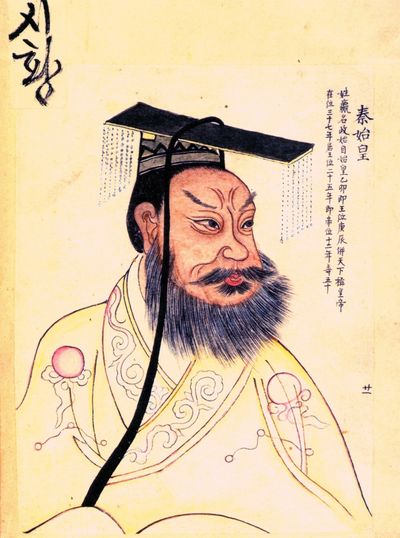
Qin Shi Huang
Emperor · Ancient
83.5Total
Basic Information
Born
-157
-259
Died
-86
-210
Era
Ancient
Ancient
Nationality
Roman Republic
China
Occupation
General
Emperor
Civilization
Western
Eastern
Score Comparison
Military (10%)
79.9
80.0
Political (20%)
71.6
88.0
Influence (20%)
75.2
82.0
Legacy (20%)
79.0
85.0
Leadership (15%)
73.1
88.0
Strategy (15%)
78.5
75.0
TOTAL
75.9
83.5
Rankings
🥇
Qin Shi HuangLeader
Mil: 80.0Pol: 88.0Inf: 82.0
83.5
🥈
Gaius Marius
Mil: 79.9Pol: 71.6Inf: 75.2
75.9
+7.6 behind
How This Comparison Works
Algorithm
Each figure is scored on 6 dimensions (0—100 scale) based on structured historical data: Military (10%), Political (20%), Influence (20%), Legacy (20%), Leadership (15%), Strategy (15%). The weighted total produces the final ranking.
Data Sources
Scores are computed from structured sub-indicators in the database. Scale factors adjust for era (Ancient ×0.85, Modern ×1.0) and civilization size (Eastern ×1.05, Other ×0.80) to account for differences in population and military scale.
Maximum 3 Figures
Comparisons are limited to 2—3 figures to ensure readability and statistical meaningfulness.
Error Margins
±5 points per dimension — Sub-scores are derived from historical records with inherent uncertainty. Two figures within 5 points on a dimension should be considered roughly equivalent in that area.
Total Score Accuracy
±3 points overall — The weighted combination of 6 dimensions produces a total score with approximately ±3 points of uncertainty. Differences of less than 3 points are not statistically significant— the figures are effectively tied.
Known Limitations
- Historical records are incomplete and uneven across civilizations
- Figures from oral-tradition societies may be underrepresented
- Occupation labels can misclassify multi-role figures
- Scores measure capability and impact, not moral character
- Quantitative scoring is a comparison tool, not absolute truth
Capability Radar
Military (10%) — Battles & Warfare
Battles
85
85
Win Rate
80
90
Expansion
70
90
Political (20%) — Governance & Reform
Reform
90
95
Diplomacy
60
75
Economy
70
90
Influence (20%) — Cultural & Global Reach
Cultural
75
95
Global
80
85
Legacy (20%) — Historical Impact
Historical
90
95
Longevity
85
95
Leadership (15%) — Power & Stability
Tenure
75
70
Stability
40
65
Strategy (15%) — Tactics & Innovation
Strategy
85
85
Tactics
75
80
Reform
95
95
Analysis will be generated on first visit.
Scores and timeline are available below. The page will refresh automatically when ready.
Gaius Marius — Complete Timeline
107 BC
Marian ReformsReform
As consul, Marius opened military service to landless citizens, replacing the property-based levy with a volunteer army. He standardized equipment and training, creating a professional standing army loyal to commanders rather than the state.
Military ReformRoman ArmyProfessionalization
Impact: globalconstructive
102 BC
Battle of Aquae SextiaeWar◆ Major
Marius defeated the Teutones and Ambrones at Aquae Sextiae in Gaul. The Germanic tribes were annihilated, ending their invasion of Roman territory and securing Marius's reputation as a savior of Rome.
Cimbrian WarGermanic InvasionVictory
Impact: regional
101 BC
Battle of VercellaeWar◆ Major
Marius, with proconsul Catulus, defeated the Cimbri at Vercellae in Cisalpine Gaul. The Cimbri were destroyed, ending the Cimbrian War and securing Rome's northern frontier.
Cimbrian WarGermanic InvasionVictory
Impact: regional
100 BC
Sixth Consulship and Exile of MetellusPolitical Action◆ Major
Marius served an unprecedented sixth consulship amid political turmoil. He used force to suppress the tribune Saturninus and praetor Glaucia, but later lost support and went into exile in Africa.
Political CrisisConsulshipExile
Impact: nationaldestructive
87 BC
March on Rome and ProscriptionsPolitical Action◆ Major
Marius returned from exile, allied with Cinna, and marched on Rome. He captured the city and initiated a purge of his political enemies, including the execution of consul Octavius and many senators.
Civil WarProscriptionsViolence
Impact: nationaldestructive
Qin Shi Huang — Complete Timeline
246 BC
Construction of the Mausoleum and Terracotta ArmyOther◆ Major
Qin Shi Huang commissioned a vast mausoleum complex near Xi'an, guarded by thousands of life-sized terracotta soldiers, horses, and chariots. The project employed hundreds of thousands of workers and reflected his obsession with immortality and imperial power.
Impact: global
230 BC
Conquest of the Six Warring StatesWar
From 230 to 221 BCE, Ying Zheng led the Qin state in a series of campaigns that conquered the Han, Zhao, Wei, Chu, Yan, and Qi states. This unified China under a single ruler for the first time, ending the Warring States period.
Impact: global
221 BC
Standardization of Writing, Currency, and MeasurementsReform◆ Major
Qin Shi Huang ordered the standardization of Chinese script, currency, and weights and measures across the unified empire. This facilitated administration, trade, and cultural integration, laying a foundation for future dynasties.
Impact: globalconstructive
Proclamation of the Qin DynastyPolitical Action
After conquering the last independent state, Ying Zheng declared himself Shi Huangdi (First Emperor), founding the Qin Dynasty. He adopted a new title to signify his supreme authority and initiated centralized imperial rule.
Impact: global
214 BC
Initiation of the Great Wall ConstructionOther◆ Major
Qin Shi Huang ordered the connection and extension of existing northern fortifications to create a unified defensive wall against nomadic Xiongnu raids. This project involved massive conscripted labor and became the precursor to the later Great Wall.
Impact: regional
213 BC
Burning of Books and Burying of ScholarsPolitical Action◆ Major
On the advice of Li Si, Qin Shi Huang ordered the burning of historical records and philosophical texts not aligned with Legalist doctrine. He also had 460 Confucian scholars buried alive to suppress dissent and consolidate ideological control.
Impact: nationaldestructive
Similar Comparisons
Comments & Discussion
MariusTheInnovator6/17/2026
Marius was a military genius who saved Rome from barbarian hordes, but Qin Shi Huang was a bureaucratic tyrant who burned books. While Marius reformed the legions with volunteer soldiers, Qin standardized everything—writing, roads, even axle widths. One lifted the poor to glory; the other crushed individuality into dust. Give me a Roman centurion over a Chinese eunuch any day.
兵马俑批判者6/17/2026
说秦始皇统一度量衡就是伟大?他为了修长城和陵墓,征发了上百万民夫,死人无数。马里乌斯征募无产者参军虽然争议大,但至少给了底层人机会。秦朝严刑峻法,砍手指比发军饷还勤快,这能叫盛世?我宁可当罗马平民,也不做秦朝的"黔首"。
HistoryBuff_996/17/2026
The comparison is fascinating: both were radical reformers facing existential threats. Qin Shi Huang defeated six kingdoms in just nine years, a feat unmatched in scale. Marius beat the Teutones and Cimbri, but Rome's enemies were tribes, not civilizations. Qin created a centralized empire that lasted 2,000 years; Marius' reforms led to Sulla's dictatorship. Who really changed history more? I vote Qin.
数据考据党6/17/2026
别吹了!马里乌斯改革后罗马军队从农民兵变成职业兵,直接导致军阀割据,共和国灭亡。但秦始皇焚书坑儒毁灭了多少文献?《汉书》记载仅医药占卜农书免遭劫难。一个搞出军事革命但毁掉制度,一个用暴力统一但抹杀思想。两者都是灾难性天才,非要选?我宁可要马里乌斯,至少他留了点古籍。
ClassicsScholar_elite6/17/2026
The fundamental difference: Qin ruled through ideological conquest—standardizing script, currency, and law to create a unified mind. Marius never sought such total control; his populism was tactical, not philosophical. Qin's Terracotta Army shows a monarch obsessed with immortality; Marius' seven consulships reveal a pragmatist addicted to power. Both were monstrous, but Qin built a prison for the soul, Marius just a ladder for himself.