Loading...
Analysis will be generated on first visit.
Scores and timeline are available below. The page will refresh automatically when ready.
Kangxi Emperor vs Qin Shi Huang
Qin Shi Huang leads by 7.6 pts · 2 figures compared
…
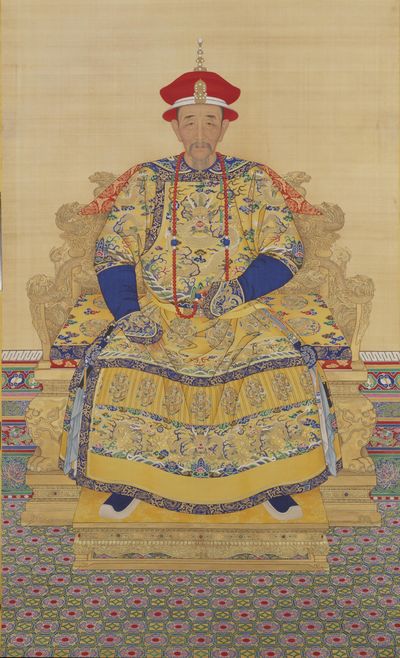
Kangxi Emperor
Emperor · Modern
75.9Total
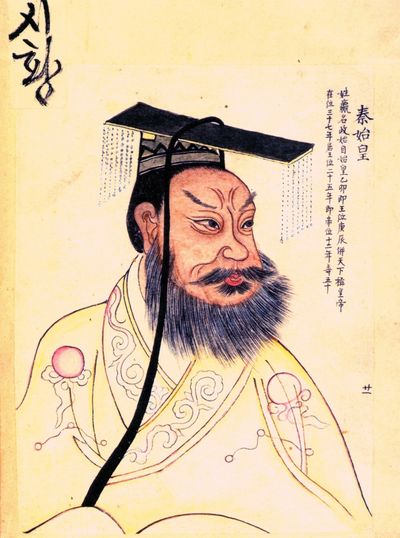
Qin Shi Huang
Emperor · Ancient
83.5Total
Basic Information
Born
1654
-259
Died
1722
-210
Era
Modern
Ancient
Nationality
China
China
Occupation
Emperor
Emperor
Civilization
Eastern
Eastern
Score Comparison
Military (10%)
72.9
80.0
Political (20%)
83.6
88.0
Influence (20%)
78.8
82.0
Legacy (20%)
75.0
85.0
Leadership (15%)
69.6
88.0
Strategy (15%)
71.6
75.0
TOTAL
75.9
83.5
Rankings
🥇
Qin Shi HuangLeader
Mil: 80.0Pol: 88.0Inf: 82.0
83.5
🥈
Kangxi Emperor
Mil: 72.9Pol: 83.6Inf: 78.8
75.9
+7.6 behind
How This Comparison Works
Algorithm
Each figure is scored on 6 dimensions (0—100 scale) based on structured historical data: Military (10%), Political (20%), Influence (20%), Legacy (20%), Leadership (15%), Strategy (15%). The weighted total produces the final ranking.
Data Sources
Scores are computed from structured sub-indicators in the database. Scale factors adjust for era (Ancient ×0.85, Modern ×1.0) and civilization size (Eastern ×1.05, Other ×0.80) to account for differences in population and military scale.
Maximum 3 Figures
Comparisons are limited to 2—3 figures to ensure readability and statistical meaningfulness.
Error Margins
±5 points per dimension — Sub-scores are derived from historical records with inherent uncertainty. Two figures within 5 points on a dimension should be considered roughly equivalent in that area.
Total Score Accuracy
±3 points overall — The weighted combination of 6 dimensions produces a total score with approximately ±3 points of uncertainty. Differences of less than 3 points are not statistically significant— the figures are effectively tied.
Known Limitations
- Historical records are incomplete and uneven across civilizations
- Figures from oral-tradition societies may be underrepresented
- Occupation labels can misclassify multi-role figures
- Scores measure capability and impact, not moral character
- Quantitative scoring is a comparison tool, not absolute truth
Capability Radar
Military (10%) — Battles & Warfare
Battles
85
85
Win Rate
88
90
Expansion
92
90
Political (20%) — Governance & Reform
Reform
88
95
Diplomacy
90
75
Economy
85
90
Influence (20%) — Cultural & Global Reach
Cultural
88
95
Global
80
85
Legacy (20%) — Historical Impact
Historical
90
95
Longevity
85
95
Leadership (15%) — Power & Stability
Tenure
95
70
Stability
92
65
Strategy (15%) — Tactics & Innovation
Strategy
90
85
Tactics
82
80
Reform
85
95
Analysis will be generated on first visit.
Scores and timeline are available below. The page will refresh automatically when ready.
Kangxi Emperor — Complete Timeline
1673 AD
Suppression of the Revolt of the Three FeudatoriesWar
The Kangxi Emperor faced a major rebellion led by three powerful Han Chinese feudatories in southern China, including Wu Sangui. He personally directed military campaigns, and by 1681 the revolt was crushed, consolidating Qing control over the south.
RebellionFeudatoriesQing Dynasty
Impact: national
1683 AD
Conquest of TaiwanWar◆ Major
Kangxi ordered the invasion of Taiwan, then held by the Ming loyalist Zheng Keshuang. Qing naval forces defeated the Zheng fleet, and Taiwan was incorporated into the Qing Empire as a prefecture, ending the last major Ming resistance.
TaiwanConquestMing Loyalists
Impact: regional
1689 AD
Treaty of NerchinskPolitical Action◆ Major
The Kangxi Emperor negotiated the Treaty of Nerchinsk with the Russian Empire, establishing the border between Siberia and Manchuria. This was China's first treaty with a European power and secured the northern frontier, allowing trade and diplomatic relations.
TreatyRussiaBorder
Impact: globalconstructive
1691 AD
Incorporation of Outer MongoliaPolitical Action◆ Major
Kangxi personally met with Khalkha Mongol leaders at Dolon Nor, where they formally submitted to Qing authority. This brought Outer Mongolia under Qing control, ending the Dzungar threat and expanding the empire's northern borders.
MongoliaExpansionQing
Impact: regionalconstructive
1716 AD
Compilation of the Kangxi DictionaryCultural◆ Major
Kangxi commissioned the Kangxi Dictionary, a comprehensive dictionary of Chinese characters. It became the standard reference for Chinese lexicography, containing over 47,000 characters and influencing scholarship for centuries.
DictionaryLanguageScholarship
Impact: globalconstructive
Qin Shi Huang — Complete Timeline
246 BC
Construction of the Mausoleum and Terracotta ArmyOther◆ Major
Qin Shi Huang commissioned a vast mausoleum complex near Xi'an, guarded by thousands of life-sized terracotta soldiers, horses, and chariots. The project employed hundreds of thousands of workers and reflected his obsession with immortality and imperial power.
Impact: global
230 BC
Conquest of the Six Warring StatesWar
From 230 to 221 BCE, Ying Zheng led the Qin state in a series of campaigns that conquered the Han, Zhao, Wei, Chu, Yan, and Qi states. This unified China under a single ruler for the first time, ending the Warring States period.
Impact: global
221 BC
Standardization of Writing, Currency, and MeasurementsReform◆ Major
Qin Shi Huang ordered the standardization of Chinese script, currency, and weights and measures across the unified empire. This facilitated administration, trade, and cultural integration, laying a foundation for future dynasties.
Impact: globalconstructive
Proclamation of the Qin DynastyPolitical Action
After conquering the last independent state, Ying Zheng declared himself Shi Huangdi (First Emperor), founding the Qin Dynasty. He adopted a new title to signify his supreme authority and initiated centralized imperial rule.
Impact: global
214 BC
Initiation of the Great Wall ConstructionOther◆ Major
Qin Shi Huang ordered the connection and extension of existing northern fortifications to create a unified defensive wall against nomadic Xiongnu raids. This project involved massive conscripted labor and became the precursor to the later Great Wall.
Impact: regional
213 BC
Burning of Books and Burying of ScholarsPolitical Action◆ Major
On the advice of Li Si, Qin Shi Huang ordered the burning of historical records and philosophical texts not aligned with Legalist doctrine. He also had 460 Confucian scholars buried alive to suppress dissent and consolidate ideological control.
Impact: nationaldestructive
Similar Comparisons
Comments & Discussion
QinScythe6/17/2026
The First Emperor had one job — make his dynasty last. He standardized writing, currency, and measures, built roads, connected the Great Wall. Brilliant moves. But he failed on succession. No clear heir, no trusted advisors left alive. Kangxi picked his successor carefully, managed factions, kept the aristocracy in check. That's the whole difference. Legacy isn't just about building systems — it's about making sure they survive you. Qin forgot that. Kangxi never did.
数据掘墓人6/17/2026
说Kangxi比秦始皇伟大?笑死。Kangxi接手的清帝国本来就已经统一了,他不过是锦上添花。秦始皇是零到一的开创者,把一堆互相厮杀几百年的国家捏成一块,统一文字度量衡,这难度是Kangxi谈判签几条约能比的?别拿办公室政治碰瓷战场史诗。
ClassicsSkald6/17/2026
The real comparison isn't military or administrative — it's ideological. Qin Shi Huang built a state that suppressed history, burned the classics, buried scholars alive. He wanted to control time itself. Kangxi commissioned the Kangxi Dictionary, patronized Confucian learning, sponsored the Complete Tang Poems. Two different visions of empire: one that erases the past, one that curates it. I know which civilization I'd rather inherit.
铁血直男6/17/2026
Kangxi活到69岁,在位61年,治国平稳,收台湾、平三藩、打噶尔丹,样样漂亮。秦始皇49岁就死了,统一后只当了11年皇帝,全国反叛四起。这不是能力问题,是基因问题。Kangxi活得更久,所以修得更稳。历史就这么现实——活得久本身就是一种能力。
SkepticSpectacles6/17/2026
Everyone romanticizes the "standardization" myth. But iron plowshares and bronze coins don't build loyalty. Qin's Legalism created a surveillance state that collapsed because people hated it. Kangxi's Confucian civil service exams created an organic loyalty network. The First Emperor's empire was a machine. Kangxi's was an ecosystem. Machines break when the operator dies. Ecosystems adapt. That's not about personality — it's about system design.