Loading...
Analysis will be generated on first visit.
Scores and timeline are available below. The page will refresh automatically when ready.
Nogai Khan vs Qin Shi Huang
Qin Shi Huang leads by 7.8 pts · 2 figures compared
…

Nogai Khan
General · Medieval
75.7Total
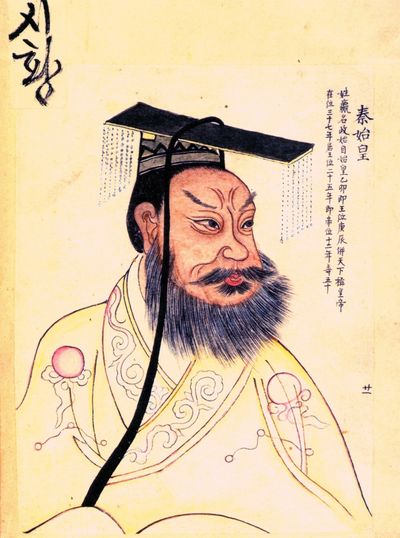
Qin Shi Huang
Emperor · Ancient
83.5Total
Basic Information
Born
1235
-259
Died
1300
-210
Era
Medieval
Ancient
Nationality
Golden Horde
China
Occupation
General
Emperor
Civilization
Eastern
Eastern
Score Comparison
Military (10%)
67.4
80.0
Political (20%)
87.9
88.0
Influence (20%)
73.2
82.0
Legacy (20%)
67.9
85.0
Leadership (15%)
78.2
88.0
Strategy (15%)
76.0
75.0
TOTAL
75.7
83.5
Rankings
🥇
Qin Shi HuangLeader
Mil: 80.0Pol: 88.0Inf: 82.0
83.5
🥈
Nogai Khan
Mil: 67.4Pol: 87.9Inf: 73.2
75.7
+7.8 behind
How This Comparison Works
Algorithm
Each figure is scored on 6 dimensions (0—100 scale) based on structured historical data: Military (10%), Political (20%), Influence (20%), Legacy (20%), Leadership (15%), Strategy (15%). The weighted total produces the final ranking.
Data Sources
Scores are computed from structured sub-indicators in the database. Scale factors adjust for era (Ancient ×0.85, Modern ×1.0) and civilization size (Eastern ×1.05, Other ×0.80) to account for differences in population and military scale.
Maximum 3 Figures
Comparisons are limited to 2—3 figures to ensure readability and statistical meaningfulness.
Error Margins
±5 points per dimension — Sub-scores are derived from historical records with inherent uncertainty. Two figures within 5 points on a dimension should be considered roughly equivalent in that area.
Total Score Accuracy
±3 points overall — The weighted combination of 6 dimensions produces a total score with approximately ±3 points of uncertainty. Differences of less than 3 points are not statistically significant— the figures are effectively tied.
Known Limitations
- Historical records are incomplete and uneven across civilizations
- Figures from oral-tradition societies may be underrepresented
- Occupation labels can misclassify multi-role figures
- Scores measure capability and impact, not moral character
- Quantitative scoring is a comparison tool, not absolute truth
Capability Radar
Military (10%) — Battles & Warfare
Battles
75
85
Win Rate
70
90
Expansion
75
90
Political (20%) — Governance & Reform
Reform
65
95
Diplomacy
70
75
Economy
60
90
Influence (20%) — Cultural & Global Reach
Cultural
50
95
Global
60
85
Legacy (20%) — Historical Impact
Historical
65
95
Longevity
55
95
Leadership (15%) — Power & Stability
Tenure
80
70
Stability
55
65
Strategy (15%) — Tactics & Innovation
Strategy
78
85
Tactics
72
80
Reform
60
95
Analysis will be generated on first visit.
Scores and timeline are available below. The page will refresh automatically when ready.
Nogai Khan — Complete Timeline
1265 AD
Raid on ConstantinopleWar
Nogai Khan led a Mongol raid into Byzantine Thrace, reaching the outskirts of Constantinople. The Byzantine Emperor Michael VIII Palaiologos was forced to pay tribute and give his daughter in marriage to Nogai, securing peace.
ByzantineThraceMichael VIII
Impact: regional
1285 AD
Battle of the Tisza RiverWar◆ Major
Nogai Khan led a Mongol invasion of Hungary, crossing the Carpathian Mountains. He was defeated by the Hungarian army under King Ladislaus IV at the Tisza River. The defeat ended Mongol attempts to conquer Central Europe.
HungaryLadislaus IVInvasion
Impact: regional
1290 AD
Kingmaker of the Golden HordePolitical Action◆ Major
Nogai Khan became the de facto ruler of the Golden Horde, installing puppet khans such as Toqta. He controlled the western territories of the Horde and exerted influence over the Russian principalities, demanding tribute and military support.
Golden HordeToqtaPuppet Khan
Impact: regional
1299 AD
War with ToqtaWar◆ Major
Nogai Khan went to war against his former prot
ToqtaDnieperCivil War
Impact: regionaltragic
Qin Shi Huang — Complete Timeline
246 BC
Construction of the Mausoleum and Terracotta ArmyOther◆ Major
Qin Shi Huang commissioned a vast mausoleum complex near Xi'an, guarded by thousands of life-sized terracotta soldiers, horses, and chariots. The project employed hundreds of thousands of workers and reflected his obsession with immortality and imperial power.
Impact: global
230 BC
Conquest of the Six Warring StatesWar
From 230 to 221 BCE, Ying Zheng led the Qin state in a series of campaigns that conquered the Han, Zhao, Wei, Chu, Yan, and Qi states. This unified China under a single ruler for the first time, ending the Warring States period.
Impact: global
221 BC
Standardization of Writing, Currency, and MeasurementsReform◆ Major
Qin Shi Huang ordered the standardization of Chinese script, currency, and weights and measures across the unified empire. This facilitated administration, trade, and cultural integration, laying a foundation for future dynasties.
Impact: globalconstructive
Proclamation of the Qin DynastyPolitical Action
After conquering the last independent state, Ying Zheng declared himself Shi Huangdi (First Emperor), founding the Qin Dynasty. He adopted a new title to signify his supreme authority and initiated centralized imperial rule.
Impact: global
214 BC
Initiation of the Great Wall ConstructionOther◆ Major
Qin Shi Huang ordered the connection and extension of existing northern fortifications to create a unified defensive wall against nomadic Xiongnu raids. This project involved massive conscripted labor and became the precursor to the later Great Wall.
Impact: regional
213 BC
Burning of Books and Burying of ScholarsPolitical Action◆ Major
On the advice of Li Si, Qin Shi Huang ordered the burning of historical records and philosophical texts not aligned with Legalist doctrine. He also had 460 Confucian scholars buried alive to suppress dissent and consolidate ideological control.
Impact: nationaldestructive
Similar Comparisons
Comments & Discussion
THE_GREAT_WALL_DISSENTER6/17/2026
Qin Shi Huang didn't just defeat kingdoms—he engineered a civilization's DNA. Legalism wasn't cruelty; it was the first systematic state ideology. His standardization of script, axle widths, and weights created China's unity. Ningxia's terracotta army isn't a tomb; it's a political manifesto. Nogai? A Mongol warlord playing border games. Give me the emperor who defined a nation over a khan who just raided one.
THE_GRASSLANDS_GHOST6/17/2026
You're ignoring context: Nogai Khan was a kingmaker, not a conqueror. He propped up puppet khans and fought the Ilkhanate for 20+ years—that's realpolitik, not flashy conquest. He controlled the Danube to the Don, a steppe empire that outlasted him. Qin Shi Huang's dynasty flamed out within four years of his death. Nogai's legacy? He shaped the Golden Horde's survival. Who's the lasting power now?
法家信徒6/17/2026
秦始皇的功绩在于系统性变革:书同文、车同轨、统一度量衡,这些不是暴政,是文明整合。他修长城防御北方,不是懦弱,而是战略远见。诺盖汗?他连可汗都不是,只是个幕后操纵者。蒙古西征带来了什么?掠夺和死亡,没有留下任何制度遗产。秦始皇定义了东亚,诺盖只是草原上的流星。
古战场考据党6/17/2026
比较这两人的军事成就简直荒谬!诺盖汗在1265年率2000蒙古骑兵击溃了拜占庭军队,但那是战术胜利。秦始皇动用30万大军南征百越、北击匈奴,指挥的是国家级的战争机器。诺盖靠游牧机动性,秦始皇靠后勤和工程学——修驰道、运河,保障补给。一个是游牧劫掠者,一个是帝国建设者。高下立判。
汉学与铁蹄之间6/17/2026
秦始皇的暴政被浪漫化了:坑儒、焚书、连坐法,这不是统治,是恐怖主义。诺盖汗至少尊重多元文化,他与拜占庭联姻,允许基督教传教。两人都杀人如麻,但秦始皇摧毁了百家争鸣,诺盖汗只是草原政治的一部分。如果让我选一个时代生活,我宁愿在诺盖的营帐里,而不是在秦朝的刑台上。