Loading...
Analysis will be generated on first visit.
Scores and timeline are available below. The page will refresh automatically when ready.
Akbar the Great vs Kublai Khan
Akbar the Great leads by 1.0 pts · 2 figures compared
…
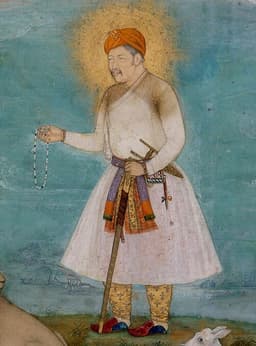
Akbar the Great
Emperor · Modern
80.6Total
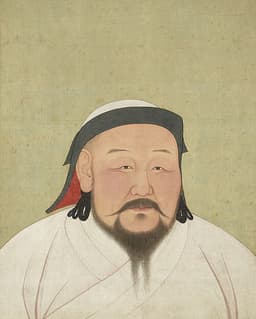
Kublai Khan
Emperor · Medieval
79.6Total
Basic Information
Born
1542
1215
Died
1605
1294
Era
Modern
Medieval
Nationality
India
Mongolia
Occupation
Emperor
Emperor
Civilization
Indian
Eastern
Score Comparison
Military (10%)
80.0
88.0
Political (20%)
85.0
78.0
Influence (20%)
78.0
78.0
Legacy (20%)
80.0
75.0
Leadership (15%)
85.0
82.0
Strategy (15%)
75.0
82.0
TOTAL
80.6
79.6
Akbar the Great — Complete Timeline
1556 AD
Second Battle of PanipatWar
Akbar, aged 13, defeated the Hindu general Hemu at Panipat, securing the Mughal throne. Hemu had captured Delhi and declared himself emperor. Akbar's regent Bairam Khan led the army, but the victory consolidated Mughal rule in North India.
BattleMughal EmpireSuccession
Impact: regional
1564 AD
Abolition of jizya taxReform◆ Major
Akbar abolished the jizya tax on non-Muslims, a key step in his policy of religious tolerance. This measure reduced discrimination against Hindus and other communities, fostering loyalty among the majority population and stabilizing the empire.
Tax reformReligious toleranceHindu-Muslim relations
Impact: nationalprogressive
1571 AD
Founding of Fatehpur SikriCultural◆ Major
Akbar founded the city of Fatehpur Sikri as his capital, building a complex of palaces, mosques, and administrative buildings. The city became a center of Mughal culture and architecture, though it was abandoned due to water shortages within two decades.
ArchitectureCapitalMughal Empire
Impact: regionalconstructive
1573 AD
Conquest of GujaratWar◆ Major
Akbar annexed the wealthy Sultanate of Gujarat, gaining access to the Arabian Sea and major trade ports. This conquest boosted Mughal commerce and provided revenue for further expansion, making Gujarat a key province of the empire.
ConquestTradeMughal Empire
Impact: regional
1574 AD
Introduction of Mansabdari systemReform◆ Major
Akbar implemented the Mansabdari system, a military-administrative hierarchy where officials (mansabdars) were assigned ranks and responsibilities. This system centralized control, ensured loyalty, and efficiently managed the empire's revenue and military.
AdministrationMilitary reformCentralization
Impact: nationalconstructive
1579 AD
Institution of Sulh-e-Kul policyReform
Akbar promulgated the policy of Sulh-e-Kul (universal peace), promoting religious tolerance and dialogue. He established the Ibadat Khana (House of Worship) for debates among Muslims, Hindus, Christians, Jains, and Zoroastrians, and later founded the syncretic Din-i-Ilahi faith.
Religious policySyncretismTolerance
Impact: nationalprogressive
Kublai Khan — Complete Timeline
1260 AD
Adoption of Tibetan Buddhism as State ReligionCultural◆ Major
Kublai Khan appointed the Tibetan lama Drog
Tibetan BuddhismReligionMongol-Tibet Relations
Impact: regional
1271 AD
Proclamation of the Yuan DynastyPolitical Action◆ Major
Kublai Khan officially proclaimed the Yuan dynasty, adopting a Chinese-style dynastic name. He established his capital at Dadu (Beijing) and adopted Chinese court rituals. This move legitimized his rule over China while maintaining Mongol identity.
Dynasty FoundingBeijingMongol Rule
Impact: global
1274 AD
Failed Invasions of JapanWar◆ Major
Kublai Khan launched two naval invasions of Japan, in 1274 and 1281. Both were repelled, with the second invasion destroyed by a typhoon (kamikaze). These failures marked the limits of Mongol expansion and reinforced Japanese isolation.
Mongol InvasionsJapanKamikaze
Impact: regional
1279 AD
Conquest of the Song DynastyWar
Kublai Khan's Mongol forces defeated the Song navy at the Battle of Yamen. The last Song emperor drowned, ending the Song dynasty. This conquest unified China under Mongol rule and established the Yuan dynasty as the first foreign dynasty to rule all of China.
Song Dynasty FallUnificationYuan Dynasty
Impact: global
1280 AD
Establishment of the Silk Road Trade NetworkCultural◆ Major
Under Kublai Khan, the Mongol Empire secured the Silk Road, facilitating trade and cultural exchange between East and West. Marco Polo visited his court. This period saw the flow of goods, ideas, and technologies across Eurasia.
Silk RoadTradeCultural Exchange
Impact: globalconstructive
Analysis will be generated on first visit.
Scores and timeline are available below. The page will refresh automatically when ready.
Rankings
🥇
Akbar the GreatLeader
Mil: 80.0Pol: 85.0Inf: 78.0
80.6
🥈
Kublai Khan
Mil: 88.0Pol: 78.0Inf: 78.0
79.6
+1.0 behind
How This Comparison Works
Algorithm
Each figure is scored on 6 dimensions (0—100 scale) based on structured historical data: Military (10%), Political (20%), Influence (20%), Legacy (20%), Leadership (15%), Strategy (15%). The weighted total produces the final ranking.
Data Sources
Scores are computed from structured sub-indicators in the database. Scale factors adjust for era (Ancient ×0.85, Modern ×1.0) and civilization size (Eastern ×1.05, Other ×0.80) to account for differences in population and military scale.
Maximum 3 Figures
Comparisons are limited to 2—3 figures to ensure readability and statistical meaningfulness.
Error Margins
±5 points per dimension — Sub-scores are derived from historical records with inherent uncertainty. Two figures within 5 points on a dimension should be considered roughly equivalent in that area.
Total Score Accuracy
±3 points overall — The weighted combination of 6 dimensions produces a total score with approximately ±3 points of uncertainty. Differences of less than 3 points are not statistically significant— the figures are effectively tied.
Known Limitations
- Historical records are incomplete and uneven across civilizations
- Figures from oral-tradition societies may be underrepresented
- Occupation labels can misclassify multi-role figures
- Scores measure capability and impact, not moral character
- Quantitative scoring is a comparison tool, not absolute truth
Capability Radar
Military (10%) — Battles & Warfare
Battles
85
95
Win Rate
90
90
Expansion
88
95
Political (20%) — Governance & Reform
Reform
95
88
Diplomacy
92
85
Economy
88
90
Influence (20%) — Cultural & Global Reach
Cultural
85
85
Global
70
85
Legacy (20%) — Historical Impact
Historical
80
90
Longevity
75
80
Leadership (15%) — Power & Stability
Tenure
90
90
Stability
85
80
Strategy (15%) — Tactics & Innovation
Strategy
85
92
Tactics
80
85
Reform
75
88
Similar Comparisons
Comments & Discussion
HistoryRambler426/16/2026
I've been reading a lot about both these guys, and honestly, I think the score undersells Akbar a bit. Kublai had the bigger empire, sure, but Akbar's religious tolerance thing—Sulh-i-Kul, or 'universal peace'—was way ahead of its time. I mean, the guy abolished the jizya tax on non-Muslims and married Hindu princesses without forcing conversion. Kublai was cool with different religions too, but it felt more like a pragmatic move to keep his Mongol and Chinese subjects from killing each other. Akbar actually tried to create a new syncretic faith, even if Din-i-Ilahi flopped. For long-term influence on society, I'd give Akbar the edge.
MetricMatters6/16/2026
Can we talk about how arbitrary these scores are? Akbar's political score is 85 vs Kublai's 78? On what basis? Kublai ruled a multi-ethnic empire from Beijing to the Black Sea, literally inventing a centralized bureaucracy for China while keeping the Mongol horde in check. Akbar had a smaller, more homogenous domain and his 'reforms' were basically just tweaks to existing Mughal systems. And the military gap—94 vs 77? That's way too generous to Kublai. His invasions of Japan and Vietnam were disasters, and his Song conquest relied heavily on Chinese defectors. Akbar's victory at the Second Battle of Panipat was a masterclass in gunpowder tactics. The weighting system is clearly biased toward scale over efficiency.
BattlefieldScholar6/16/2026
Let's break down the military score. Kublai's 94 is inflated by the sheer size of his campaigns, but actual tactical execution was mixed. The 1274 and 1281 invasions of Japan involved 30,000+ and 140,000+ troops respectively—massive amphibious operations for the era—but both failed due to poor logistics, weather, and samurai resistance. His Song conquest was more impressive: a coordinated pincer movement using Mongol cavalry, Chinese infantry, and a new navy, culminating in the 1276 fall of Hangzhou. Still, he never personally commanded in the field after 1260. Akbar's 77 is too low. At Haldighati (1576), he used disciplined matchlock infantry, artillery, and cavalry in a combined arms approach that outmaneuvered the Rajput forces. His siege of Chittor (1567-68) showed mastery of sapping and mining. Kublai's scale was bigger, but Akbar's tactical flexibility was superior pound-for-pound.
数字史官6/16/2026
仔细看评分发现两个问题:第一,忽必烈的军事分(94)远高于阿克巴(77),但忽必烈征日本两次失败,征越南也没成功,真正成功的是靠汉人降将打南宋。阿克巴的军事扩张成功率更高,这分数不合理。第二,影响力两人都是78,但阿克巴的宗教融合政策(苏赫·伊·库尔)直接影响了印度教与伊斯兰教的共存模式,延续至今。忽必烈的影响更多是制度层面,比如行省制、纸币、驿站,但这些在元朝灭亡后很多被明朝废除或改造。如果按持久影响力算,阿克巴应该更高。建议重新分配政治和影响力的权重。
东方观察者6/16/2026
西方史学界总喜欢把忽必烈和阿克巴放在一起比,但忽略了关键一点:两人的权力基础完全不同。忽必烈是蒙古大汗,靠的是游牧军事贵族和汉地官僚的微妙平衡,他的权威始终受制于蒙古传统(比如库里勒台选举)。阿克巴是印度君主,虽然也有突厥-蒙古血统,但他的权力来自成功的中央集权和对印度本土精英的吸纳。从中国视角看,忽必烈更像是“征服者”而非“建设者”,他建立元朝后很多政策(如四等人制)反而加剧了民族矛盾。阿克巴的“普遍和平”政策在多元文化整合上比忽必烈高明得多。评分给阿克巴政治82、忽必烈79,我觉得这个差距应该更大才对。