Loading...
Abdel Aziz al-Rantisi vs Harry S. Truman
Harry S. Truman leads by 23.5 pts · 2 figures compared
…

Abdel Aziz al-Rantisi
Politician · Modern
40.2Total
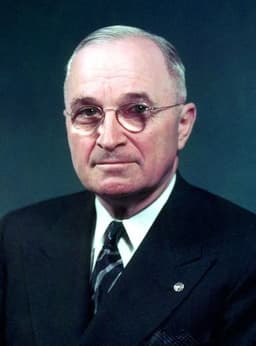
Harry S. Truman
Politician · Modern
63.7Total
Basic Information
Born
1947
1884
Died
—
1972
Era
Modern
Modern
Nationality
Palestine
United States
Occupation
Politician
Politician
Civilization
Middle Eastern
Western
Score Comparison
Military (10%)
38.3
30.0
Political (20%)
26.4
55.0
Influence (20%)
50.2
68.0
Legacy (20%)
39.2
72.0
Leadership (15%)
31.2
79.8
Strategy (15%)
53.8
55.0
TOTAL
40.2
63.7
Abdel Aziz al-Rantisi — Complete Timeline
2004 AD
Assassination by Israeli StrikeWar
Rantisi was killed in an Israeli airstrike on April 17, 2004, just weeks after succeeding Yassin. The strike targeted his car in Gaza City, killing him and his bodyguard. His death marked a major blow to Hamas leadership.
AssassinationIsraelGaza
Impact: regionaltragic
Succeeded Ahmed Yassin as Hamas LeaderPolitical Action◆ Major
Rantisi became the leader of Hamas in Gaza immediately after Yassin's assassination in March 2004. He vowed to continue armed resistance against Israel, escalating rocket attacks from Gaza.
HamasLeadershipGaza
Impact: regional
Harry S. Truman — Complete Timeline
1945 AD
Ordered atomic bombings of Hiroshima and NagasakiWar
Truman authorized the use of atomic bombs against Japan. Hiroshima was bombed on August 6, Nagasaki on August 9. Japan surrendered on August 15, ending World War II. The bombings caused massive civilian casualties and initiated the nuclear age.
World War IINuclear WeaponsJapan
Impact: globaldestructive
1947 AD
Announced the Truman DoctrinePolitical Action◆ Major
Truman declared that the United States would provide political, military, and economic assistance to all democratic nations under threat from authoritarian forces. This policy was first applied to Greece and Turkey, marking the start of the Cold War containment strategy.
Cold WarContainmentForeign Policy
Impact: globalconstructive
1948 AD
Desegregated the U.S. armed forcesReform◆ Major
Truman issued Executive Order 9981, mandating equality of treatment and opportunity for all persons in the armed services regardless of race. This order began the process of racial integration in the U.S. military, a major step in the civil rights movement.
Civil RightsMilitaryDesegregation
Impact: nationalprogressive
Signed the Marshall Plan into lawPolitical Action◆ Major
Truman signed the Economic Cooperation Act, implementing the Marshall Plan. This program provided over $12 billion in economic aid to rebuild Western European economies after World War II, stabilizing the region and countering Soviet influence.
Cold WarEconomic AidEurope
Impact: globalconstructive
1950 AD
Ordered U.S. intervention in the Korean WarWar◆ Major
After North Korea invaded South Korea, Truman committed U.S. forces under a United Nations mandate. The war lasted until 1953, ended in an armistice, and solidified the division of Korea. It also led to the militarization of the Cold War.
Korean WarCold WarMilitary Intervention
Impact: global
Expert Analysis
Origins
Abdel Aziz al-Rantisi was born in 1947 in Yibna, Palestine, later a refugee in Gaza. He studied medicine at Alexandria University, Egypt, earning a degree in pediatrics. His family was displaced during the 1948 Arab-Israeli war, shaping his early political consciousness. He joined the Muslim Brotherhood in his youth, which later evolved into Hamas.
Harry S. Truman was born in 1884 in Lamar, Missouri, into a farming family. He did not attend college; instead, he worked various jobs and eventually managed the family farm. His political career began as a judge in Jackson County, Missouri, after World War I service. He rose through the Democratic Party machine with the support of the Pendergast political organization.
Rise to Power
Al-Rantisi co-founded Hamas in 1987 during the First Intifada. He was arrested multiple times by Israeli authorities and deported to Lebanon in 1992. His rise within Hamas was steady, becoming a prominent spokesperson. After the assassination of Ahmed Yassin in March 2004, al-Rantisi succeeded him as Hamas leader in Gaza, but his tenure lasted only weeks before he was killed by an Israeli airstrike on April 17, 2004.
Truman became president in April 1945 upon Franklin D. Roosevelt's death, having served as vice president for only 82 days. Prior to that, he was a U.S. Senator from Missouri, gaining fame for his investigation of wartime corruption. His unexpected ascension placed him at the helm during the final months of World War II and the onset of the Cold War.
Leadership & Governance
Al-Rantisi led Hamas with a focus on armed resistance against Israel. He rejected negotiations and advocated for the destruction of Israel, using suicide bombings and rocket attacks. His leadership was brief but maintained the militant trajectory set by Yassin. He scored 31.2 in leadership and 53.8 in strategy, reflecting tactical focus but limited governance scope.
Truman's leadership style was decisive and hands-on. He made the controversial decision to drop atomic bombs on Hiroshima and Nagasaki, ending World War II but initiating the nuclear age. Domestically, he issued Executive Order 9981 to desegregate the military, a major step in civil rights. He also enacted the Truman Doctrine and Marshall Plan, containing Soviet expansion. His leadership score of 79.8 reflects his effective governance during crises.
Triumph & Tragedy
Al-Rantisi's greatest success was helping establish Hamas as a major Palestinian faction, resisting Israeli occupation. His tragedy was his short leadership and violent death, failing to achieve political or territorial gains. His military score of 38.3 indicates limited tactical success against a superior Israeli force.
Truman's triumphs include winning World War II, rebuilding Europe, and establishing NATO. He also desegregated the military, a lasting social achievement. His tragedies include the human cost of atomic bombings (estimated 200,000 deaths) and the inconclusive Korean War, which ended in stalemate. His legacy score of 72.0 shows enduring impact despite controversies.
Character & Destiny
Al-Rantisi was known for his uncompromising rhetoric and commitment to armed struggle. His character—defiant and ideological—led to his targeted assassination, as he refused to moderate. His influence score of 50.2 reflects his symbolic status posthumously.
Truman was pragmatic, blunt, and willing to take responsibility. His decision to use atomic bombs demonstrated a utilitarian calculus. His character, shaped by Midwestern values and military service, led him to confront communism decisively. His total score of 63.7 reflects a balanced but strong historical standing.
Legacy
Al-Rantisi's legacy is tied to Hamas's continued resistance, but his personal impact is limited due to his brief leadership. He is remembered as a martyr by supporters, but his strategic influence is minimal compared to other Hamas leaders.
Truman's legacy is vast: he set the framework for Cold War foreign policy, desegregated the military, and authorized nuclear weapons use. His decisions shaped the post-war world order. With scores of 68.0 in influence and 72.0 in legacy, he ranks among consequential U.S. presidents.
Conclusion
Harry S. Truman had a far greater impact than Abdel Aziz al-Rantisi, with a total score of 63.7 versus 40.2. Truman's decisions affected global geopolitics for decades, while al-Rantisi's influence was confined to a short period within the Israeli-Palestinian conflict. Truman's leadership, governance, and legacy far outweigh al-Rantisi's, making him the more significant figure in history.
Rankings
🥇
Harry S. TrumanLeader
Mil: 30.0Pol: 55.0Inf: 68.0
63.7
🥈
Abdel Aziz al-Rantisi
Mil: 38.3Pol: 26.4Inf: 50.2
40.2
+23.5 behind
How This Comparison Works
Algorithm
Each figure is scored on 6 dimensions (0—100 scale) based on structured historical data: Military (10%), Political (20%), Influence (20%), Legacy (20%), Leadership (15%), Strategy (15%). The weighted total produces the final ranking.
Data Sources
Scores are computed from structured sub-indicators in the database. Scale factors adjust for era (Ancient ×0.85, Modern ×1.0) and civilization size (Eastern ×1.05, Other ×0.80) to account for differences in population and military scale.
Maximum 3 Figures
Comparisons are limited to 2—3 figures to ensure readability and statistical meaningfulness.
Error Margins
±5 points per dimension — Sub-scores are derived from historical records with inherent uncertainty. Two figures within 5 points on a dimension should be considered roughly equivalent in that area.
Total Score Accuracy
±3 points overall — The weighted combination of 6 dimensions produces a total score with approximately ±3 points of uncertainty. Differences of less than 3 points are not statistically significant— the figures are effectively tied.
Known Limitations
- Historical records are incomplete and uneven across civilizations
- Figures from oral-tradition societies may be underrepresented
- Occupation labels can misclassify multi-role figures
- Scores measure capability and impact, not moral character
- Quantitative scoring is a comparison tool, not absolute truth
Capability Radar
Military (10%) — Battles & Warfare
Battles
5
0
Win Rate
5
0
Expansion
10
0
Political (20%) — Governance & Reform
Reform
15
65
Diplomacy
15
75
Economy
5
60
Influence (20%) — Cultural & Global Reach
Cultural
20
55
Global
20
80
Legacy (20%) — Historical Impact
Historical
20
80
Longevity
15
70
Leadership (15%) — Power & Stability
Tenure
10
70
Stability
5
60
Strategy (15%) — Tactics & Innovation
Strategy
10
70
Tactics
10
0
Reform
15
60
Similar Comparisons
Comments & Discussion
No comments yet. Be the first to share your thoughts!