Loading...
This comparison has not been analyzed yet.
One-time AI generation (~1 minute). Scores and timeline are already available below.
Abdel Fattah al-Burhan vs Itagaki Seishiro
Itagaki Seishiro leads by 3.4 pts · 2 figures compared
…
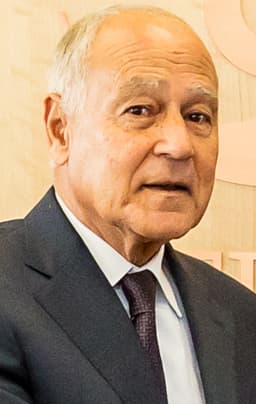
Abdel Fattah al-Burhan
General · Modern
42.5Total
Itagaki Seishiro
General · Modern
45.9Total
Basic Information
Born
1960
1885
Died
—
1948
Era
Modern
Modern
Nationality
Sudan
Japan
Occupation
General
General
Civilization
Other
Eastern
Score Comparison
Military (10%)
50.0
47.5
Political (20%)
32.2
35.1
Influence (20%)
49.4
51.0
Legacy (20%)
37.5
40.0
Leadership (15%)
43.8
47.3
Strategy (15%)
43.7
60.0
TOTAL
42.5
45.9
Abdel Fattah al-Burhan — Complete Timeline
2019 AD
Became Chairman of the Sovereignty CouncilPolitical Action◆ Major
Abdel Fattah al-Burhan became Chairman of the Sovereignty Council, Sudan's collective head of state, after the ouster of Omar al-Bashir. He led the transitional military council that shared power with civilian forces.
TransitionMilitary RuleSudan
Impact: national
2020 AD
Signed the Juba Peace AgreementPolitical Action◆ Major
Al-Burhan signed the Juba Peace Agreement with several armed rebel groups, aiming to end conflicts in Darfur, South Kordofan, and Blue Nile. The agreement was a key step in Sudan's transition but faced implementation challenges.
Peace AgreementCivil WarSudan
Impact: nationalconstructive
2021 AD
Led the 2021 CoupPolitical Action◆ Major
Al-Burhan led a military coup in October 2021, dissolving the civilian-led government and declaring a state of emergency. The coup derailed Sudan's democratic transition and sparked widespread protests.
CoupDemocracySudan
Impact: nationaldestructive
Itagaki Seishiro — Complete Timeline
1937 AD
Led Kwantung Army OperationsWar◆ Major
Itagaki Seishiro served as a senior commander in the Kwantung Army, directing Japanese military operations in Manchuria. He was involved in the escalation of the Second Sino-Japanese War, including the Battle of Beiping
Second Sino-Japanese WarKwantung ArmyMilitary Campaign
Impact: regionaldestructive
1938 AD
Appointed War MinisterPolitical Action◆ Major
Itagaki was appointed Minister of War in the cabinet of Prime Minister Fumimaro Konoe. He advocated for the expansion of the war in China and supported the Tripartite Pact with Germany and Italy, deepening Japan's commitment to World War II.
World War IIJapanese GovernmentTripartite Pact
Impact: nationaldestructive
1948 AD
Executed as War CriminalPolitical Action◆ Major
Itagaki Seishiro was tried by the International Military Tribunal for the Far East and found guilty of war crimes, including waging aggressive war. He was sentenced to death and executed by hanging on December 23, 1948.
War Crimes TrialExecutionIMTFE
Impact: nationaldestructive
This comparison has not been analyzed yet.
One-time AI generation (~1 minute). Scores and timeline are already available below.
Rankings
🥇
Itagaki SeishiroLeader
Mil: 47.5Pol: 35.1Inf: 51.0
45.9
🥈
Abdel Fattah al-Burhan
Mil: 50.0Pol: 32.2Inf: 49.4
42.5
+3.4 behind
How This Comparison Works
Algorithm
Each figure is scored on 6 dimensions (0—100 scale) based on structured historical data: Military (10%), Political (20%), Influence (20%), Legacy (20%), Leadership (15%), Strategy (15%). The weighted total produces the final ranking.
Data Sources
Scores are computed from structured sub-indicators in the database. Scale factors adjust for era (Ancient ×0.85, Modern ×1.0) and civilization size (Eastern ×1.05, Other ×0.80) to account for differences in population and military scale.
Maximum 3 Figures
Comparisons are limited to 2—3 figures to ensure readability and statistical meaningfulness.
Error Margins
±5 points per dimension — Sub-scores are derived from historical records with inherent uncertainty. Two figures within 5 points on a dimension should be considered roughly equivalent in that area.
Total Score Accuracy
±3 points overall — The weighted combination of 6 dimensions produces a total score with approximately ±3 points of uncertainty. Differences of less than 3 points are not statistically significant— the figures are effectively tied.
Known Limitations
- Historical records are incomplete and uneven across civilizations
- Figures from oral-tradition societies may be underrepresented
- Occupation labels can misclassify multi-role figures
- Scores measure capability and impact, not moral character
- Quantitative scoring is a comparison tool, not absolute truth
Capability Radar
Military (10%) — Battles & Warfare
Battles
15
45
Win Rate
10
40
Expansion
10
60
Political (20%) — Governance & Reform
Reform
15
20
Diplomacy
25
25
Economy
10
15
Influence (20%) — Cultural & Global Reach
Cultural
10
15
Global
15
20
Legacy (20%) — Historical Impact
Historical
15
30
Longevity
10
10
Leadership (15%) — Power & Stability
Tenure
30
35
Stability
10
10
Strategy (15%) — Tactics & Innovation
Strategy
20
55
Tactics
20
50
Reform
15
30
Similar Comparisons
Comments & Discussion
No comments yet. Be the first to share your thoughts!