Loading...
Abdelaziz Bouteflika vs Modibo Keita
Modibo Keita leads by 5.9 pts · 2 figures compared
…

Abdelaziz Bouteflika
Politician · Modern
46.6Total
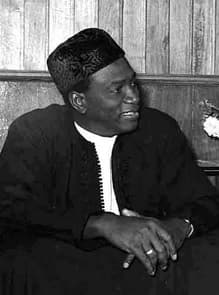
Modibo Keita
Politician · Modern
52.5Total
Basic Information
Born
1937
1915
Died
—
1977
Era
Modern
Modern
Nationality
Algeria
Mali
Occupation
Politician
Politician
Civilization
Middle Eastern
Other
Score Comparison
Military (10%)
17.4
10.0
Political (20%)
61.3
68.0
Influence (20%)
54.9
57.2
Legacy (20%)
45.0
48.3
Leadership (15%)
40.0
74.0
Strategy (15%)
46.5
38.3
TOTAL
46.6
52.5
Abdelaziz Bouteflika — Complete Timeline
1999 AD
Elected President of AlgeriaPolitical Action◆ Major
Bouteflika was elected president after all other candidates withdrew, citing fraud. His election aimed to end the Algerian Civil War, and he quickly pursued a policy of national reconciliation.
Algerian PoliticsElectionCivil War
Impact: national
2005 AD
Implemented the Charter for Peace and National ReconciliationPolitical Action
Bouteflika's government passed a charter offering amnesty to Islamist militants who laid down arms, effectively ending the Algerian Civil War. The charter was approved by referendum and led to a significant reduction in violence, though it was criticized for impunity.
National ReconciliationCivil War EndAmnesty
Impact: nationalconstructive
2014 AD
Won Fourth Term Amid ControversyPolitical Action◆ Major
Bouteflika, despite being in poor health and rarely appearing in public, won a fourth presidential term. The election was marred by low turnout and allegations of fraud, fueling public discontent that later erupted in the Hirak movement.
ElectionHealth CrisisProtest
Impact: nationaldestructive
2019 AD
Resigned Amid Mass Protests (Hirak Movement)Political Action
After months of massive weekly protests known as the Hirak movement, Bouteflika resigned from the presidency. The protests demanded an end to his rule and the dismantling of the political system that had kept him in power for 20 years.
Hirak MovementResignationProtest
Impact: nationaltragic
Modibo Keita — Complete Timeline
1960 AD
Adoption of Socialist PoliciesReform◆ Major
Keita implemented a socialist economic program, nationalizing key industries, collectivizing agriculture, and establishing state-run enterprises. These policies aimed to reduce dependence on France and promote self-sufficiency but led to economic inefficiency and shortages.
SocialismEconomic PolicyMali
Impact: national
First President of Independent MaliPolitical Action◆ Major
Modibo Keita became the first President of Mali on September 22, 1960, after the country gained independence from France. He led the Sudanese Republic (formerly French Sudan) in breaking away from the short-lived Mali Federation with Senegal.
IndependenceFoundingMali
Impact: nationalconstructive
1963 AD
Promotion of Pan-AfricanismPolitical Action◆ Major
Keita was a leading pan-Africanist and co-founder of the Organization of African Unity (OAU) in 1963. He advocated for African unity and anti-colonialism, hosting the OAU's first summit in Addis Ababa and supporting liberation movements across the continent.
Pan-AfricanismOAUDiplomacy
Impact: regionalconstructive
1968 AD
Overthrown in Military CoupPolitical Action◆ Major
On November 19, 1968, Keita was overthrown in a military coup led by Lieutenant Moussa Traore. The coup was fueled by economic decline, popular discontent with austerity measures, and political repression. Keita was imprisoned and died in detention in 1977.
CoupOverthrowMali
Impact: nationaldestructive
Expert Analysis
Origins
Abdelaziz Bouteflika was born on March 2, 1937, in Oujda, Morocco, to a family of Algerian origin. He joined the National Liberation Front (FLN) at age 18 and served as a key aide to Ahmed Ben Bella. Modibo Keita was born on June 4, 1915, in Bamako, French Sudan (now Mali), into a royal family; he studied at the William Ponty School and became a teacher. Both were shaped by colonial contexts, but Bouteflika's early career was forged in the Algerian War of Independence, while Keita's was in political organizing and trade unions.
Rise to Power
Bouteflika rose through the FLN ranks, becoming Minister of Youth and Sports at 25 and Foreign Minister at 26 under Houari Boumédiène. He played a central role in Algeria's foreign policy, including the 1975 nationalization of hydrocarbons. After a period of exile during the 1980s, he returned to win the presidency in 1999 after all rival candidates withdrew, citing fraud. Keita's rise was more linear: he co-founded the Sudanese Union-African Democratic Rally (US-RDA) and led Mali to independence on September 22, 1960, becoming its first president. He consolidated power by suppressing opposition and implementing socialist policies.
Leadership & Governance
Bouteflika's governance was authoritarian but pragmatic. He ended the Algerian Civil War (1991-2002) by offering amnesty to Islamist militants through the Charter for Peace and National Reconciliation (2005). He also launched a public works program and increased oil revenues. However, his later years were marked by corruption and cronyism, with his brother Saïd and business associates controlling state resources. Keita's leadership was ideologically driven: he nationalized industries, collectivized agriculture, and pursued pan-Africanism. He co-founded the Organization of African Unity (OAU) in 1963. But his economic policies led to stagnation, and his heavy-handed rule alienated many, culminating in the 1968 coup.
Triumph & Tragedy
Bouteflika's greatest triumph was ending the civil war, reducing violence from 200,000 deaths to near-peace. He also secured a second term with 85% of the vote in 2004. His tragedy was his later years: a 2013 stroke left him wheelchair-bound, and his 2014 re-election bid was marred by allegations of fraud. The Hirak protests forced his resignation on April 2, 2019. Keita's triumph was leading Mali to independence and championing African unity; he scored 68.0 in political skill. His tragedy was economic failure: food shortages, IMF debt, and a coup that ended his rule. He died in detention in 1977, likely from neglect.
Character & Destiny
Bouteflika was a skilled diplomat and pragmatist, scoring 61.3 in political acumen. He was patient and calculating, but his isolation in later years led to poor decision-making. His character shaped his destiny: his refusal to groom a successor or address corruption fueled the Hirak movement. Keita was idealistic and charismatic, scoring 74.0 in leadership. He was a true believer in socialism and pan-Africanism, but his rigidity and failure to adapt economically led to his downfall. Both men were autocrats, but Bouteflika's pragmatism gave him a longer tenure (20 years) while Keita's idealism proved unsustainable.
Legacy
Bouteflika's legacy is mixed: he ended a civil war but left a fractured political system and a culture of corruption. His Charter for Peace remains controversial. He scored 45.0 in legacy. Keita is remembered as a founding father of Mali and a pan-Africanist icon; the OAU (now AU) endures. His economic failures, however, tarnish his record. He scored 48.3 in legacy. Both scored low in military (17.4 and 10.0) and strategy (46.5 and 38.3), reflecting their non-military backgrounds.
Conclusion
Modibo Keita had a greater overall impact, as reflected in his total score of 52.5 versus Bouteflika's 46.6. Keita's role in founding the OAU and leading Mali's independence reverberates across Africa, while Bouteflika's peace deal, though significant, was more regional. Keita's vision of African unity persists, while Bouteflika's authoritarian legacy is being actively dismantled. Though both were flawed, Keita's contributions to continental integration and anti-colonialism give him the edge.
Rankings
🥇
Modibo KeitaLeader
Mil: 10.0Pol: 68.0Inf: 57.2
52.5
🥈
Abdelaziz Bouteflika
Mil: 17.4Pol: 61.3Inf: 54.9
46.6
+5.9 behind
How This Comparison Works
Algorithm
Each figure is scored on 6 dimensions (0—100 scale) based on structured historical data: Military (10%), Political (20%), Influence (20%), Legacy (20%), Leadership (15%), Strategy (15%). The weighted total produces the final ranking.
Data Sources
Scores are computed from structured sub-indicators in the database. Scale factors adjust for era (Ancient ×0.85, Modern ×1.0) and civilization size (Eastern ×1.05, Other ×0.80) to account for differences in population and military scale.
Maximum 3 Figures
Comparisons are limited to 2—3 figures to ensure readability and statistical meaningfulness.
Error Margins
±5 points per dimension — Sub-scores are derived from historical records with inherent uncertainty. Two figures within 5 points on a dimension should be considered roughly equivalent in that area.
Total Score Accuracy
±3 points overall — The weighted combination of 6 dimensions produces a total score with approximately ±3 points of uncertainty. Differences of less than 3 points are not statistically significant— the figures are effectively tied.
Known Limitations
- Historical records are incomplete and uneven across civilizations
- Figures from oral-tradition societies may be underrepresented
- Occupation labels can misclassify multi-role figures
- Scores measure capability and impact, not moral character
- Quantitative scoring is a comparison tool, not absolute truth
Capability Radar
Military (10%) — Battles & Warfare
Battles
26
0
Win Rate
28
0
Expansion
32
0
Political (20%) — Governance & Reform
Reform
30
65
Diplomacy
60
60
Economy
40
40
Influence (20%) — Cultural & Global Reach
Cultural
30
45
Global
40
40
Legacy (20%) — Historical Impact
Historical
40
50
Longevity
30
40
Leadership (15%) — Power & Stability
Tenure
75
60
Stability
20
30
Strategy (15%) — Tactics & Innovation
Strategy
34
0
Tactics
40
0
Reform
40
10
Similar Comparisons
Comments & Discussion
No comments yet. Be the first to share your thoughts!