Loading...
This comparison has not been analyzed yet.
One-time AI generation (~1 minute). Scores and timeline are already available below.
Abdul Hamid Dbeibeh vs Ali Bongo Ondimba
Ali Bongo Ondimba leads by 5.4 pts · 2 figures compared
…

Abdul Hamid Dbeibeh
Politician · Modern
38.3Total
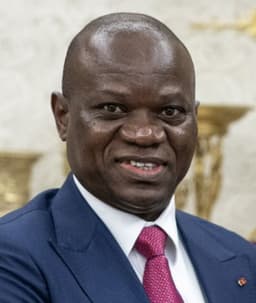
Ali Bongo Ondimba
Politician · Modern
43.7Total
Basic Information
Born
1959
1959
Died
—
—
Era
Modern
Modern
Nationality
Libya
Gabon
Occupation
Politician
Politician
Civilization
Middle Eastern
Other
Score Comparison
Military (10%)
46.1
48.1
Political (20%)
25.0
32.2
Influence (20%)
46.3
47.9
Legacy (20%)
35.8
37.5
Leadership (15%)
34.6
55.3
Strategy (15%)
42.1
44.0
TOTAL
38.3
43.7
Abdul Hamid Dbeibeh — Complete Timeline
2021 AD
Appointment as Interim Prime MinisterPolitical Action
Abdul Hamid Dbeibeh was appointed interim Prime Minister of Libya on February 5, 2021, by the Libyan Political Dialogue Forum. He was tasked with leading the country to national elections scheduled for December 2021.
Interim GovernmentUN Process
Impact: nationalconstructive
Formation of the Government of National UnityPolitical Action◆ Major
Dbeibeh formed the Government of National Unity (GNU) on March 10, 2021, which was approved by the House of Representatives. This unified the rival eastern and western administrations for the first time since 2014.
Unity GovernmentReconciliation
Impact: nationalconstructive
Postponement of ElectionsPolitical Action◆ Major
The national elections scheduled for December 24, 2021, were postponed indefinitely due to disputes over candidate eligibility and electoral laws. Dbeibeh's government remained in power despite the delay.
Election DelayPolitical Crisis
Impact: nationaltragic
2022 AD
Refusal to Step DownPolitical Action◆ Major
Dbeibeh refused to cede power to a rival government appointed by the House of Representatives in February 2022. This led to a political standoff and the emergence of two competing governments in Libya.
Political CrisisDivision
Impact: nationaldestructive
Ali Bongo Ondimba — Complete Timeline
2009 AD
Elected President of GabonPolitical Action◆ Major
Following the death of his father Omar Bongo, Ali Bongo Ondimba won the presidential election in Gabon. His victory was contested by the opposition, leading to protests and accusations of electoral fraud.
ElectionSuccessionControversy
Impact: national
2018 AD
Suffered StrokeOther◆ Major
Ali Bongo Ondimba suffered a stroke while attending a summit in Saudi Arabia. He spent months abroad recovering, which fueled speculation about his health and ability to govern, leading to a power vacuum and attempted coup in 2019.
Health CrisisPower VacuumSpeculation
Impact: nationaltragic
2023 AD
Overthrown in Coup d'ÉtatPolitical Action
On August 30, 2023, military officers led by General Brice Oligui Nguema announced the overthrow of President Ali Bongo Ondimba. The coup occurred shortly after Bongo was declared winner of a disputed election, ending his 14-year rule.
CoupEnd of RegimeMilitary Takeover
Impact: nationaldestructive
This comparison has not been analyzed yet.
One-time AI generation (~1 minute). Scores and timeline are already available below.
Rankings
🥇
Ali Bongo OndimbaLeader
Mil: 48.1Pol: 32.2Inf: 47.9
43.7
🥈
Abdul Hamid Dbeibeh
Mil: 46.1Pol: 25.0Inf: 46.3
38.3
+5.4 behind
How This Comparison Works
Algorithm
Each figure is scored on 6 dimensions (0—100 scale) based on structured historical data: Military (10%), Political (20%), Influence (20%), Legacy (20%), Leadership (15%), Strategy (15%). The weighted total produces the final ranking.
Data Sources
Scores are computed from structured sub-indicators in the database. Scale factors adjust for era (Ancient ×0.85, Modern ×1.0) and civilization size (Eastern ×1.05, Other ×0.80) to account for differences in population and military scale.
Maximum 3 Figures
Comparisons are limited to 2—3 figures to ensure readability and statistical meaningfulness.
Error Margins
±5 points per dimension — Sub-scores are derived from historical records with inherent uncertainty. Two figures within 5 points on a dimension should be considered roughly equivalent in that area.
Total Score Accuracy
±3 points overall — The weighted combination of 6 dimensions produces a total score with approximately ±3 points of uncertainty. Differences of less than 3 points are not statistically significant— the figures are effectively tied.
Known Limitations
- Historical records are incomplete and uneven across civilizations
- Figures from oral-tradition societies may be underrepresented
- Occupation labels can misclassify multi-role figures
- Scores measure capability and impact, not moral character
- Quantitative scoring is a comparison tool, not absolute truth
Capability Radar
Military (10%) — Battles & Warfare
Battles
23
21
Win Rate
27
24
Expansion
24
30
Political (20%) — Governance & Reform
Reform
10
15
Diplomacy
20
30
Economy
10
20
Influence (20%) — Cultural & Global Reach
Cultural
5
10
Global
10
15
Legacy (20%) — Historical Impact
Historical
10
15
Longevity
5
10
Leadership (15%) — Power & Stability
Tenure
15
40
Stability
5
10
Strategy (15%) — Tactics & Innovation
Strategy
29
31
Tactics
34
34
Reform
39
35
Similar Comparisons
Comments & Discussion
No comments yet. Be the first to share your thoughts!