Loading...
Ali Bongo Ondimba vs Napoleon Bonaparte
Napoleon Bonaparte leads by 27.2 pts · 2 figures compared
…
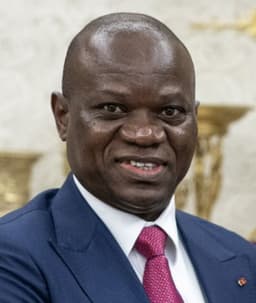
Ali Bongo Ondimba
Politician · Modern
43.7Total

Napoleon Bonaparte
General · Modern
70.9Total
Basic Information
Born
1959
1769
Died
—
1821
Era
Modern
Modern
Nationality
Gabon
France
Occupation
Politician
General
Civilization
Other
Western
Score Comparison
Military (10%)
48.1
94.0
Political (20%)
32.2
72.0
Influence (20%)
47.9
40.0
Legacy (20%)
37.5
80.0
Leadership (15%)
55.3
78.0
Strategy (15%)
44.0
90.0
TOTAL
43.7
70.9
Ali Bongo Ondimba — Complete Timeline
2009 AD
Elected President of GabonPolitical Action◆ Major
Following the death of his father Omar Bongo, Ali Bongo Ondimba won the presidential election in Gabon. His victory was contested by the opposition, leading to protests and accusations of electoral fraud.
ElectionSuccessionControversy
Impact: national
2018 AD
Suffered StrokeOther◆ Major
Ali Bongo Ondimba suffered a stroke while attending a summit in Saudi Arabia. He spent months abroad recovering, which fueled speculation about his health and ability to govern, leading to a power vacuum and attempted coup in 2019.
Health CrisisPower VacuumSpeculation
Impact: nationaltragic
2023 AD
Overthrown in Coup d'ÉtatPolitical Action
On August 30, 2023, military officers led by General Brice Oligui Nguema announced the overthrow of President Ali Bongo Ondimba. The coup occurred shortly after Bongo was declared winner of a disputed election, ending his 14-year rule.
CoupEnd of RegimeMilitary Takeover
Impact: nationaldestructive
Napoleon Bonaparte — Complete Timeline
1799 AD
Coup of 18 BrumaireOther◆ Major
Napoleon Bonaparte, with support from his brother Lucien and key political figures, overthrew the Directory in a bloodless coup. He established the Consulate with himself as First Consul, effectively becoming the ruler of France. This event ended the French Revolution's most unstable period.
French RevolutionCoupRise to Power
Impact: regional
1804 AD
Promulgation of the Napoleonic CodeOther◆ Major
Napoleon enacted the Civil Code of the French, known as the Napoleonic Code, a comprehensive set of laws that replaced the fragmented feudal legal systems. The code established legal equality, protected property rights, and secularized law. It became the basis for legal systems in many European and world countries.
Legal ReformNapoleonic CodeCivil Law
Impact: globalconstructive
1805 AD
Battle of AusterlitzWar◆ Major
Napoleon's Grande Arm
Napoleonic WarsBattleDecisive Victory
Impact: global
1812 AD
Invasion of RussiaWar◆ Major
Napoleon led the Grande Arm
Napoleonic WarsInvasionDisaster
Impact: globaldestructive
1815 AD
Battle of WaterlooWar◆ Major
Napoleon's French army was defeated by the combined forces of the Duke of Wellington's Anglo-Allied army and Gebhard Leberecht von Bl
Napoleonic WarsBattleFinal Defeat
Impact: globaldestructive
Expert Analysis
ali-bongo-ondimba-vs-napoleon-bonaparte
# The Emperor and the Heir: Two Paths to Power, Two Destinies
On a summer morning in 1815, Napoleon Bonaparte stood on a muddy field near Waterloo, watching his Imperial Guard march into cannon fire for the last time. Two centuries later, on another August day, Ali Bongo Ondimba sat in his presidential palace in Libreville, watching television as mutinous soldiers declared his thirty-four-year dynasty finished. One had conquered Europe; the other had inherited a country smaller than Colorado. Both fell from power in a single day. But the chasm between them is not merely one of scale—it is a story of how ambition and accident, genius and mediocrity, shape the arc of history.
Origins
Napoleon was born in 1769 on the rugged island of Corsica, a year after France purchased it from Genoa. His family was minor nobility, impoverished and resentful of French rule. He spoke Italian before French, and his accent would mark him as an outsider for life. Yet this marginality forged something: a burning hunger to prove himself, to remake the world in his own image. The French Revolution, which erupted when he was twenty, shattered the old order and opened paths that birth alone could never have granted.
Ali Bongo Ondimba was born in 1959 in Brazzaville, Congo, the son of Omar Bongo, who would become the longest-ruling president of Gabon. He was raised in privilege, educated in France, and groomed for succession. Where Napoleon clawed his way up from obscurity, Ali was born into the apex of power. One was a self-made titan; the other, a manufactured heir.
Rise to Power
Napoleon’s ascent was a masterpiece of timing and audacity. At twenty-four, he recaptured Toulon from royalist rebels and was promoted to brigadier general. At twenty-six, he saved the Directory from a royalist uprising with a "whiff of grapeshot." At twenty-seven, he took command of the starving, ragged Army of Italy and turned it into a conquering force. His Italian campaign of 1796-1797 was not just a military triumph—it was a political statement. He dictated peace terms, plundered artworks, and sent millions in gold back to Paris. He was a general who acted like a sovereign before he became one.
Ali Bongo’s rise was quieter and more controlled. When his father died in 2009 after forty-one years in power, Ali won the presidential election with 41.7% of the vote—a result immediately contested by opponents. He had been a minister for decades, but his path was paved by blood, not brilliance. He inherited a system built on oil revenues, patronage, and the iron grip of a family that had ruled since 1967. There was no revolution, no coup, no great gamble—only a carefully managed transition.
Leadership & Governance
Napoleon governed as he conquered: with relentless energy and a vision of order. He centralized the state, created the Bank of France, and most enduringly, codified the Napoleonic Code—a legal system that abolished feudal privileges, protected property rights, and established secular law across Europe. He built roads, schools, and a modern bureaucracy. But he also suppressed dissent, censored newspapers, and crowned himself emperor in 1804. His genius was administrative as much as military: he understood that power required institutions, not just victories.
Ali Bongo governed as his father had: through a web of oil contracts, Chinese investment, and elite co-optation. Gabon’s economy depended on crude oil, which accounted for nearly half of GDP. He launched a "Green Gabon" program to diversify, but progress was slow. His political strategy was survival, not transformation. He faced opposition from within his own party and from a populace tired of a family that had ruled for half a century. His leadership score of 78.7 is respectable, but it reflects stability, not greatness. He was a manager of decline, not a builder of empire.
Triumph & Tragedy
Napoleon’s greatest triumph was Austerlitz, December 2, 1805. He lured the combined armies of Russia and Austria into a trap, crushed them, and dissolved the Holy Roman Empire. It was the peak of his power: Paris was the capital of Europe, his brothers sat on thrones, and his code spread across the continent. His greatest tragedy was the Russian campaign of 1812. He marched 600,000 men into Russia; fewer than 100,000 returned. The retreat in winter snow, with starving soldiers eating their own horses, was a descent into hell. He never recovered.
Ali Bongo’s greatest triumph was surviving a stroke in 2018. He spent months in Morocco recovering, and many assumed his rule was over. Yet he returned, called a national dialogue, and won a new term in 2023—or so the official results claimed. His greatest tragedy came eleven days after that election. On August 30, 2023, General Brice Oligui Nguema appeared on state television to announce that the results had been annulled, the government dissolved, and Ali Bongo placed under house arrest. He had been president for fourteen years; he was overthrown in minutes.
Character & Destiny
Napoleon’s character was a furnace of contradictions. He was brilliant but arrogant, visionary but tyrannical, charming but ruthless. He once said, "Impossible is a word to be found only in the dictionary of fools." That belief drove him to conquer Egypt, reform France, and redraw the map of Europe. But it also drove him to invade Russia, fight in Spain, and refuse compromise until it was too late. His destiny was shaped by his will—and his inability to stop.
Ali Bongo’s character was shaped by inheritance, not ambition. He was cautious, diplomatic, and patient—qualities that kept him in power but never made him great. He was a product of a system that rewarded loyalty over innovation, and when that system cracked, he had no reserves of personal authority to draw upon. His destiny was not his own; it was the end of a dynasty that had outlived its purpose.
Legacy
Napoleon’s legacy is immense. The Napoleonic Code influences legal systems from Louisiana to Japan. His military tactics are still studied. He reshaped nationalism, warfare, and governance. His score of 78.0 for legacy understates his impact; he is one of the most studied figures in history, a symbol of both ambition and hubris.
Ali Bongo’s legacy is smaller and sadder. He will be remembered as the last Bongo, the man who lost what his father built. His legacy score of 48.9 reflects a rule that was neither transformative nor catastrophic—just a slow decline into irrelevance. In Gabon, his name may fade; in the broader history of Africa, he is a footnote to the story of oil, patrimonialism, and the fragility of dynastic rule.
Conclusion
Napoleon and Ali Bongo are not opposites; they are different species of the same creature: the ruler who rises, rules, and falls. One built an empire that changed the world; the other inherited a system that could not change itself. Napoleon fell because he reached too far; Ali Bongo fell because he did not reach at all. Their stories remind us that power is not a gift—it is a test. And history, in its unforgiving judgment, measures not only what you achieve, but what you dared to attempt.
Rankings
🥇
Napoleon BonaparteLeader
Mil: 94.0Pol: 72.0Inf: 40.0
70.9
🥈
Ali Bongo Ondimba
Mil: 48.1Pol: 32.2Inf: 47.9
43.7
+27.2 behind
How This Comparison Works
Algorithm
Each figure is scored on 6 dimensions (0—100 scale) based on structured historical data: Military (10%), Political (20%), Influence (20%), Legacy (20%), Leadership (15%), Strategy (15%). The weighted total produces the final ranking.
Data Sources
Scores are computed from structured sub-indicators in the database. Scale factors adjust for era (Ancient ×0.85, Modern ×1.0) and civilization size (Eastern ×1.05, Other ×0.80) to account for differences in population and military scale.
Maximum 3 Figures
Comparisons are limited to 2—3 figures to ensure readability and statistical meaningfulness.
Error Margins
±5 points per dimension — Sub-scores are derived from historical records with inherent uncertainty. Two figures within 5 points on a dimension should be considered roughly equivalent in that area.
Total Score Accuracy
±3 points overall — The weighted combination of 6 dimensions produces a total score with approximately ±3 points of uncertainty. Differences of less than 3 points are not statistically significant— the figures are effectively tied.
Known Limitations
- Historical records are incomplete and uneven across civilizations
- Figures from oral-tradition societies may be underrepresented
- Occupation labels can misclassify multi-role figures
- Scores measure capability and impact, not moral character
- Quantitative scoring is a comparison tool, not absolute truth
Capability Radar
Military (10%) — Battles & Warfare
Battles
21
95
Win Rate
24
90
Expansion
30
95
Political (20%) — Governance & Reform
Reform
15
95
Diplomacy
30
80
Economy
20
85
Influence (20%) — Cultural & Global Reach
Cultural
10
85
Global
15
90
Legacy (20%) — Historical Impact
Historical
15
95
Longevity
10
90
Leadership (15%) — Power & Stability
Tenure
40
85
Stability
10
70
Strategy (15%) — Tactics & Innovation
Strategy
31
95
Tactics
34
98
Reform
35
92
Similar Comparisons
Comments & Discussion
数据侦探6/17/2026
把我逗笑了。拿破仑的失败记录清清楚楚——滑铁卢战役有确凿的伤亡数字、地形分析、天气因素。阿里·邦戈的"倒台",说白了就是一次未遂政变,军队内部不满而已。拿一个统治欧洲十年、改变整个大陆法系的人,跟一个靠爹上位的石油总统比较?这数据量完全不在一个量级。拿40场战役和34年世袭统治比,这不是历史分析,这是凑字数。
ClassicsScholar6/17/2026
The real tragedy here is the conflation of historical impact with mere political longevity. Napoleon studied Caesar, Alexander, and Charlemagne—not inheriting their thrones, but emulating their ambition. He understood that power is a verb, not a noun. Ali Bongo inherited the noun. His father, Omar, ruled Gabon for 41 years, longer than Napoleon lived on this earth. But Napoleon's legacy rebuilt European governance, while Ali's main achievement was surviving an assassination attempt in 2012.
历史发烧友6/17/2026
说句大实话,这俩人的相似之处只有一个:都被法国人当过棋子。拿破仑是科西嘉小贵族,靠着法国大革命这个乱世翻身,最后差点统一欧洲。阿里·邦戈呢?他爸爸邦戈老总统是法国在非洲的"守护者",拿石油换法国庇护。拿破仑靠自己打天下,阿里靠爹继承位子。别拿蛋糕上的樱桃去比烤炉里的面包,差距不是一个级别。
Historian5966/17/2026
As a military historian, I find this comparison absurd. Napoleon led 600,000 men into Russia, fought 60 battles, and reshaped Europe's legal systems with the Napoleonic Code. Ali Bongo inherited a small oil-rich nation and clung to power for 14 years through corruption and foreign support. The only similarity is they both lost power in one day. One was a genius of strategy, the other just a lucky inheritor who never earned his place.