Loading...
This comparison has not been analyzed yet.
One-time AI generation (~1 minute). Scores and timeline are already available below.
Abdullah of Saudi Arabia vs Murad IV
Murad IV leads by 6.4 pts · 2 figures compared
…

Abdullah of Saudi Arabia
Emperor · Modern
54.6Total
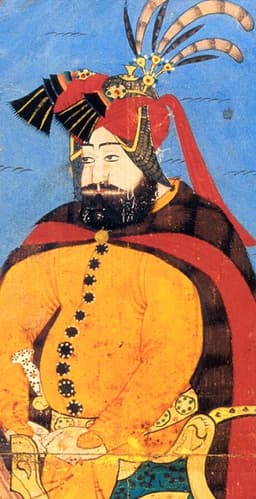
Murad IV
Emperor · Modern
61.0Total
Basic Information
Born
1924
1612
Died
—
1640
Era
Modern
Modern
Nationality
Saudi Arabia
Ottoman Empire
Occupation
Emperor
Emperor
Civilization
Middle Eastern
Middle Eastern
Score Comparison
Military (10%)
45.0
67.3
Political (20%)
55.0
55.0
Influence (20%)
62.0
59.0
Legacy (20%)
47.5
52.0
Leadership (15%)
72.0
78.0
Strategy (15%)
36.8
65.4
TOTAL
54.6
61.0
Abdullah of Saudi Arabia — Complete Timeline
2003 AD
Counter-Terrorism CampaignWar◆ Major
Following a wave of al-Qaeda attacks in Saudi Arabia, King Abdullah (then Crown Prince) launched a comprehensive counter-terrorism campaign involving security crackdowns, ideological rehabilitation programs, and international cooperation. The campaign significantly reduced terrorist activity in the kingdom.
TerrorismSecurityRehabilitation
Impact: national
2005 AD
Accession to the ThronePolitical Action◆ Major
Abdullah became King of Saudi Arabia after the death of King Fahd. His reign was characterized by cautious social and economic reforms, including efforts to modernize the education system and increase women's participation in public life.
SuccessionRoyal Family
Impact: national
2009 AD
King Abdullah University of Science and Technology (KAUST)Cultural◆ Major
King Abdullah established KAUST as a world-class graduate research university in Thuwal. The university was designed to promote scientific research and innovation, with a co-educational campus and international faculty, representing a significant investment in education.
EducationScienceInnovation
Impact: regionalconstructive
2011 AD
Women's Suffrage and Political ParticipationReform◆ Major
King Abdullah announced that women would be granted the right to vote and run in municipal elections, and would be appointed to the Shura Council. This was a landmark reform in Saudi Arabia, though implementation was gradual and faced conservative opposition.
Women's RightsPolitical Reform
Impact: nationalprogressive
Murad IV — Complete Timeline
1632 AD
Suppression of the Janissary RevoltPolitical Action◆ Major
Murad IV faced a major revolt by the Janissaries, who demanded the execution of several officials. Murad IV initially conceded but later executed the Janissary leaders and purged the corps. He then imposed strict discipline, reducing the Janissaries' political power and restoring order in the capital.
RevoltJanissariesPurge
Impact: nationaldestructive
1633 AD
Ban on Tobacco and AlcoholReform
Murad IV issued a decree banning the use of tobacco, coffee, and alcohol throughout the Ottoman Empire. He enforced this ban with harsh penalties, including execution for violators. This measure aimed to restore public morality and discipline, reflecting his authoritarian rule.
ProhibitionMoralityAuthoritarianism
Impact: nationaldestructive
1638 AD
Recapture of BaghdadWar◆ Major
Murad IV personally led a massive Ottoman army to recapture Baghdad from the Safavid Empire after a 40-day siege. The city had been lost to the Safavids in 1623. The victory restored Ottoman control over Mesopotamia and was a major military achievement of his reign.
SiegeSafavid WarMesopotamia
Impact: regional
1639 AD
Treaty of ZuhabPolitical Action◆ Major
Murad IV's recapture of Baghdad led to the Treaty of Zuhab with the Safavid Empire. This treaty established the permanent border between the Ottoman and Safavid empires, which largely corresponds to the modern Iran-Iraq border. It ended decades of war between the two empires.
TreatyBorderOttoman-Safavid
Impact: regionalconstructive
This comparison has not been analyzed yet.
One-time AI generation (~1 minute). Scores and timeline are already available below.
Rankings
🥇
Murad IVLeader
Mil: 67.3Pol: 55.0Inf: 59.0
61.0
🥈
Abdullah of Saudi Arabia
Mil: 45.0Pol: 55.0Inf: 62.0
54.6
+6.4 behind
How This Comparison Works
Algorithm
Each figure is scored on 6 dimensions (0—100 scale) based on structured historical data: Military (10%), Political (20%), Influence (20%), Legacy (20%), Leadership (15%), Strategy (15%). The weighted total produces the final ranking.
Data Sources
Scores are computed from structured sub-indicators in the database. Scale factors adjust for era (Ancient ×0.85, Modern ×1.0) and civilization size (Eastern ×1.05, Other ×0.80) to account for differences in population and military scale.
Maximum 3 Figures
Comparisons are limited to 2—3 figures to ensure readability and statistical meaningfulness.
Error Margins
±5 points per dimension — Sub-scores are derived from historical records with inherent uncertainty. Two figures within 5 points on a dimension should be considered roughly equivalent in that area.
Total Score Accuracy
±3 points overall — The weighted combination of 6 dimensions produces a total score with approximately ±3 points of uncertainty. Differences of less than 3 points are not statistically significant— the figures are effectively tied.
Known Limitations
- Historical records are incomplete and uneven across civilizations
- Figures from oral-tradition societies may be underrepresented
- Occupation labels can misclassify multi-role figures
- Scores measure capability and impact, not moral character
- Quantitative scoring is a comparison tool, not absolute truth
Capability Radar
Military (10%) — Battles & Warfare
Battles
5
75
Win Rate
5
80
Expansion
10
60
Political (20%) — Governance & Reform
Reform
60
80
Diplomacy
75
50
Economy
65
55
Influence (20%) — Cultural & Global Reach
Cultural
50
40
Global
60
45
Legacy (20%) — Historical Impact
Historical
55
60
Longevity
40
50
Leadership (15%) — Power & Stability
Tenure
80
60
Stability
70
85
Strategy (15%) — Tactics & Innovation
Strategy
10
75
Tactics
5
70
Reform
30
65
Similar Comparisons
Comments & Discussion
No comments yet. Be the first to share your thoughts!