Loading...
Abolhassan Banisadr vs Hirota Koki
Hirota Koki leads by 4.8 pts · 2 figures compared
…
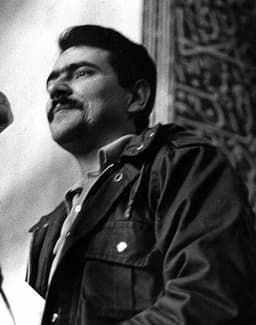
Abolhassan Banisadr
Politician · Modern
39.0Total
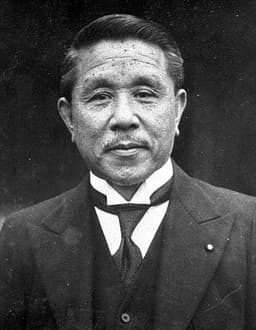
Hirota Koki
Politician · Modern
43.8Total
Basic Information
Born
1933
1878
Died
—
1948
Era
Modern
Modern
Nationality
Iran
Japan
Occupation
Politician
Politician
Civilization
Middle Eastern
Eastern
Score Comparison
Military (10%)
30.2
11.4
Political (20%)
26.4
42.3
Influence (20%)
49.4
48.6
Legacy (20%)
40.0
40.0
Leadership (15%)
34.6
65.0
Strategy (15%)
44.5
44.2
TOTAL
39.0
43.8
Abolhassan Banisadr — Complete Timeline
1980 AD
Iran-Iraq War BeginsWar◆ Major
As president, Banisadr oversaw Iran's initial response to the Iraqi invasion in September 1980. He advocated for a professional military strategy, but his authority was undermined by hardliners and the Revolutionary Guards.
Iran-Iraq WarMilitaryConflict
Impact: regionaltragic
Election as First President of IranPolitical Action◆ Major
Abolhassan Banisadr won Iran's first presidential election after the 1979 Islamic Revolution, with 76% of the vote. He was a close ally of Ayatollah Khomeini and advocated for a democratic Islamic republic.
ElectionIslamic RevolutionIran
Impact: nationalconstructive
1981 AD
Impeachment and ExilePolitical Action◆ Major
Banisadr was impeached by the Iranian parliament in June 1981 after conflicts with the clerical establishment. He fled to France, where he lived in exile, and was sentenced to death in absentia.
ImpeachmentExilePolitical Conflict
Impact: nationaltragic
Hirota Koki — Complete Timeline
1936 AD
Service as Prime MinisterPolitical Action◆ Major
Hirota Koki became Prime Minister in March 1936, forming a cabinet after the February 26 Incident. As a civilian, he was seen as a compromise candidate, but his government was dominated by the military and pursued expansionist policies.
Prime MinisterCivilian Government
Impact: national
Signing of the Anti-Comintern PactPolitical Action◆ Major
Hirota's government signed the Anti-Comintern Pact with Nazi Germany in November 1936, forming an alliance against the Soviet Union and international communism. This pact aligned Japan with Germany and Italy, leading to the Axis alliance.
Axis AllianceForeign PolicyAnti-Comintern
Impact: globaldestructive
1937 AD
Foreign Minister During the Nanking MassacrePolitical Action◆ Major
As Foreign Minister in 1937, Hirota was responsible for diplomatic relations during the Nanking Massacre. The Tokyo Tribunal found that he failed to take adequate steps to stop the atrocities despite receiving reports, contributing to his war crimes conviction.
Nanking MassacreWar CrimesDiplomacy
Impact: globaldestructive
1948 AD
Execution as a War CriminalOther◆ Major
Hirota Koki was executed by hanging on December 23, 1948, after being convicted by the International Military Tribunal for the Far East. He was found guilty of conspiracy to wage aggressive war and for atrocities committed by Japanese forces in China, including the Nanking Massacre.
War CrimesExecutionTokyo Trials
Impact: globaltragic
Expert Analysis
Origins
Abolhassan Banisadr was born in 1933 in Hamadan, Iran, into a religious family. His father was an ayatollah. He studied economics at the Sorbonne in Paris, where he became involved with anti-Shah activities and developed a blend of Islamic and Western political thought. He allied with Ayatollah Khomeini in exile.
Hirota Koki was born in 1878 in Fukuoka, Japan, into a samurai family. He studied law at Tokyo Imperial University and entered the diplomatic service. He rose through the ranks as a career diplomat, serving in posts in China, Europe, and the United States.
Rise to Power
Banisadr returned to Iran in 1979 after the Islamic Revolution. As a close advisor to Khomeini, he helped draft the new constitution. In January 1980, he won the first presidential election with 76% of the vote, becoming the first president of the Islamic Republic of Iran. His power was checked by the clerical establishment from the start.
Hirota became Foreign Minister in 1933 and Prime Minister in March 1936 after the February 26 Incident, when military rebels attempted a coup. He was a civilian compromise candidate acceptable to both the army and the emperor. He served as Prime Minister for one year and later as Foreign Minister again in 1937.
Leadership & Governance
Banisadr advocated for a mixed economy and a professional military. He clashed with the clerical-dominated Islamic Republican Party over control of the government. During the Iran-Iraq War (beginning September 1980), he favored a conventional military strategy, but the Revolutionary Guards and clerics undermined his authority. His political score of 26.4 reflects his inability to consolidate power.
Hirota governed as a moderate conservative but failed to control the military. He signed the Anti-Comintern Pact with Nazi Germany in November 1936, aligning Japan with fascist powers. As Foreign Minister during the Nanking Massacre (1937-1938), he received reports of atrocities but took no effective action to stop them. His leadership score of 65.0 indicates his competence in diplomacy, but his political score of 42.3 shows his limited control over military aggression.
Triumph & Tragedy
Banisadr's triumph was winning the presidency and shaping early revolutionary policy. However, his tragedy was his impeachment in June 1981 after less than 18 months in office. He fled to France, where he lived in exile for decades, a marginalized figure. His military score of 30.2 and strategy score of 44.5 indicate limited effectiveness in war and politics.
Hirota's triumph was his diplomatic career, including the Anti-Comintern Pact. His tragedy was his execution as a war criminal in 1948, the only civilian to be executed by the Tokyo Tribunal. He was convicted for failing to prevent atrocities in Nanking. His legacy score of 40.0 reflects the mixed judgment of history.
Character & Destiny
Banisadr was an intellectual idealist, but he lacked political ruthlessness. He believed in a democratic Islamic republic, but the clerical establishment outmaneuvered him. His destiny was exile and obscurity.
Hirota was a cautious diplomat who tried to moderate the military but ultimately failed. He accepted ministerial posts even as the army expanded war in China. His character—compliant and legalistic—led to his conviction and execution.
Legacy
Banisadr's legacy is as the first president of Iran, a symbol of the failed liberal democratic moment in the revolution. He is largely forgotten in Iran, though his writings influence some exiles. His influence score of 49.4 reflects his early prominence.
Hirota's legacy is more significant: his execution set a precedent for holding civilians accountable for war crimes. The Anti-Comintern Pact shaped World War II alliances. But he is remembered as a war criminal in East Asia. His influence score of 48.6 is similar to Banisadr's.
Conclusion
Hirota Koki had greater impact than Abolhassan Banisadr. Although both scored similarly on legacy (40.0 each) and influence (49.4 vs 48.6), Hirota's actions—signing the Anti-Comintern Pact and his role in the Nanking Massacre—had global consequences that reshaped international law and East Asian relations. Banisadr's impact was confined to a brief period in Iran's early revolution. Hirota's total score of 43.8 edges Banisadr's 39.0, and his historical significance is more enduring.
Rankings
🥇
Hirota KokiLeader
Mil: 11.4Pol: 42.3Inf: 48.6
43.8
🥈
Abolhassan Banisadr
Mil: 30.2Pol: 26.4Inf: 49.4
39.0
+4.8 behind
How This Comparison Works
Algorithm
Each figure is scored on 6 dimensions (0—100 scale) based on structured historical data: Military (10%), Political (20%), Influence (20%), Legacy (20%), Leadership (15%), Strategy (15%). The weighted total produces the final ranking.
Data Sources
Scores are computed from structured sub-indicators in the database. Scale factors adjust for era (Ancient ×0.85, Modern ×1.0) and civilization size (Eastern ×1.05, Other ×0.80) to account for differences in population and military scale.
Maximum 3 Figures
Comparisons are limited to 2—3 figures to ensure readability and statistical meaningfulness.
Error Margins
±5 points per dimension — Sub-scores are derived from historical records with inherent uncertainty. Two figures within 5 points on a dimension should be considered roughly equivalent in that area.
Total Score Accuracy
±3 points overall — The weighted combination of 6 dimensions produces a total score with approximately ±3 points of uncertainty. Differences of less than 3 points are not statistically significant— the figures are effectively tied.
Known Limitations
- Historical records are incomplete and uneven across civilizations
- Figures from oral-tradition societies may be underrepresented
- Occupation labels can misclassify multi-role figures
- Scores measure capability and impact, not moral character
- Quantitative scoring is a comparison tool, not absolute truth
Capability Radar
Military (10%) — Battles & Warfare
Battles
19
16
Win Rate
25
19
Expansion
27
19
Political (20%) — Governance & Reform
Reform
20
30
Diplomacy
15
40
Economy
10
30
Influence (20%) — Cultural & Global Reach
Cultural
10
10
Global
15
20
Legacy (20%) — Historical Impact
Historical
20
30
Longevity
10
10
Leadership (15%) — Power & Stability
Tenure
15
60
Stability
5
20
Strategy (15%) — Tactics & Innovation
Strategy
30
25
Tactics
32
28
Reform
36
32
Similar Comparisons
Comments & Discussion
No comments yet. Be the first to share your thoughts!