Loading...
Hirota Koki vs Napoleon Bonaparte
Napoleon Bonaparte leads by 27.1 pts · 2 figures compared
…
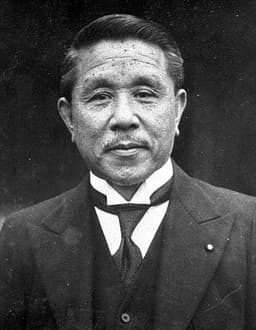
Hirota Koki
Politician · Modern
43.8Total

Napoleon Bonaparte
General · Modern
70.9Total
Basic Information
Born
1878
1769
Died
1948
1821
Era
Modern
Modern
Nationality
Japan
France
Occupation
Politician
General
Civilization
Eastern
Western
Score Comparison
Military (10%)
11.4
94.0
Political (20%)
42.3
72.0
Influence (20%)
48.6
40.0
Legacy (20%)
40.0
80.0
Leadership (15%)
65.0
78.0
Strategy (15%)
44.2
90.0
TOTAL
43.8
70.9
Hirota Koki — Complete Timeline
1936 AD
Service as Prime MinisterPolitical Action◆ Major
Hirota Koki became Prime Minister in March 1936, forming a cabinet after the February 26 Incident. As a civilian, he was seen as a compromise candidate, but his government was dominated by the military and pursued expansionist policies.
Prime MinisterCivilian Government
Impact: national
Signing of the Anti-Comintern PactPolitical Action◆ Major
Hirota's government signed the Anti-Comintern Pact with Nazi Germany in November 1936, forming an alliance against the Soviet Union and international communism. This pact aligned Japan with Germany and Italy, leading to the Axis alliance.
Axis AllianceForeign PolicyAnti-Comintern
Impact: globaldestructive
1937 AD
Foreign Minister During the Nanking MassacrePolitical Action◆ Major
As Foreign Minister in 1937, Hirota was responsible for diplomatic relations during the Nanking Massacre. The Tokyo Tribunal found that he failed to take adequate steps to stop the atrocities despite receiving reports, contributing to his war crimes conviction.
Nanking MassacreWar CrimesDiplomacy
Impact: globaldestructive
1948 AD
Execution as a War CriminalOther◆ Major
Hirota Koki was executed by hanging on December 23, 1948, after being convicted by the International Military Tribunal for the Far East. He was found guilty of conspiracy to wage aggressive war and for atrocities committed by Japanese forces in China, including the Nanking Massacre.
War CrimesExecutionTokyo Trials
Impact: globaltragic
Napoleon Bonaparte — Complete Timeline
1799 AD
Coup of 18 BrumaireOther◆ Major
Napoleon Bonaparte, with support from his brother Lucien and key political figures, overthrew the Directory in a bloodless coup. He established the Consulate with himself as First Consul, effectively becoming the ruler of France. This event ended the French Revolution's most unstable period.
French RevolutionCoupRise to Power
Impact: regional
1804 AD
Promulgation of the Napoleonic CodeOther◆ Major
Napoleon enacted the Civil Code of the French, known as the Napoleonic Code, a comprehensive set of laws that replaced the fragmented feudal legal systems. The code established legal equality, protected property rights, and secularized law. It became the basis for legal systems in many European and world countries.
Legal ReformNapoleonic CodeCivil Law
Impact: globalconstructive
1805 AD
Battle of AusterlitzWar◆ Major
Napoleon's Grande Arm
Napoleonic WarsBattleDecisive Victory
Impact: global
1812 AD
Invasion of RussiaWar◆ Major
Napoleon led the Grande Arm
Napoleonic WarsInvasionDisaster
Impact: globaldestructive
1815 AD
Battle of WaterlooWar◆ Major
Napoleon's French army was defeated by the combined forces of the Duke of Wellington's Anglo-Allied army and Gebhard Leberecht von Bl
Napoleonic WarsBattleFinal Defeat
Impact: globaldestructive
Expert Analysis
hirota-koki-vs-napoleon-bonaparte
# The Conqueror and the Diplomat: Two Paths to Power, Two Destinies
On a December morning in 1948, Koki Hirota mounted the scaffold in Sugamo Prison, Tokyo, the only civilian prime minister among the seven Japanese leaders executed for war crimes. Just over a century earlier, in the spring of 1815, Napoleon Bonaparte rode into Paris at the head of a triumphant army, reclaiming an empire he had lost only months before. One man conquered Europe; the other tried to steer an empire through a storm. Both wielded immense power. Both ended in ruin. But the forces that drove them—and the worlds they shaped—could not have been more different.
Origins
Napoleon was born in 1769 on the island of Corsica, a year after France purchased it from Genoa. His family was minor nobility, but their world was one of Mediterranean ambition and resentment toward French rule. Young Napoleon spoke Italian before French, and his early letters seethed with Corsican nationalism. Yet France’s revolutionary upheaval offered him a ladder. The old aristocracy crumbled; talent became currency. He was short, intense, and ruthlessly intelligent—a man forged in the chaos of revolution, where a general could become emperor in a decade.
Hirota Koki was born in 1878 in Fukuoka, Japan, into a world of rigid order. The Meiji Restoration had begun only a decade earlier, and Japan was racing to modernize while preserving its imperial soul. Hirota’s father was a stonemason, and the family was poor. But education offered escape. He studied at Tokyo Imperial University, the gateway to Japan’s bureaucratic elite. Where Napoleon breathed the smoky air of battlefields, Hirota inhaled the still air of government offices. His Japan was not a nation in revolution but a nation in disciplined transformation—an empire learning to walk like a Western power.
Rise to Power
Napoleon’s ascent was meteoric and violent. At age 24, he drove the British out of Toulon with a brilliant artillery plan. At 26, he crushed a royalist uprising in Paris with a “whiff of grapeshot.” By 30, he had conquered Italy and Egypt. His path was paved with cannon fire and treaties dictated at swordpoint. In 1799, he staged a coup d’état, becoming First Consul, and by 1804, he crowned himself Emperor of the French. Every step was taken against a backdrop of war, betrayal, and the constant possibility of death.
Hirota’s rise was slow, careful, and bureaucratic. He entered Japan’s Foreign Ministry in 1903, serving as a diplomat in China, Europe, and the United States. He was a skilled negotiator, fluent in English and French, and known for his calm demeanor. In 1936, after the February 26 Incident—a failed coup by young army officers—Japan’s political establishment needed a civilian leader who could steady the ship. Hirota became Prime Minister in March 1936. He was not a conqueror; he was a stabilizer. But the stabilization he offered came at a price.
Leadership & Governance
Napoleon ruled with a combination of genius and tyranny. He reformed France’s legal system with the Napoleonic Code, establishing equality before the law and secular governance. He centralized education, built roads, and stabilized the currency. On the battlefield, he was unmatched: his speed, deception, and use of artillery shattered armies from Austerlitz in 1805 to Jena in 1806. He governed as a military autocrat, but he also understood propaganda, image, and the power of a story. His greatest weakness was his inability to stop. Victory bred more ambition; ambition bred more war.
Hirota governed as a civilian caught between forces he could not control. His cabinet included military men who answered to the army, not the prime minister. In November 1936, Hirota’s government signed the Anti-Comintern Pact with Nazi Germany, aligning Japan with Hitler’s regime. It was a diplomatic move meant to isolate the Soviet Union, but it tied Japan’s fate to a European war. As Foreign Minister in 1937, during the Nanking Massacre, Hirota received reports of atrocities. The Tokyo Tribunal later found that he did not take effective action to stop them. His governance was not one of conquest but of complicity—a slow slide into catastrophe, driven by a system he could not master.
Triumph & Tragedy
Napoleon’s greatest triumph was Austerlitz, the Battle of the Three Emperors in December 1805. He lured the Russian and Austrian armies into a trap and destroyed them, ending the Third Coalition. His greatest tragedy was the invasion of Russia in 1812. He marched with 600,000 men; fewer than 100,000 returned. The Russian winter, the scorched earth, and his own hubris consumed his Grand Army. Exiled to Elba in 1814, he escaped and ruled for a Hundred Days before Waterloo in 1815 sealed his fate.
Hirota’s triumph was quieter: he was a diplomat who helped Japan navigate a dangerous decade, maintaining civilian rule when the military could have seized full control. His tragedy was that his navigation led to disaster. The Anti-Comintern Pact hardened Japan’s alignment with Germany. His inaction during the Nanking Massacre stained his legacy beyond repair. He was arrested by Allied forces in 1945, tried as a Class A war criminal, and hanged in 1948. His last words were a Buddhist prayer.
Character & Destiny
Napoleon’s character was a furnace of ambition, intelligence, and insecurity. He believed in destiny—his own. “Impossible is a word to be found only in the dictionary of fools,” he once said. That confidence built an empire and then destroyed it. He could not delegate, could not rest, could not compromise. His personality demanded total victory, and total victory demanded total war.
Hirota was a different kind of man: cautious, diplomatic, and trapped. He believed in order, not glory. His tragedy was that order required compromise with evil. He was not a warmonger, but he served a warmongering state. His personality was that of a bureaucrat—competent, loyal, and ultimately, morally blind. “I bow to the verdict,” he said at his trial. He did not fight. He accepted.
Legacy
Napoleon is remembered as one of history’s greatest military commanders, a reformer who shaped modern Europe, and a cautionary tale about unchecked ambition. His Napoleonic Code influences legal systems worldwide. He is studied, debated, and memorialized—from the Arc de Triomphe to countless books and films. His legacy is complex, but undeniable.
Hirota Koki is remembered as a footnote in Japan’s wartime history, the only civilian executed by the Tokyo Tribunal. To some, he was a scapegoat, a politician punished for the crimes of generals. To others, he was a man who could have acted and did not. His grave lies in a quiet cemetery in Kamakura, visited by few. His legacy is a warning about the limits of civilian power in a militarized state, and the moral cost of inaction.
Conclusion
Napoleon and Hirota lived in different centuries, different worlds. One conquered with cannon, the other with treaties. One died in exile on a remote island, the other at the end of a rope. Yet both were men who rose from modest beginnings to the pinnacle of power, and both were destroyed by forces they helped create. Napoleon’s tragedy was his inability to stop conquering. Hirota’s was his inability to stop serving. In the end, history judges not just what we do, but what we allow to be done in our name.
Rankings
🥇
Napoleon BonaparteLeader
Mil: 94.0Pol: 72.0Inf: 40.0
70.9
🥈
Hirota Koki
Mil: 11.4Pol: 42.3Inf: 48.6
43.8
+27.1 behind
How This Comparison Works
Algorithm
Each figure is scored on 6 dimensions (0—100 scale) based on structured historical data: Military (10%), Political (20%), Influence (20%), Legacy (20%), Leadership (15%), Strategy (15%). The weighted total produces the final ranking.
Data Sources
Scores are computed from structured sub-indicators in the database. Scale factors adjust for era (Ancient ×0.85, Modern ×1.0) and civilization size (Eastern ×1.05, Other ×0.80) to account for differences in population and military scale.
Maximum 3 Figures
Comparisons are limited to 2—3 figures to ensure readability and statistical meaningfulness.
Error Margins
±5 points per dimension — Sub-scores are derived from historical records with inherent uncertainty. Two figures within 5 points on a dimension should be considered roughly equivalent in that area.
Total Score Accuracy
±3 points overall — The weighted combination of 6 dimensions produces a total score with approximately ±3 points of uncertainty. Differences of less than 3 points are not statistically significant— the figures are effectively tied.
Known Limitations
- Historical records are incomplete and uneven across civilizations
- Figures from oral-tradition societies may be underrepresented
- Occupation labels can misclassify multi-role figures
- Scores measure capability and impact, not moral character
- Quantitative scoring is a comparison tool, not absolute truth
Capability Radar
Military (10%) — Battles & Warfare
Battles
16
95
Win Rate
19
90
Expansion
19
95
Political (20%) — Governance & Reform
Reform
30
95
Diplomacy
40
80
Economy
30
85
Influence (20%) — Cultural & Global Reach
Cultural
10
85
Global
20
90
Legacy (20%) — Historical Impact
Historical
30
95
Longevity
10
90
Leadership (15%) — Power & Stability
Tenure
60
85
Stability
20
70
Strategy (15%) — Tactics & Innovation
Strategy
25
95
Tactics
28
98
Reform
32
92
Similar Comparisons
Comments & Discussion
No comments yet. Be the first to share your thoughts!