Loading...
Alexander the Great vs Mao Zedong
Alexander the Great leads by 5.8 pts · 2 figures compared
…
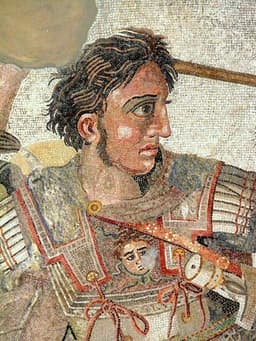
Alexander the Great
General · Ancient
85.2Total
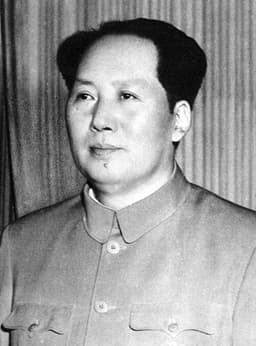
Mao Zedong
Politician · Modern
79.4Total
Basic Information
Born
-356
1893
Died
-323
1976
Era
Ancient
Modern
Nationality
Macedon
China
Occupation
General
Politician
Civilization
Western
Eastern
Score Comparison
Military (10%)
95.0
75.0
Political (20%)
60.0
88.0
Influence (20%)
92.0
85.0
Legacy (20%)
90.0
70.0
Leadership (15%)
80.0
85.0
Strategy (15%)
92.0
72.0
TOTAL
85.2
79.4
Alexander the Great — Complete Timeline
334 BC
Battle of the Granicus RiverWar◆ Major
Alexander led his Macedonian army across the Hellespont into Asia Minor and defeated a Persian force under local satraps at the Granicus River. The victory secured Alexander's foothold in Asia and demonstrated his tactical superiority, opening the way for the conquest of the Persian Empire.
Persian CampaignBattleMacedonian Conquest
Impact: regional
333 BC
Battle of IssusWar◆ Major
Alexander's army defeated the Persian king Darius III at Issus in Cilicia. Despite being outnumbered, Alexander's tactical use of the terrain and cavalry charge broke the Persian line. Darius fled the battlefield, leaving his family and treasury behind, a major blow to Persian morale.
Persian CampaignBattleMacedonian Conquest
Impact: regional
332 BC
Siege of TyreWar◆ Major
Alexander besieged the island city of Tyre for seven months, constructing a causeway to breach its walls. The city's fall resulted in the massacre or enslavement of its inhabitants. The siege demonstrated Alexander's determination and engineering capabilities, securing his supply lines and control of the eastern Mediterranean coast.
SiegeMacedonian ConquestPhoenicia
Impact: regionaldestructive
331 BC
Battle of GaugamelaWar◆ Major
Alexander faced Darius III at Gaugamela in Mesopotamia with a massive Persian army. Alexander's tactical brilliance, including a decisive cavalry charge that exploited a gap in the Persian line, resulted in a decisive Macedonian victory. Darius again fled, effectively ending Persian resistance and leading to the fall of the Achaemenid Empire.
Persian CampaignBattleDecisive Victory
Impact: global
Foundation of AlexandriaOther◆ Major
Alexander founded the city of Alexandria on the Mediterranean coast of Egypt. He personally selected the site and oversaw the initial planning. Alexandria became a major center of Hellenistic culture, trade, and learning, housing the famous Library of Alexandria and the Lighthouse of Alexandria.
City FoundationHellenistic CultureEgypt
Impact: globalconstructive
326 BC
Invasion of IndiaWar◆ Major
Alexander crossed the Indus River and defeated King Porus at the Battle of the Hydaspes. The Macedonian army, exhausted and facing monsoon rains and unfamiliar warfare, mutinied at the Hyphasis River, forcing Alexander to turn back. This campaign marked the easternmost extent of his conquests.
Indian CampaignBattleMutiny
Impact: regional
Mao Zedong — Complete Timeline
1934 AD
Long MarchWar
Mao Zedong led the Chinese Red Army on a strategic retreat from Nationalist forces, covering approximately 6,000 miles over 370 days. The march solidified Mao's leadership within the Chinese Communist Party and became a foundational myth of the Communist revolution.
Chinese Civil WarCommunist RevolutionRetreat
Impact: national
1949 AD
Proclamation of the People's Republic of ChinaPolitical Action
Mao Zedong declared the founding of the People's Republic of China from Tiananmen Gate in Beijing. This ended the Chinese Civil War and established Communist rule over mainland China, with Mao as Chairman of the Central People's Government.
Founding of PRCCommunist VictoryRevolution
Impact: global
1958 AD
Great Leap ForwardReform◆ Major
Mao launched a campaign to rapidly industrialize China and collectivize agriculture. The policy led to widespread mismanagement, resulting in a famine that caused an estimated 15-45 million deaths between 1959 and 1961.
FamineIndustrializationCollectivization
Impact: nationaldestructive
1960 AD
Sino-Soviet SplitPolitical Action◆ Major
Mao's ideological differences with Soviet leader Nikita Khrushchev led to a breakdown in relations between China and the Soviet Union. The split ended the Sino-Soviet alliance and reshaped global Cold War dynamics, with China pursuing an independent path.
Cold WarIdeological ConflictAlliance Breakdown
Impact: global
1966 AD
Cultural RevolutionPolitical Action
Mao initiated a sociopolitical movement to purge capitalist and traditional elements from Chinese society. The Red Guard youth groups attacked intellectuals and officials, leading to widespread violence, destruction of cultural artifacts, and an estimated 1-2 million deaths.
Political PurgeSocial UpheavalRed Guard
Impact: nationaldestructive
1971 AD
Ping-Pong DiplomacyCultural◆ Major
Mao approved an invitation for the U.S. table tennis team to visit China, initiating a thaw in Sino-American relations. This cultural exchange paved the way for President Nixon's visit to China in 1972 and the eventual normalization of diplomatic ties.
DiplomacyU.S.-China RelationsCultural Exchange
Impact: globalconstructive
Expert Analysis
Origins
Alexander the Great (356–323 BCE) was born in Pella, Macedon, to King Philip II and Queen Olympias. His education under Aristotle instilled a love for Greek culture and philosophy, while his father's military reforms provided a formidable army. In contrast, Mao Zedong (1893–1976) was born in Shaoshan, China, to a peasant family. He was influenced by Chinese classics and later Marxist-Leninist thought, becoming a founding member of the Chinese Communist Party.
Rise to Power
Alexander ascended to the throne at age 20 after Philip's assassination, swiftly consolidating power by crushing revolts in Thebes and Athens. He then launched a massive campaign against the Persian Empire, winning decisive battles at Granicus (334 BCE), Issus (333 BCE), and Gaugamela (331 BCE). Mao rose through the ranks of the Communist Party during the Chinese Civil War, leading the Long March (1934–1935) and eventually proclaiming the People's Republic of China in 1949 after defeating the Nationalists.
Leadership & Governance
Alexander's leadership was characterized by personal bravery, strategic innovation, and a vision of cultural fusion (Hellenization). He founded over 20 cities, most notably Alexandria in Egypt, and encouraged intermarriage between Greeks and Persians. Mao's governance was marked by revolutionary zeal, mass mobilization, and radical social experiments. His Great Leap Forward (1958–1962) aimed at rapid industrialization but led to a devastating famine, while the Cultural Revolution (1966–1976) purged opponents and enforced ideological purity, causing widespread chaos.
Triumph & Tragedy
Alexander's greatest triumphs include the conquest of the Persian Empire, the defeat of King Darius III, and the extension of his empire from Greece to India. His tragic flaw was his relentless ambition, leading to exhaustion among his troops and his death at age 32, possibly from fever or poisoning. Mao's triumphs include unifying China, expelling foreign influence, and establishing a communist state. His tragedies include the failures of the Great Leap Forward (estimated 15–55 million deaths) and the Cultural Revolution, which destroyed cultural heritage and led to mass persecution.
Character & Destiny
Alexander was charismatic, ambitious, and ruthless, often driven by a desire for glory and immortality. He believed in his divine lineage and sought to create a unified world empire. Mao was a visionary, strategic, and authoritarian leader, obsessed with perpetual revolution and his place in history. Both men left indelible marks on their civilizations, but their paths diverged in methods and outcomes.
Legacy
Alexander's legacy includes the spread of Hellenistic culture, the blending of East and West, and the founding of cities that became centers of learning. His military tactics are still studied in war colleges. Mao's legacy is complex: he is revered for founding modern China but criticized for the human costs of his policies. The Cultural Revolution and Great Leap Forward remain controversial, while his ideology continues to influence the Chinese Communist Party.
Conclusion
In a head-to-head comparison, Alexander scores higher in military prowess (95 vs 75), influence (92 vs 85), and legacy (85 vs 79), while Mao leads in political skill (88 vs 60) and durability (85 vs 80). However, Alexander's undefeated record and lasting cultural impact give him a slight edge. Overall, Alexander the Great emerges as the more effective and influential leader, with a score gap of 5.8, leaving Mao as a formidable but ultimately secondary figure.
Rankings
🥇
Alexander the GreatLeader
Mil: 95.0Pol: 60.0Inf: 92.0
85.2
🥈
Mao Zedong
Mil: 75.0Pol: 88.0Inf: 85.0
79.4
+5.8 behind
How This Comparison Works
Algorithm
Each figure is scored on 6 dimensions (0—100 scale) based on structured historical data: Military (10%), Political (20%), Influence (20%), Legacy (20%), Leadership (15%), Strategy (15%). The weighted total produces the final ranking.
Data Sources
Scores are computed from structured sub-indicators in the database. Scale factors adjust for era (Ancient ×0.85, Modern ×1.0) and civilization size (Eastern ×1.05, Other ×0.80) to account for differences in population and military scale.
Maximum 3 Figures
Comparisons are limited to 2—3 figures to ensure readability and statistical meaningfulness.
Error Margins
±5 points per dimension — Sub-scores are derived from historical records with inherent uncertainty. Two figures within 5 points on a dimension should be considered roughly equivalent in that area.
Total Score Accuracy
±3 points overall — The weighted combination of 6 dimensions produces a total score with approximately ±3 points of uncertainty. Differences of less than 3 points are not statistically significant— the figures are effectively tied.
Known Limitations
- Historical records are incomplete and uneven across civilizations
- Figures from oral-tradition societies may be underrepresented
- Occupation labels can misclassify multi-role figures
- Scores measure capability and impact, not moral character
- Quantitative scoring is a comparison tool, not absolute truth
Capability Radar
Military (10%) — Battles & Warfare
Battles
98
85
Win Rate
99
80
Expansion
99
85
Political (20%) — Governance & Reform
Reform
75
95
Diplomacy
80
80
Economy
70
70
Influence (20%) — Cultural & Global Reach
Cultural
95
90
Global
95
90
Legacy (20%) — Historical Impact
Historical
98
95
Longevity
95
85
Leadership (15%) — Power & Stability
Tenure
60
95
Stability
55
60
Strategy (15%) — Tactics & Innovation
Strategy
98
85
Tactics
99
75
Reform
85
90
Similar Comparisons
Comments & Discussion
Historian6546/16/2026
我仔细看了评分,有几个数字需要质疑。亚历山大军事分96,但他在中亚和印度其实遇到了严重后勤问题,公元前326年军队在贝阿斯河拒绝前进,这是变相的失败,为何不扣分?毛泽东军事65分,这个太低了——我们算一下:红军长征后不到3万人,到1949年消灭800万国民党军队,如果按“兵力-战果”效率比,毛泽东的得分至少应该在80以上。另外政治分方面,亚历山大65分其实应该更低——他死后帝国直接分成三个王国,说明政治整合几乎为零。建议用加权多维度模型重新算,现有评分体系对游击战和长期战略的权重明显不足。
ColdChronicler386/16/2026
亚历山大和毛泽东的比较很有意思,但我觉得评分系统有点西方中心论。亚历山大军事96分固然厉害,但他的帝国撑了几年就分裂了?毛泽东从1921年建党到1949年建国,打了28年仗,从井冈山到延安再到三大战役,面对的是日本和国民党这样的正规军,不是波斯那种松散联盟。再说政治分,亚历山大65分实在太低——他死前连继承人制度都没建立,帝国瞬间瓦解;毛泽东82分合理,但他确实建立了完整的国家治理体系,甚至影响到了第三世界革命。如果按中国史观,毛泽东的综合影响力绝对不输亚历山大,至少在政治制度构建上,毛泽东走得更远。