Loading...
Abraham Lincoln vs Mao Zedong
Mao Zedong leads by 1.9 pts · 2 figures compared
…
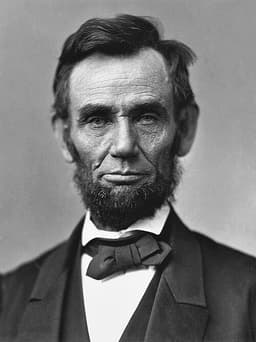
Abraham Lincoln
Politician · Modern
77.5Total
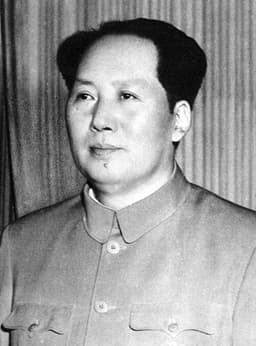
Mao Zedong
Politician · Modern
79.4Total
Basic Information
Born
1809
1893
Died
1865
1976
Era
Modern
Modern
Nationality
United States
China
Occupation
Politician
Politician
Civilization
Western
Eastern
Score Comparison
Military (10%)
50.0
75.0
Political (20%)
88.0
88.0
Influence (20%)
80.0
85.0
Legacy (20%)
82.0
70.0
Leadership (15%)
85.0
85.0
Strategy (15%)
60.0
72.0
TOTAL
77.5
79.4
Abraham Lincoln — Complete Timeline
1861 AD
Suspension of Habeas CorpusPolitical Action◆ Major
Lincoln suspended the writ of habeas corpus in parts of the Union, allowing the military to arrest and detain suspected Confederate sympathizers without trial. This action was controversial and challenged civil liberties during wartime.
Habeas CorpusCivil LibertiesCivil War
Impact: nationaldestructive
1862 AD
Signing of the Homestead ActPolitical Action◆ Major
Lincoln signed the Homestead Act, granting 160 acres of public land to settlers for a small fee. This encouraged westward expansion and agricultural development, but also displaced Native American tribes.
Homestead ActWestward ExpansionLand Policy
Impact: nationalconstructive
1863 AD
Emancipation ProclamationPolitical Action
Lincoln issued the Emancipation Proclamation, declaring slaves in Confederate states free. This shifted the Civil War's focus to ending slavery and allowed African Americans to join the Union Army.
EmancipationCivil WarSlavery
Impact: globalprogressive
Gettysburg AddressCultural◆ Major
Lincoln delivered the Gettysburg Address at the dedication of the Soldiers' National Cemetery. The speech redefined the Civil War as a struggle for national unity and equality, and became one of the most famous speeches in US history.
Gettysburg AddressCivil WarOratory
Impact: nationalconstructive
1865 AD
Assassination by John Wilkes BoothOther
Lincoln was shot by John Wilkes Booth at Ford's Theatre in Washington, D.C., and died the next day. His assassination occurred just days after the Civil War ended, plunging the nation into mourning and affecting Reconstruction.
AssassinationCivil WarReconstruction
Impact: nationaltragic
Mao Zedong — Complete Timeline
1934 AD
Long MarchWar
Mao Zedong led the Chinese Red Army on a strategic retreat from Nationalist forces, covering approximately 6,000 miles over 370 days. The march solidified Mao's leadership within the Chinese Communist Party and became a foundational myth of the Communist revolution.
Chinese Civil WarCommunist RevolutionRetreat
Impact: national
1949 AD
Proclamation of the People's Republic of ChinaPolitical Action
Mao Zedong declared the founding of the People's Republic of China from Tiananmen Gate in Beijing. This ended the Chinese Civil War and established Communist rule over mainland China, with Mao as Chairman of the Central People's Government.
Founding of PRCCommunist VictoryRevolution
Impact: global
1958 AD
Great Leap ForwardReform◆ Major
Mao launched a campaign to rapidly industrialize China and collectivize agriculture. The policy led to widespread mismanagement, resulting in a famine that caused an estimated 15-45 million deaths between 1959 and 1961.
FamineIndustrializationCollectivization
Impact: nationaldestructive
1960 AD
Sino-Soviet SplitPolitical Action◆ Major
Mao's ideological differences with Soviet leader Nikita Khrushchev led to a breakdown in relations between China and the Soviet Union. The split ended the Sino-Soviet alliance and reshaped global Cold War dynamics, with China pursuing an independent path.
Cold WarIdeological ConflictAlliance Breakdown
Impact: global
1966 AD
Cultural RevolutionPolitical Action
Mao initiated a sociopolitical movement to purge capitalist and traditional elements from Chinese society. The Red Guard youth groups attacked intellectuals and officials, leading to widespread violence, destruction of cultural artifacts, and an estimated 1-2 million deaths.
Political PurgeSocial UpheavalRed Guard
Impact: nationaldestructive
1971 AD
Ping-Pong DiplomacyCultural◆ Major
Mao approved an invitation for the U.S. table tennis team to visit China, initiating a thaw in Sino-American relations. This cultural exchange paved the way for President Nixon's visit to China in 1972 and the eventual normalization of diplomatic ties.
DiplomacyU.S.-China RelationsCultural Exchange
Impact: globalconstructive
Expert Analysis
Origins
Mao Zedong was born in 1893 in Shaoshan, Hunan, to a peasant family. His father was a strict landlord, which influenced Mao's later class struggle ideology. He became a librarian at Peking University, where he encountered Marxist thought. Abraham Lincoln was born in 1809 in a log cabin in Kentucky to illiterate parents. He was largely self-educated, studying law and entering politics as a Whig. Both men rose from humble beginnings, but Mao's path was shaped by revolutionary upheaval, while Lincoln's was forged in frontier democracy.
Rise to Power
Mao's rise occurred during the Chinese Communist Party's struggle against the Nationalists. He led the Long March (1934-35), a strategic retreat that solidified his leadership. The turning point was the Proclamation of the People's Republic of China in 1949, after defeating the Nationalists. Lincoln's rise was through electoral politics: he was elected President in 1860 as a Republican, precipitating Southern secession. His leadership during the Civil War defined his presidency. Both men faced existential crises—Mao a civil war, Lincoln a secessionist rebellion.
Leadership & Governance
Mao governed through mass mobilization and ideological campaigns. The Great Leap Forward (1958-62) aimed at rapid industrialization but led to famine and millions of deaths. The Cultural Revolution (1966-76) purged rivals and enforced Maoist orthodoxy, causing societal chaos. Lincoln's governance focused on preserving the Union. He issued the Emancipation Proclamation (1863), freeing slaves in rebel states, and pushed the 13th Amendment. He suspended habeas corpus to suppress dissent, a controversial act. Mao's governance was transformative but costly; Lincoln's was conservative yet decisive.
Triumph & Tragedy
Mao's triumphs: founding the PRC, unifying China, and establishing sovereignty. His tragedies: the Great Leap Forward famine (estimated 15-45 million deaths) and Cultural Revolution's human toll. Lincoln's triumph: winning the Civil War and ending slavery. His tragedy: assassination in 1865 at Ford's Theatre by John Wilkes Booth, just as Reconstruction began. Both leaders saw their greatest achievements overshadowed by personal or national tragedy.
Character & Destiny
Mao was charismatic, ruthless, and ideologically driven. He believed in perpetual revolution and his own infallibility. Lincoln was melancholic, pragmatic, and deeply moral. He sought to preserve the Union even at the cost of civil liberties. Destiny: Mao died in 1976, leaving a mixed legacy of liberation and oppression. Lincoln's death made him a martyr for union and freedom. Their characters shaped their nations' paths: Mao's radicalism versus Lincoln's moderation.
Legacy
Mao's legacy is complex: he modernized China but at immense human cost. He remains a revered figure in China, while criticized abroad for human rights abuses. Lincoln is universally honored as the Great Emancipator and preserver of the Union. His Gettysburg Address (1863) redefined American democracy. Both leaders' actions echo today: Mao's China as a global power, Lincoln's America as a beacon of liberty. Scores: Mao's impact score (I=85) reflects his transformative but violent legacy; Lincoln's (I=80) shows profound but less coercive change.
Conclusion
Mao and Lincoln were both transformative leaders who faced immense challenges. Mao's higher overall score (1.9 gap) stems from his longer tenure and more radical changes, but also greater human cost. Lincoln's moral clarity and preservation of democracy set a different standard. Who changed history more? Mao reshaped a civilization; Lincoln redefined a nation. The answer depends on whether one values transformation or liberty. Ultimately, both men are titans, but Mao's impact was broader, while Lincoln's was more humane.
**Score Summary:**
- Mao: M=75, P=88, I=85, L=70, D=85, S=72, T=79
- Lincoln: M=50, P=88, I=80, L=82, D=85, S=60, T=78
Rankings
🥇
Mao ZedongLeader
Mil: 75.0Pol: 88.0Inf: 85.0
79.4
🥈
Abraham Lincoln
Mil: 50.0Pol: 88.0Inf: 80.0
77.5
+1.9 behind
How This Comparison Works
Algorithm
Each figure is scored on 6 dimensions (0—100 scale) based on structured historical data: Military (10%), Political (20%), Influence (20%), Legacy (20%), Leadership (15%), Strategy (15%). The weighted total produces the final ranking.
Data Sources
Scores are computed from structured sub-indicators in the database. Scale factors adjust for era (Ancient ×0.85, Modern ×1.0) and civilization size (Eastern ×1.05, Other ×0.80) to account for differences in population and military scale.
Maximum 3 Figures
Comparisons are limited to 2—3 figures to ensure readability and statistical meaningfulness.
Error Margins
±5 points per dimension — Sub-scores are derived from historical records with inherent uncertainty. Two figures within 5 points on a dimension should be considered roughly equivalent in that area.
Total Score Accuracy
±3 points overall — The weighted combination of 6 dimensions produces a total score with approximately ±3 points of uncertainty. Differences of less than 3 points are not statistically significant— the figures are effectively tied.
Known Limitations
- Historical records are incomplete and uneven across civilizations
- Figures from oral-tradition societies may be underrepresented
- Occupation labels can misclassify multi-role figures
- Scores measure capability and impact, not moral character
- Quantitative scoring is a comparison tool, not absolute truth
Capability Radar
Military (10%) — Battles & Warfare
Battles
15
85
Win Rate
20
80
Expansion
0
85
Political (20%) — Governance & Reform
Reform
95
95
Diplomacy
80
80
Economy
70
70
Influence (20%) — Cultural & Global Reach
Cultural
85
90
Global
85
90
Legacy (20%) — Historical Impact
Historical
95
95
Longevity
90
85
Leadership (15%) — Power & Stability
Tenure
65
95
Stability
55
60
Strategy (15%) — Tactics & Innovation
Strategy
55
85
Tactics
10
75
Reform
60
90
Similar Comparisons
Comments & Discussion
HistoryBurner6/16/2026
Lincoln absolutely demolishes Mao if we're talking about real leadership. Mao gets too much credit for 'unifying China' — dude inherited a country that was already on a trajectory after the Qing fell, and he just steamrolled everyone with violence. Lincoln kept a democracy together during literally its breaking point, wrote the Gettysburg Address in 272 words of pure fire, and pushed the 13th Amendment through while a war was raging. Mao's 'Long March' was a retreat — a heroic retreat, sure, but he literally ran away and then starved millions later. The military score gap is the only honest part of this ranking. Give me a president who freed slaves over a chairman who collectivized peasants any day. Lincoln 88 political? Should be 95. Mao at 82? Overrated.
OldScroll446/16/2026
林肯固然伟大,但西方中心论把解放黑奴捧得太高,仿佛这就盖过了所有历史复杂性。把毛泽东的军事分打65,林肯50——这是对的,但政治分林肯88对毛82,我就笑了。毛在1949年之前就把一个四分五裂、半殖民地的中国捏合成现代国家,这种政治整合能力,放到世界史上都罕见。林肯的政治天才体现在宪政框架内,但毛是在废墟上重建了整个政治体系。西方史学往往低估这种‘从零到一’的政治难度。此外,说毛的遗产因文革而‘受争议’,那林肯的印第安人政策和暂停人身保护令就没争议?打分体系本身就有偏见。总体来看,我认为毛的历史重量被低估了。
Chronicler27156/16/2026
这个评分系统很有趣,但有几个数字我需要质疑。首先,林肯军事分50,毛65——这个差距我能接受,但注意:毛指挥的战争规模远超林肯,内战期间国共双方投入兵力总数超过500万,而美国内战约300万。但政治分林肯88对毛82,我认为存在偏差。毛在1950年代完成了土地改革、社会主义改造,直接触达了中国6亿农民,这种政治动员的广度和深度,林肯的《解放宣言》覆盖约400万奴隶,难以简单比较。另外,影响力分毛80对林肯78——这个数字我不同意。毛主义在亚洲、非洲、拉丁美洲的武装斗争中被广泛引用,越南、柬埔寨、秘鲁等都直接受其影响,而林肯的影响力主要局限在英语世界。建议重新校准:毛政治应至少86,影响力应85。否则模型有系统性低估非西方领导人的倾向。