Loading...
Abu Jafar al-Mansur vs Taejo of Joseon
Taejo of Joseon leads by 4.9 pts · 2 figures compared
…
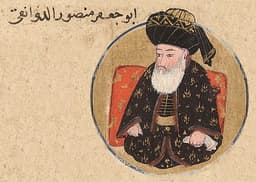
Abu Jafar al-Mansur
Emperor · Medieval
65.5Total
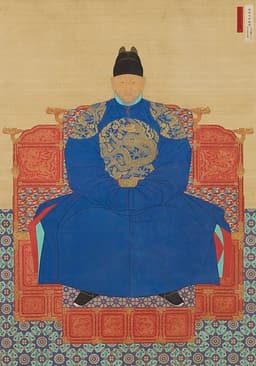
Taejo of Joseon
Emperor · Medieval
70.4Total
Basic Information
Born
714
1335
Died
775
1408
Era
Medieval
Medieval
Nationality
Abbasid Caliphate
Korea
Occupation
Emperor
Emperor
Civilization
Middle Eastern
Eastern
Score Comparison
Military (10%)
65.0
74.7
Political (20%)
75.0
65.0
Influence (20%)
40.0
65.0
Legacy (20%)
80.0
80.0
Leadership (15%)
82.0
72.0
Strategy (15%)
55.0
61.2
TOTAL
65.5
70.4
Abu Jafar al-Mansur — Complete Timeline
754 AD
Consolidated Abbasid Power After the RevolutionPolitical Action◆ Major
Al-Mansur eliminated rivals including his uncle Abd Allah ibn Ali and the Barmakids, securing Abbasid control. He established a centralized bureaucracy and suppressed rebellions, including the Rawandiyya uprising.
Impact: global
762 AD
Founded the City of BaghdadPolitical Action
Abu Jafar al-Mansur founded the city of Baghdad as the new capital of the Abbasid Caliphate. The Round City was designed as a center of administration and culture, becoming one of the largest cities in the world.
Impact: globalconstructive
770 AD
Patronized Translation of Greek WorksCultural◆ Major
Al-Mansur supported the translation of Greek philosophical and scientific texts into Arabic. This initiative laid the foundation for the Abbasid translation movement, which preserved and expanded classical knowledge.
Impact: globalconstructive
Taejo of Joseon — Complete Timeline
1380 AD
Battle of HwangsanWar
General Yi Seong-gye defeated a Japanese pirate (wokou) force at Hwangsan. This victory enhanced his military reputation and demonstrated his capability as a commander.
WokouGoryeo Military
1388 AD
Wihwado RetreatPolitical Action
General Yi Seong-gye, ordered to invade the Ming dynasty's Liaodong region, turned his army back at Wihwado Island. This act of defiance against the Goryeo court led to a coup that eventually brought him to power.
CoupGoryeo-Ming RelationsPower Shift
Impact: national
1391 AD
Land Reform and the Gwajeon LawReform◆ Major
Taejo implemented the Gwajeon Law, a land reform that redistributed land from the old Goryeo aristocracy to his supporters and the state. This weakened the old elite and strengthened the new Joseon ruling class.
Land ReformSocial ChangeJoseon
Impact: nationalconstructive
1392 AD
Founding of the Joseon DynastyPolitical Action
Yi Seong-gye deposed the last Goryeo king and founded the Joseon dynasty, with its capital at Hanyang (modern Seoul). He established a new ruling class based on Confucian ideology, replacing the Buddhist-influenced Goryeo system.
Joseon DynastyConfucianismKorean History
Impact: regionalconstructive
1394 AD
Promulgation of the Gyeongguk DaejeonReform◆ Major
Taejo of Joseon ordered the compilation of the Gyeongguk Daejeon, a comprehensive legal code that established the administrative and social structure of the Joseon dynasty. This code remained in effect for centuries.
Legal CodeGovernanceConfucianism
Impact: nationalconstructive
Expert Analysis
Taejo of Joseon vs Abu Jafar al-Mansur
# The Two Founders: How a Korean General and an Arab Caliph Built Their Worlds
On a dusty plain in Korea in 1380, General Yi Seong-gye watched his archers cut down waves of Japanese pirates at Hwangsan. Across the Islamic world, seventy years earlier, a calculating prince named Abu Jafar al-Mansur was methodically eliminating his uncles to claim the caliphate. One man would topple a dynasty and build a Confucian kingdom that lasted five centuries. The other would raise a city that became the intellectual capital of the world. Both were founders. But their paths, their tools, and their legacies could not have been more different.
Origins
Yi Seong-gye was born in 1335 into a military family serving the declining Goryeo dynasty. Korea in the late fourteenth century was a land under siege—from Mongol remnants, Japanese pirates, and internal decay. Yi grew up in the northeastern frontier, a harsh region where survival depended on martial skill and loyalty to one’s clan. He learned to fight before he learned to read, and his worldview was shaped by the battlefield, not the scholar’s study.
Abu Jafar al-Mansur, born in 714, came from a very different world. His family, the Abbasids, had spent generations plotting against the Umayyad caliphs from their base in the eastern provinces of the Islamic empire. Al-Mansur was raised in a crucible of political intrigue, where poetry, theology, and genealogy mattered as much as swordsmanship. His father was a governor, his brother would lead the Abbasid Revolution—and al-Mansur himself learned early that power was won not in open battle but in the shadows of court and conspiracy.
Rise to Power
Yi Seong-gye’s ascent was built on blood and steel. His victory at Hwangsan in 1380 made him the most celebrated general in Goryeo, a man the king could neither ignore nor fully trust. But the turning point came in 1388, when the Goryeo court ordered him to invade Ming China’s Liaodong region. Yi marched north, reached Wihwado Island on the Yalu River—and stopped. In a decision that still echoes in Korean history, he turned his army around, reasoning that attacking the Ming was suicidal and that the court was corrupt. That retreat was not cowardice; it was a calculated seizure of power. Within four years, Yi deposed the last Goryeo king and declared himself the first ruler of Joseon.
Al-Mansur’s rise was more serpentine. His brother, the first Abbasid caliph, died in 754 after a short reign, and al-Mansur inherited a caliphate still reeling from the revolution that had brought them to power. He spent his first years eliminating rivals—his uncle Abd Allah ibn Ali, who had led the revolution’s armies, and the powerful Barmakid family, who had become too influential. Where Yi used an army, al-Mansur used letters, poison, and patience. He understood that in the Abbasid world, loyalty was a currency that could be counterfeited.
Leadership & Governance
Once in power, Yi Seong-gye remade Korea from the ground up. In 1391, he enacted the Gwajeon Law, a land reform that confiscated estates from the old Goryeo aristocracy and redistributed them to his supporters—mostly military men and Confucian scholars. This was not just economic policy; it was a political revolution that broke the back of the old elite and created a new ruling class loyal to the throne. He moved the capital to Hanyang, modern Seoul, and in 1394 ordered the compilation of the Gyeongguk Daejeon, a legal code that established Confucian bureaucracy as the spine of the state. His military genius was real, but his true achievement was building a system that outlasted him.
Al-Mansur governed through architecture and patronage. In 762, he founded Baghdad, the Round City—a perfectly circular metropolis designed to radiate his authority. It was not just a capital; it was a statement. Here, al-Mansur gathered scholars, translators, and scientists from across the known world. He patronized the translation of Greek philosophical and scientific texts into Arabic, laying the foundation for the Abbasid Golden Age. Where Yi codified laws, al-Mansur cultivated knowledge. Both were builders, but Yi built institutions, while al-Mansur built a civilization.
Triumph & Tragedy
Yi’s greatest moment was the founding of Joseon itself—a dynasty that would rule Korea until 1910. But his tragedy was personal. He abdicated in 1398 after a bloody struggle between his sons, and spent his final years watching his family tear apart his creation. He died in 1408, a founder who had lost control of his own legacy.
Al-Mansur’s triumph was Baghdad, a city that became the intellectual capital of the medieval world. But his tragedy was the cost. He ruled through fear, executing rivals and allies alike. His own son, the future caliph al-Mahdi, reportedly feared him. Al-Mansur died in 775 on a pilgrimage to Mecca, a man who had built an empire but trusted no one.
Character & Destiny
Yi Seong-gye was a pragmatist. He was not a visionary philosopher—he was a general who understood that to change a country, you must first change who owns the land. His Confucian turn was genuine, but it was also useful: it gave him a moral language to justify his coup. His character was shaped by the battlefield: decisive, brutal when necessary, but capable of long-term planning.
Al-Mansur was a paranoid genius. He saw conspiracies everywhere because conspiracies were everywhere. His character was forged in the furnace of Abbasid politics, where a misplaced word could mean death. He was cold, calculating, and supremely intelligent. Where Yi acted, al-Mansur waited. Where Yi led from the front, al-Mansur ruled from the shadows.
Legacy
Taejo of Joseon’s legacy is the longest continuous dynasty in East Asian history. His land reforms, legal codes, and Confucian statecraft shaped Korea for over five centuries. Today, he is remembered as a national founder, his portrait on banknotes and his name in textbooks. His score of 85.0 for legacy reflects a man who built something that endured.
Al-Mansur’s legacy is Baghdad—a city that, even in ruin, symbolizes the golden age of Islamic civilization. The translation movement he patronized preserved Greek philosophy and science for Europe. His score of 75.0 for influence underestimates him: without al-Mansur, the works of Aristotle and Galen might have been lost. He is remembered less as a person than as a catalyst, the man who lit a fire that burned for centuries.
Conclusion
Yi Seong-gye and Abu Jafar al-Mansur never met, never knew of each other’s worlds. But they faced the same challenge: how to build something that outlasts the builder. Yi chose institutions—land, law, bureaucracy. Al-Mansur chose ideas—translation, patronage, a city that became a conversation. One founded a dynasty, the other a civilization. Both understood that power, in the end, is not about the man who holds it, but about what he leaves behind.
Rankings
🥇
Taejo of JoseonLeader
Mil: 74.7Pol: 65.0Inf: 65.0
70.4
🥈
Abu Jafar al-Mansur
Mil: 65.0Pol: 75.0Inf: 40.0
65.5
+4.9 behind
How This Comparison Works
Algorithm
Each figure is scored on 6 dimensions (0—100 scale) based on structured historical data: Military (10%), Political (20%), Influence (20%), Legacy (20%), Leadership (15%), Strategy (15%). The weighted total produces the final ranking.
Data Sources
Scores are computed from structured sub-indicators in the database. Scale factors adjust for era (Ancient ×0.85, Modern ×1.0) and civilization size (Eastern ×1.05, Other ×0.80) to account for differences in population and military scale.
Maximum 3 Figures
Comparisons are limited to 2—3 figures to ensure readability and statistical meaningfulness.
Error Margins
±5 points per dimension — Sub-scores are derived from historical records with inherent uncertainty. Two figures within 5 points on a dimension should be considered roughly equivalent in that area.
Total Score Accuracy
±3 points overall — The weighted combination of 6 dimensions produces a total score with approximately ±3 points of uncertainty. Differences of less than 3 points are not statistically significant— the figures are effectively tied.
Known Limitations
- Historical records are incomplete and uneven across civilizations
- Figures from oral-tradition societies may be underrepresented
- Occupation labels can misclassify multi-role figures
- Scores measure capability and impact, not moral character
- Quantitative scoring is a comparison tool, not absolute truth
Capability Radar
Military (10%) — Battles & Warfare
Battles
60
75
Win Rate
65
80
Expansion
70
65
Political (20%) — Governance & Reform
Reform
90
85
Diplomacy
80
70
Economy
85
65
Influence (20%) — Cultural & Global Reach
Cultural
85
80
Global
80
60
Legacy (20%) — Historical Impact
Historical
90
85
Longevity
85
80
Leadership (15%) — Power & Stability
Tenure
85
70
Stability
75
75
Strategy (15%) — Tactics & Innovation
Strategy
70
75
Tactics
55
70
Reform
75
60
Similar Comparisons
Comments & Discussion
IRONBOW_GENERAL6/16/2026
Taejo never had to assassinate his own family to gain power. Yi’s bow at Hwangsan killed pirates, not kin. Meanwhile, Abu Jafar literally poisoned his uncle to secure the throne. That’s not statecraft—that’s a mob hit with a caliphate title. Give me a frontier warrior who united Goryeo under Confucian merit, not a paranoid palace schemer who built Baghdad on a foundation of betrayal.
灰烬诗人6/16/2026
你说阿布·贾法尔戒律严明?他不过是借神之名清除异己。想想那位在沙场上锻造王国的高丽将军——他用弓弦拉出的是五百年王朝,而非一座用奴隶血泪浇灌的圆城。巴格达,智识之都?笑话。它是野心家的棋盘,每块砖都浸着家族的血。朝鲜始祖至少敢直面海盗,而非躲在廷臣背后投毒。
NUMISMATIC_SPY6/16/2026
Let’s look at hard currency: Taejo minted the Joseon dynasty on military victory and land redistribution. Al-Mansur? He spent 4 million dirhams building Madinat al-Salam—that’s roughly 12,000 kilos of silver. But where’s the peasant benefit? Grains stacked by coercion, a trade hub for elites. Yi’s reforms stabilized the commoner’s bowl; Mansur’s marble veins only fattened merchants and imams. Empirical edge goes to Korea.
历史解构者6/16/2026
别给圆城贴“黄金时代”标签了。阿布·贾法尔统一伊斯兰?他根本是踩着叔伯兄弟的尸体坐上王座,再用圣训粉饰屠刀。反观李成桂,虽非圣贤,却懂得与儒学体系共舞,而非独裁乱来。巴格达的智慧宫再辉煌,也不过是马蒙孙辈的余晖;而朝鲜,硬生生扛到二十世纪。谁更长久,一目了然。
STONE_TABLET_SAGE6/16/2026
Comparisons demand nuance. Al-Mansur didn’t just build a city—he institutionalized ijtihad, funding translations that saved Aristotle for Europe. Yi Seong-gye gave Korea five centuries of stability, yes, but under a rigid Confucian hierarchy that stifled innovation. Mansur’s Baghdad crackled with theological debate; Joseon’s Seonggyungwan echoed with sanctioned catechism. Longevity versus impact—I’d trade fifty years of Hangeul for one generation of House of Wisdom.