Loading...
Abu Said Mirza vs Moctezuma II
Moctezuma II leads by 29.2 pts · 2 figures compared
…
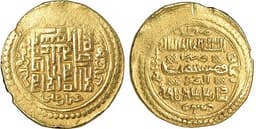
Abu Said Mirza
Emperor · Medieval
41.5Total
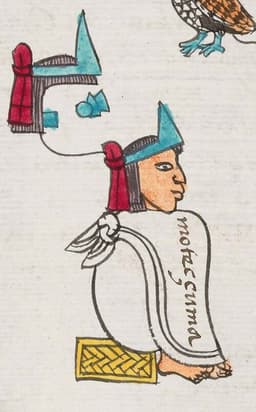
Moctezuma II
Emperor · Medieval
70.7Total
Basic Information
Born
1424
1466
Died
1469
1520
Era
Medieval
Medieval
Nationality
Timurid Empire
Aztec Empire
Occupation
Emperor
Emperor
Civilization
Eastern
Other
Score Comparison
Military (10%)
25.0
65.0
Political (20%)
30.8
68.0
Influence (20%)
48.6
82.0
Legacy (20%)
40.0
72.0
Leadership (15%)
41.5
65.0
Strategy (15%)
60.0
57.5
TOTAL
41.5
70.7
Abu Said Mirza — Complete Timeline
1451 AD
Reunification of Khorasan and TransoxianaPolitical Action◆ Major
Abu Said Mirza, a Timurid prince, conquered Samarkand and reunited the Timurid territories of Khorasan and Transoxiana under his rule. This ended a period of fragmentation following the death of Shah Rukh and restored a centralized Timurid state.
Timurid EmpireReunificationSamarkand
Impact: regionalconstructive
1468 AD
Campaign against the Aq QoyunluWar◆ Major
Abu Said Mirza launched a military campaign against the Aq Qoyunlu confederation under Uzun Hasan. The campaign aimed to expand Timurid influence into western Iran but ended in defeat for Abu Said.
Timurid EmpireWarAq Qoyunlu
Impact: regionaldestructive
1469 AD
Capture and execution by Uzun HasanWar◆ Major
Abu Said Mirza was captured by Uzun Hasan of the Aq Qoyunlu after a failed campaign. He was executed, ending his rule and the united Timurid state. His death led to the final fragmentation of the Timurid Empire in Khorasan and Transoxiana.
Timurid EmpireDeathAq Qoyunlu
Impact: regionaltragic
Moctezuma II — Complete Timeline
1502 AD
Expansion of the Aztec Empire under Moctezuma IIWar◆ Major
Moctezuma II launched military campaigns that expanded the Aztec Empire to its greatest territorial extent, extending control over regions from the Gulf of Mexico to the Pacific. He also centralized power by reducing the autonomy of conquered provinces and increasing tribute demands.
ConquestTerritorial ExpansionAztec Empire
Impact: regional
1519 AD
First Meeting with Hernán CortésPolitical Action
Moctezuma II received Hern
EncounterSpanish ConquestAztec Empire
Impact: global
1520 AD
Capture and Death of Moctezuma IIPolitical Action◆ Major
Moctezuma was taken hostage by Cort
HostageDeathSpanish Conquest
Impact: globaltragic
Expert Analysis
Origins
Abu Said Mirza (1424–1469) was a Timurid prince, grandson of Miran Shah (son of Timur). Born into the fractious Timurid dynasty, he spent his early years navigating civil wars. His father, Muhammad Mirza, was a minor prince, and Abu Said grew up amid the collapse of Timur's empire. He received military training but lacked a stable power base.
Moctezuma II (1466–1520) was the ninth Aztec emperor, born into the royal lineage of Tenochtitlan. His father was Axayacatl, a previous ruler. Moctezuma was educated as a priest and warrior, trained in the calmecac school. He became tlatoani (speaker) in 1502 after his uncle Ahuitzotl died.
Rise to Power
Abu Said Mirza rose by exploiting Timurid succession conflicts. In 1451, he captured Samarkand with the help of the Uzbek leader Abu'l-Khayr Khan. This reunified Khorasan and Transoxiana, ending a decade of division. He consolidated power by appointing loyalists and suppressing rivals like his cousin Ala al-Dawla. His reign began in 1451, but he faced constant threats from internal and external foes.
Moctezuma II became emperor in 1502 after a contested succession. He quickly centralized power, purging many nobles and appointing commoners to high offices. He expanded the Aztec Empire through military campaigns, conquering regions like the Mixtec and Zapotec areas. By 1519, the empire reached its greatest territorial extent, covering modern central and southern Mexico.
Leadership & Governance
Abu Said Mirza governed as a traditional Timurid ruler, relying on a coalition of tribal leaders and military commanders. He attempted to maintain the decentralized feudal system inherited from Timur. His governance was marked by constant warfare: he fought the Aq Qoyunlu, the Kara Koyunlu, and the Uzbek tribes. He failed to establish a stable bureaucracy or succession plan, leading to fragmentation after his death.
Moctezuma II ruled as an absolute monarch, centralizing Aztec governance. He expanded the tribute system, demanding goods and labor from conquered peoples. He built infrastructure like aqueducts and temples, and enforced religious orthodoxy. His leadership score of 65.0 reflects his ability to control a vast empire, but his political score of 68.0 is marred by his disastrous handling of the Spanish arrival.
Triumph & Tragedy
Abu Said Mirza's greatest triumph was reunifying the Timurid heartland in 1451, scoring 60.0 in strategy for this achievement. However, his tragedy came in 1469 when he invaded Aq Qoyunlu territory. He was captured at the Battle of Qarabagh by Uzun Hasan and executed. His death ended the united Timurid state, which fractured into rival principalities. His military score of 25.0 reflects his poor decision to campaign without adequate support.
Moctezuma II's triumph was expanding the Aztec Empire to its peak, with a military score of 65.0 and influence of 82.0. He conquered over 50 city-states. His tragedy was his encounter with Hernán Cortés in 1519. He initially welcomed the Spanish, possibly believing Cortés was the god Quetzalcoatl. He was taken hostage, and during a revolt, he was killed—likely stoned by his own people or killed by the Spanish. His death precipitated the fall of Tenochtitlan in 1521.
Character & Destiny
Abu Said Mirza was ambitious but overconfident. His decision to attack the Aq Qoyunlu despite warnings showed poor judgment. He failed to secure alliances, leading to his isolation. His personality score of 41.5 reflects his inability to adapt to changing power dynamics. His destiny was sealed by his own miscalculations.
Moctezuma II was cautious and superstitious. He hesitated to attack the Spanish, interpreting omens as signs of doom. His political score of 68.0 indicates he was a capable administrator but indecisive in crisis. His character led to his capture and the empire's collapse. Historians like Hugh Thomas note his fatalism.
Legacy
Abu Said Mirza's legacy is minimal. His reunification was temporary, and his execution ended Timurid unity. He scored 40.0 in legacy, remembered mainly as the last ruler of a united Timurid state before its decline. His descendants, like Babur (founder of the Mughal Empire), learned from his failures.
Moctezuma II's legacy is immense. He is remembered as the emperor who presided over the Aztec Empire's peak and fall. His legacy score of 72.0 reflects his impact on world history. The Spanish conquest led to the colonization of Mexico and the spread of European culture. In Mexico, he is a controversial figure, seen as both a tragic hero and a weak leader.
Conclusion
Moctezuma II had greater impact than Abu Said Mirza. His total score of 70.7 versus 41.5 reflects his larger influence on world history. While Abu Said's reunification was a short-lived achievement, Moctezuma's empire was a major civilization whose encounter with Europeans changed the Americas. Moctezuma's actions directly led to the Aztec downfall, but his empire's scale and legacy outweigh Abu Said's. The Aztec Empire's collapse reshaped global history, while the Timurid fragmentation was a regional event. Thus, Moctezuma II is the more significant figure.
Rankings
🥇
Moctezuma IILeader
Mil: 65.0Pol: 68.0Inf: 82.0
70.7
🥈
Abu Said Mirza
Mil: 25.0Pol: 30.8Inf: 48.6
41.5
+29.2 behind
How This Comparison Works
Algorithm
Each figure is scored on 6 dimensions (0—100 scale) based on structured historical data: Military (10%), Political (20%), Influence (20%), Legacy (20%), Leadership (15%), Strategy (15%). The weighted total produces the final ranking.
Data Sources
Scores are computed from structured sub-indicators in the database. Scale factors adjust for era (Ancient ×0.85, Modern ×1.0) and civilization size (Eastern ×1.05, Other ×0.80) to account for differences in population and military scale.
Maximum 3 Figures
Comparisons are limited to 2—3 figures to ensure readability and statistical meaningfulness.
Error Margins
±5 points per dimension — Sub-scores are derived from historical records with inherent uncertainty. Two figures within 5 points on a dimension should be considered roughly equivalent in that area.
Total Score Accuracy
±3 points overall — The weighted combination of 6 dimensions produces a total score with approximately ±3 points of uncertainty. Differences of less than 3 points are not statistically significant— the figures are effectively tied.
Known Limitations
- Historical records are incomplete and uneven across civilizations
- Figures from oral-tradition societies may be underrepresented
- Occupation labels can misclassify multi-role figures
- Scores measure capability and impact, not moral character
- Quantitative scoring is a comparison tool, not absolute truth
Capability Radar
Military (10%) — Battles & Warfare
Battles
45
65
Win Rate
40
60
Expansion
30
70
Political (20%) — Governance & Reform
Reform
20
55
Diplomacy
30
30
Economy
25
65
Influence (20%) — Cultural & Global Reach
Cultural
20
75
Global
10
65
Legacy (20%) — Historical Impact
Historical
25
80
Longevity
15
70
Leadership (15%) — Power & Stability
Tenure
35
60
Stability
15
40
Strategy (15%) — Tactics & Innovation
Strategy
35
50
Tactics
40
55
Reform
20
40
Similar Comparisons
Comments & Discussion
No comments yet. Be the first to share your thoughts!