Loading...
Albert of Brandenburg vs Moctezuma II
Moctezuma II leads by 26.7 pts · 2 figures compared
…

Albert of Brandenburg
Emperor · Medieval
44.0Total
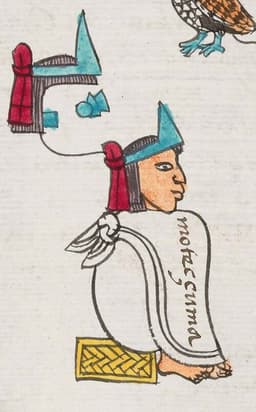
Moctezuma II
Emperor · Medieval
70.7Total
Basic Information
Born
1490
1466
Died
1545
1520
Era
Medieval
Medieval
Nationality
Brandenburg
Aztec Empire
Occupation
Emperor
Emperor
Civilization
Western
Other
Score Comparison
Military (10%)
18.6
65.0
Political (20%)
39.4
68.0
Influence (20%)
52.5
82.0
Legacy (20%)
44.2
72.0
Leadership (15%)
58.8
65.0
Strategy (15%)
32.5
57.5
TOTAL
44.0
70.7
Albert of Brandenburg — Complete Timeline
1513 AD
Appointed Archbishop of MagdeburgPolitical Action◆ Major
Albert was appointed Archbishop of Magdeburg at age 23, a position that made him a prince-elector of the Holy Roman Empire. This appointment was part of a pluralism of benefices that concentrated significant ecclesiastical and political power in his hands.
ArchbishopEcclesiastical Power
Impact: regional
1514 AD
Became Archbishop-Elector of MainzPolitical Action◆ Major
Albert was appointed Archbishop-Elector of Mainz, the highest-ranking ecclesiastical prince in the Holy Roman Empire. This position gave him a vote in imperial elections and control over the largest archdiocese in Germany, making him a key figure in imperial politics.
Archbishop-ElectorMainz
Impact: regional
1517 AD
Authorized the Sale of IndulgencesPolitical Action◆ Major
Albert authorized the sale of indulgences in his territories to repay debts incurred from his appointments. This practice, promoted by Johann Tetzel, sparked Martin Luther's Ninety-five Theses and the beginning of the Protestant Reformation.
Indulgence TradeReformation
Impact: globaldestructive
1520 AD
Patronized the Arts and HumanismCultural
Albert was a patron of the arts and humanist scholarship, commissioning works from artists like Albrecht D
PatronageRenaissance
Impact: regionalconstructive
1521 AD
Opposed the ReformationPolitical Action◆ Major
Albert opposed the Protestant Reformation and remained a staunch Catholic. He supported the Edict of Worms, which banned Luther's teachings, and used his influence to suppress Protestantism in his territories, though with limited success.
Catholic OppositionReformation
Impact: regional
Moctezuma II — Complete Timeline
1502 AD
Expansion of the Aztec Empire under Moctezuma IIWar◆ Major
Moctezuma II launched military campaigns that expanded the Aztec Empire to its greatest territorial extent, extending control over regions from the Gulf of Mexico to the Pacific. He also centralized power by reducing the autonomy of conquered provinces and increasing tribute demands.
ConquestTerritorial ExpansionAztec Empire
Impact: regional
1519 AD
First Meeting with Hernán CortésPolitical Action
Moctezuma II received Hern
EncounterSpanish ConquestAztec Empire
Impact: global
1520 AD
Capture and Death of Moctezuma IIPolitical Action◆ Major
Moctezuma was taken hostage by Cort
HostageDeathSpanish Conquest
Impact: globaltragic
Expert Analysis
Origins
Albert of Brandenburg was born in 1490 in Berlin, a younger son of Elector John Cicero of Brandenburg. Destined for the Church, he studied at the University of Frankfurt (Oder) and quickly advanced through ecclesiastical ranks due to noble connections. By age 23, he was Archbishop of Magdeburg and administrator of Halberstadt. His family's influence and his own ambition drove his rapid rise.
Moctezuma II (also spelled Montezuma) was born in 1466 in Tenochtitlan, the capital of the Aztec Empire. As a son of Emperor Axayacatl, he was trained in warfare, religion, and governance. He became a high priest and military commander before ascending to the throne in 1502. His upbringing in the heart of the empire prepared him for absolute rule.
Rise to Power
Albert's rise was a product of nepotism and political maneuvering. In 1514, at age 24, he became Archbishop-Elector of Mainz, the highest-ranking ecclesiastical prince in the Holy Roman Empire. To secure the position, he paid enormous fees to the pope, borrowing from the Fugger banking family. This debt led him to authorize the sale of indulgences—a practice that would trigger the Reformation.
Moctezuma II rose through military campaigns and priestly roles. He became emperor in 1502 after his uncle Ahuitzotl died. His selection was not automatic; he was chosen by a council of nobles and priests for his intelligence, piety, and military record. He quickly centralized power, purging former officials and elevating his own loyalists.
Leadership & Governance
Albert's governance was marked by political pragmatism and religious conservatism. As archbishop, he managed vast territories and wielded significant political influence. He opposed the Reformation, enforcing the Edict of Worms (1521) and persecuting Protestants. However, his primary concern was maintaining his power and wealth. He patronized the arts, commissioning works from Albrecht Dürer and Lucas Cranach, but his financial mismanagement and indulgence sales undermined his moral authority.
Moctezuma II ruled as an absolute monarch, expanding the Aztec Empire to its greatest extent. He reformed the tribute system, centralizing control over conquered provinces. He also enforced strict social hierarchies and religious orthodoxy, demanding human sacrifices on a massive scale to appease the gods. His leadership score of 65.0 reflects his effective but brutal governance.
Triumph & Tragedy
Albert's greatest triumph was his successful navigation of the Reformation's early turmoil. Despite his role in provoking it, he retained his positions and wealth until his death in 1545. He also built a notable art collection, including Dürer's 'The Martyrdom of Saint Catherine'. His greatest failure was his short-sighted indulgence trade, which fueled Luther's protests and led to the fracturing of Western Christianity. His political score of 39.4 indicates limited strategic acumen.
Moctezuma II's triumphs include expanding the empire to its peak, with control over 5 million subjects. He also beautified Tenochtitlan, constructing grand temples and palaces. However, his tragic failure was his indecisive handling of the Spanish arrival. In 1519, he welcomed Hernán Cortés into Tenochtitlan, possibly believing Cortés was the god Quetzalcoatl. He was taken hostage and killed in 1520 during a revolt. His military score of 65.0 shows his competence, but his strategy score of 57.5 reveals critical errors.
Character & Destiny
Albert was ambitious and pragmatic, prioritizing personal power over religious integrity. His willingness to sell indulgences for political gain made him a symbol of church corruption. His character score of 52.5 for influence reflects his mixed legacy. He died peacefully in 1545, but his actions had set in motion events beyond his control.
Moctezuma II was intelligent and devout, but also superstitious and indecisive. His belief in omens and prophecies paralyzed him when facing Cortés. His character shaped his destiny: his initial hospitality led to his captivity and death. His leadership score of 65.0 suggests competence, but his strategic failure cost him his empire.
Legacy
Albert's legacy is deeply tied to the Reformation. His indulgence sales directly inspired Martin Luther's 95 Theses in 1517. He is remembered as a corrupt churchman who inadvertently sparked one of history's greatest religious upheavals. His total score of 44.0 reflects his limited direct impact, though his actions had vast consequences.
Moctezuma II's legacy is more tragic. He is remembered as the ruler who lost the Aztec Empire to the Spanish. However, he also symbolizes the grandeur and complexity of pre-Columbian civilization. His total score of 70.7 is higher, reflecting his greater power and impact. His empire's fall reshaped the Americas.
Conclusion
Moctezuma II's impact was greater. He ruled an empire of millions, expanded it, and his fateful encounter with Cortés changed world history. His total score of 70.7 far exceeds Albert's 44.0. While Albert's actions triggered the Reformation, Moctezuma's decisions led to the conquest of a continent. The Aztec emperor's story is a stark example of how a single leader's choices can lead to the collapse of a civilization. Albert, though influential, was a secondary figure in a larger movement. Moctezuma II stands as a tragic king whose legacy endures.
Rankings
🥇
Moctezuma IILeader
Mil: 65.0Pol: 68.0Inf: 82.0
70.7
🥈
Albert of Brandenburg
Mil: 18.6Pol: 39.4Inf: 52.5
44.0
+26.7 behind
How This Comparison Works
Algorithm
Each figure is scored on 6 dimensions (0—100 scale) based on structured historical data: Military (10%), Political (20%), Influence (20%), Legacy (20%), Leadership (15%), Strategy (15%). The weighted total produces the final ranking.
Data Sources
Scores are computed from structured sub-indicators in the database. Scale factors adjust for era (Ancient ×0.85, Modern ×1.0) and civilization size (Eastern ×1.05, Other ×0.80) to account for differences in population and military scale.
Maximum 3 Figures
Comparisons are limited to 2—3 figures to ensure readability and statistical meaningfulness.
Error Margins
±5 points per dimension — Sub-scores are derived from historical records with inherent uncertainty. Two figures within 5 points on a dimension should be considered roughly equivalent in that area.
Total Score Accuracy
±3 points overall — The weighted combination of 6 dimensions produces a total score with approximately ±3 points of uncertainty. Differences of less than 3 points are not statistically significant— the figures are effectively tied.
Known Limitations
- Historical records are incomplete and uneven across civilizations
- Figures from oral-tradition societies may be underrepresented
- Occupation labels can misclassify multi-role figures
- Scores measure capability and impact, not moral character
- Quantitative scoring is a comparison tool, not absolute truth
Capability Radar
Military (10%) — Battles & Warfare
Battles
7
65
Win Rate
7
60
Expansion
15
70
Political (20%) — Governance & Reform
Reform
20
55
Diplomacy
30
30
Economy
25
65
Influence (20%) — Cultural & Global Reach
Cultural
20
75
Global
35
65
Legacy (20%) — Historical Impact
Historical
45
80
Longevity
30
70
Leadership (15%) — Power & Stability
Tenure
40
60
Stability
15
40
Strategy (15%) — Tactics & Innovation
Strategy
13
50
Tactics
18
55
Reform
18
40
Similar Comparisons
Comments & Discussion
No comments yet. Be the first to share your thoughts!